
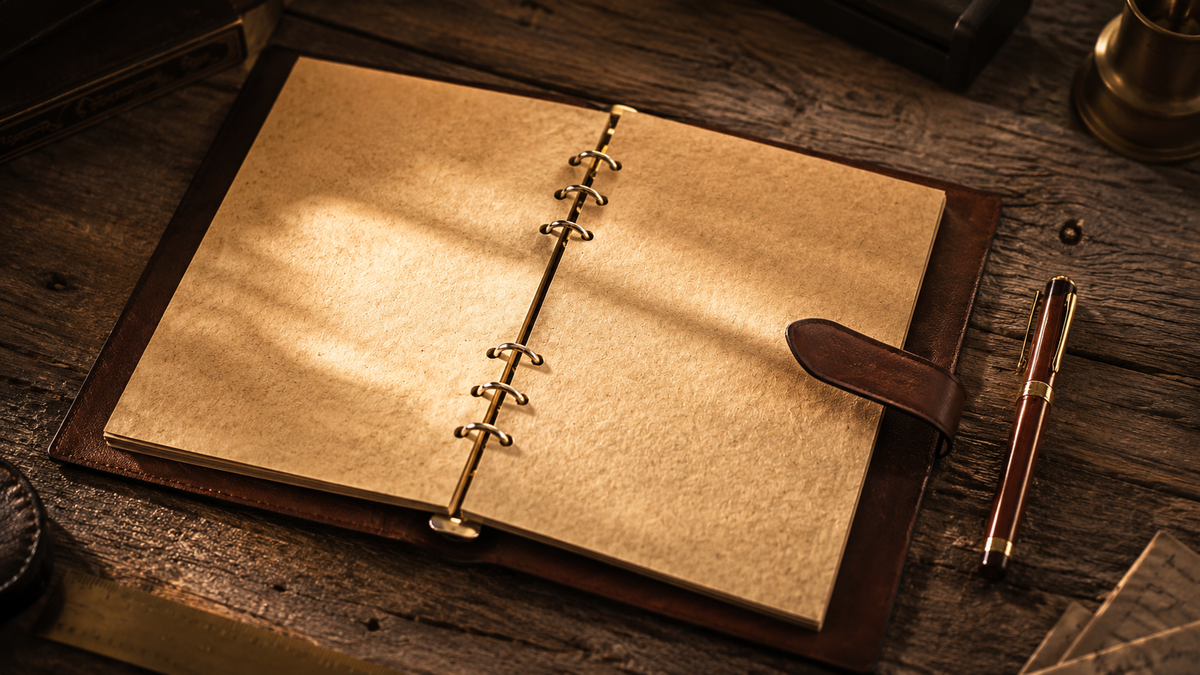
Best Paper for Leather Journals: GSM, Fountain Pens and Bleed-Through
We ranked six writing papers on one thing above all: how cleanly they hold fountain pen ink inside a leather cover, tested from the wettest nib down. Rhodia 90 gsm finished last on portability because a firm page makes a thick book, and first for anyone who writes with a broad nib.
By BRAND_NAME Editorial · Updated 28 August 2026 · Prices checked 28 August 2026 · 4,230 words · 17 min read
|
HOW THIS GUIDE IS FUNDED
BRAND_NAME sells leather journal covers. We do not make or sell paper, and we earn nothing when you buy any of the six notebooks below. No paper maker paid for a place in this guide.
We do have an interest in one recommendation: we sell refillable leather journal covers, and this guide argues that a refillable cover is the safer buy for fountain pen users. Read that section knowing where our money comes from, then judge the argument on the evidence given.
|
Our Picks at a Glance
|
BEST OVERALL
 MD PAPER, in the MD Notebook A5
About $19 at US specialist retailers, checked 28 August 2026
|
|
BEST FOR WET AND SHEENING INKS
 Sanzen Tomoe River FP, 52 gsm
About $32 for a 400-page A5 book, checked 28 August 2026
|
|
BEST FIRM PAGE FOR BROAD NIBS
 Rhodia Premium R, 90 gsm, in the A5 Webnotebook
About $32.50, checked 28 August 2026
|
The Six Papers, Side by Side
Here is every paper in this guide with the numbers that actually change how a page behaves.
|
Paper
|
Weight
|
Surface
|
Ghosting
|
Dry time
|
Suits
|
|
MD PAPER (MD Notebook)
|
Not published
|
Cream, light feedback
|
Moderate
|
Medium
|
EF to B
|
|
Maruman Mnemosyne N195A
|
80 g/m2
|
Bright white, smooth
|
Low to moderate
|
Medium
|
EF to M
|
|
Yu-Sari
|
70 gsm as reported
|
Smooth, slight tooth
|
Moderate
|
Fast
|
EF to B
|
|
Sanzen Tomoe River FP
|
52 gsm
|
Very smooth, crisp
|
High
|
Slow
|
F to flex
|
|
Cosmo Air Light
|
75 or 83 gsm
|
Very smooth, glassy
|
Moderate
|
Slow
|
M to flex
|
|
Rhodia Premium R
|
90 gsm
|
Ivory, smooth
|
Low
|
Medium to slow
|
M to B
|
Two exceptions are worth naming before you read further. Midori does not publish a GSM figure for MD PAPER on its official paper page, so we print Not published rather than repeat a number from a reseller. The Yu-Sari weight of 70 gsm comes from the research supplied to us, not from an English-language manufacturer sheet, so treat it as reported rather than confirmed.
Which Journal Paper Wins for Fountain Pens?
MD PAPER wins for most people, at about $19 for an A5 MD Notebook. It handles ordinary fountain pen writing cleanly, it keeps a little feedback under the nib, and Midori states plainly that the paper is designed around how ink feathers, dries, smears and bleeds. If you write with wet, sheening or flex nibs, Sanzen Tomoe River FP at 52 gsm is the better answer, and a 400-page A5 book costs about $32. If you press hard, use a broad nib or add ruled layouts and highlighters, take the 90 gsm Rhodia Premium R page in the A5 Webnotebook at about $32.50.
All three prices were checked at US specialist retailers on 28 August 2026 and move with stock and exchange rates.
Most people buy the leather first and discover the paper problem later. The cover looks beautiful on a desk, then the first wet line of ink spreads sideways into the fibres and the back of the page picks up dots, and the whole book becomes a one-sided notebook.
The Spec That Actually Decides It

Surface sizing decides bleed-through, not GSM. Sizing is the treatment that slows how fast liquid soaks into the fibres. A well-sized 52 gsm sheet keeps ink near the surface, so the line stays sharp and very little pigment reaches the back. An untreated 100 gsm sheet can pull the same ink straight in, which produces fuzzy edges and dull colour even though almost nothing shows through.
That is why a thin Japanese specialty paper can beat a heavy office pad with a wet nib. GSM tells you how much the page weighs and roughly how thick the finished book will be. It tells you very little about ink.
Pick by Need
|
If you
|
Buy
|
Because
|
|
Want one book that does everything
|
MD PAPER
|
Clean lines with most nibs and a writing feel people stay loyal to
|
|
Use wet, flex or sheening inks
|
Sanzen Tomoe River FP 52 gsm
|
Holds ink on the surface, so colour and sheen show
|
|
Write left-handed or in a hurry
|
Yu-Sari
|
Fastest drying paper in this group, which cuts smudging
|
|
Take structured work notes
|
Maruman Mnemosyne 80 gsm
|
Bright, ruled, acid-free and easy to scan
|
|
Want maximum pages in a slim cover
|
Sanzen Tomoe River or Cosmo Air Light
|
Hundreds of sheets without a bulky spine
|
|
Press hard or use broad nibs
|
Rhodia Premium R 90 gsm
|
Firm page, low ghosting, tolerates heavy strokes
|
How We Judged These Papers
Bleed resistance under the wettest nib. We judge a paper by the worst pen a normal person owns, not the easiest. A dry extra-fine flatters everything.
Line definition. A fine nib should still look fine. If a paper widens the stroke or fringes the edges, small handwriting stops being readable.
Ghosting and double-sided use. Ghosting is a preference, not a defect. We separate what you can see through the sheet from ink that actually passed through it.
Drying time. A paper that resists bleed perfectly is still a poor journal if every line smears when you close the book.
Evidence: manufacturer specification pages for weight, sizing and acid content, published fountain pen writing tests that show both sides of the sheet, and the pen community research supplied for this article. Prices come from US specialist retailers on 28 August 2026.
What Counts as Fountain Pen Friendly
Sellers use the phrase loosely. Here is the banding we apply.
|
Band
|
What you see on the page
|
What it means for a journal
|
|
Excellent
|
Crisp edges with a wet broad nib, no ink dots on the reverse, shading visible
|
Safe for both sides of every page, and for ink swatches
|
|
Good
|
Clean lines with fine and medium nibs, isolated bleed only where ink pools
|
Both sides usable, avoid heavy flex work
|
|
Usable
|
Slight spread, visible ghosting, occasional bleed at stroke ends
|
One side per page, or stay with drier pens
|
|
Poor
|
Fringed letters, dots through the sheet, colour looks flat
|
Not a fountain pen journal, whatever the GSM says
|
The Four Ways Journal Paper Fails

Bleed-through. Ink physically travels through the sheet and appears as marks on the reverse, sometimes on the next page too. Wet nibs, slow strokes and repeated passes trigger it first. Always inspect the back of a test page, not just the front.
Feathering. Ink creeps outward along the fibres and letters grow hairy edges. This is an absorbency problem. A fine nib that suddenly writes like a medium is telling you the surface is too open for that ink.
Ink spread. The line simply gets wider without the branching pattern of feathering. Shading and line variation flatten out, and compact handwriting loses definition. Extra-fine users notice this first.
Cockling. The page ripples as it dries because it absorbed a lot of liquid. Normal writing rarely causes it. Ink swatches, washes and repeated passes do, and once a page has buckled the book never closes flat again.
Group 1: Everyday Journal Papers
These three suit a person who writes most days, uses one or two pens, and wants both sides of every page.
1. MD PAPER, in the MD Notebook A5

BEST OVERALL · EVERYDAY PAPER
The default answer for a leather cover. Cream, quietly textured, and refined by Midori since the 1960s.
|
Weight
|
Not published by the manufacturer
|
|
Colour
|
Cream, with a white version also produced
|
|
Surface
|
Smooth with a touch of feedback
|
|
Binding
|
Sewn, opens flat, glassine jacket
|
|
Size used here
|
A5, 176 to 192 pages depending on ruling
|
|
Refill friendly
|
Yes, fits most A5 covers
|
WHAT WORKS
WHAT TO WEIGH
– No published GSM figure, so you cannot compare it on paper against rivals.
– Cream tone shifts how cool blues and greys look.
– Ghosting is moderate, more than a 90 gsm sheet.
Best for: a daily journal in an A5 or B6 leather cover, with fine to broad nibs.
About $19 at US specialist retailers · price checked 28 August 2026 · Buy the cover first, then match this insert.
Evidence: Midori publishes its paper design criteria on its own product site, including resistance to smearing and bleed-through. In 2026 the brand line was renamed MD PRODUCT while the paper stayed the same.
2. Maruman Mnemosyne N195A, 80 g/m2

BEST FOR WORK NOTES · EVERYDAY PAPER
The office notebook that fountain pen users kept buying. Bright white, ruled with intent, and cheap enough to run in parallel with a journal.
|
Weight
|
80 g/m2 writing paper, stated by Maruman
|
|
Sheets
|
80, micro-perforated
|
|
Body size
|
210 x 161 x 10 mm
|
|
Binding
|
Twin wire, lies completely flat
|
|
Paper
|
Acid-free, bright white
|
|
Refill friendly
|
Limited, the wire spine resists most covers
|
WHAT WORKS
WHAT TO WEIGH
– Twin wire binding will not slide into a standard refillable cover.
– Published user reports note feathering with wide and stub nibs.
– Perforated pages tear out easily, which is a risk in a keepsake journal.
Best for: meetings, study notes and daily task pages with fine or medium nibs.
Maruman lists 792 yen in Japan. US sellers ask about $10 to $13 depending on size · both prices checked 28 August 2026 · Pair with a strap-style cover, not a slip-in cover.
Evidence: the Mnemosyne N195A specification lists 80 g/m2 writing paper, 80 sheets and a 210 x 161 x 10 mm body.
3. Yu-Sari, 70 gsm as reported

BEST FAST-DRYING PAPER · EVERYDAY PAPER
A newer Japanese paper built around one problem the premium papers ignore: how long the ink stays wet.
|
Weight
|
70 gsm, as reported in the supplied research
|
|
Maker
|
Nakabayashi, Japan
|
|
Surface
|
Smooth with a small amount of tooth
|
|
Binding
|
Traditional Japanese sewn binding, sits flat
|
|
Cover
|
Soft cardstock with gold embossing
|
|
Refill friendly
|
Yes, in A5 and B5 covers
|
WHAT WORKS
WHAT TO WEIGH
– Less dramatic ink expression than the two papers in Group 2.
– Thinner stock than 80 or 90 gsm sheets, so ghosting is visible.
– Harder to find outside specialist stationery sellers.
Best for: left-handed writers, fast note-takers and anyone who closes a journal the moment they stop writing.
From about $17, and $18.50 for a B5 lined book · prices checked 28 August 2026 · Buy one book before committing to a cover size.
Evidence: drying performance and the 70 gsm figure come from the fountain pen review research supplied for this article. Nakabayashi does not publish an English specification sheet we could verify, so we have not printed one.
|
VERDICT
Buy MD PAPER unless you have a specific reason not to. Take Mnemosyne if the notebook lives on a desk rather than inside leather, and take Yu-Sari if smudging is your daily complaint. All three handle normal fountain pen writing cleanly, which is not true of most leather journals sold with unnamed paper inside.
|
Group 2: Papers for Ink Expression and Page Count
Both papers here are thin, which sounds like a weakness and is actually the point. Thin plus well sized means hundreds of pages inside a cover that still closes.
4. Sanzen Tomoe River FP, 52 gsm

BEST FOR WET AND SHEENING INKS · INK EXPRESSION
The paper the fountain pen world panicked about losing. Tomoegawa stopped production in 2021 and Sanzen, based in Kanazawa, took it over and re-engineered the formula.
|
Weight
|
52 gsm
|
|
Producer
|
Sanzen Paper, distributed by Sakae Technical Paper
|
|
Paper
|
Acid-free and pH neutral per US retailer listings
|
|
Surface
|
Very smooth, holds ink on top of the sheet
|
|
Typical book
|
A5 with 368 to 400 pages, around 5 mm thick
|
|
Refill friendly
|
Yes, and the page count is the reason to use it
|
WHAT WORKS
WHAT TO WEIGH
– Heavy ghosting. You will see every line through the sheet.
– Slow drying compared with ordinary writing paper.
– Generations differ, so an old review may not describe the book you buy.
Best for: ink collectors, sheen chasers and anyone who wants a year of daily pages in one slim insert.
About $32 for a 400-page A5 notebook, and about $11.45 for 100 loose A5 sheets · prices checked 28 August 2026 · Try loose sheets before buying a full book.
Evidence: retailer and paper-maker listings confirm the 52 gsm weight, the 2021 handover from Tomoegawa to Sanzen, and the acid-free, pH neutral description used on US listings.
5. Cosmo Air Light, 75 or 83 gsm

BEST FOR COLOUR · INK EXPRESSION
The paper the community reached for when Tomoe River supply looked shaky. It is not a copy. It behaves differently and it makes ink look vivid.
|
Weight
|
75 gsm or 83 gsm depending on the run
|
|
Surface
|
Almost glassy, very little feedback
|
|
Ink behaviour
|
Strong colour, shading and sheen
|
|
Typical book
|
A5 with around 288 pages
|
|
Drying
|
Slow, similar to Tomoe River
|
|
Refill friendly
|
Yes, common in A5 and B6 inserts
|
WHAT WORKS
WHAT TO WEIGH
– Almost no feedback, which some writers find slippery.
– Slow drying makes it a poor match for left-handed writers.
– More expensive per page than the everyday papers.
Best for: journalers who care how the ink looks more than how fast it dries.
About $35 for a 288-page A5 notebook · price checked 28 August 2026 · Buy the same size as your cover, not the same brand as your cover.
Evidence: weight range and ink behaviour come from stationery retailer specifications and the supplied fountain pen review research.
|
VERDICT
Both papers reward wet nibs and punish impatience. Choose Sanzen Tomoe River if page count and sheen matter most, and Cosmo Air Light if you want vivid colour with slightly less show-through. Neither is a sensible first journal for a left-handed writer.
|
Group 3: The Firm Page
6. Rhodia Premium R, 90 gsm, in the A5 Webnotebook

BEST FIRM PAGE FOR BROAD NIBS · HEAVY STOCK
The one page here that feels substantial under the hand. It is also the reason your journal gets thicker.
|
Weight
|
90 gsm
|
|
Paper
|
Rhodia Premium R, ivory, acid-free and pH neutral
|
|
Sheets
|
96 in the A5 Webnotebook
|
|
Cover
|
Leatherette hardcover with elastic closure
|
|
Surface
|
Smooth, low friction
|
|
Refill friendly
|
No, this is a bound book, not an insert
|
WHAT WORKS
WHAT TO WEIGH
– Heavy. Ninety-six sheets take the space that 300 Tomoe River sheets would.
– Very smooth ink-resistant surface means slower drying with saturated inks.
– Sold as a finished book, so you cannot move the paper into a leather cover.
Best for: bullet journalers, planners and anyone who writes with a broad, stub or flex nib at a desk.
About $32.50 at US specialist retailers · price checked 28 August 2026 · Choose this when page feel beats page count.
Evidence: US retailer specifications list 96 sheets of ivory 90 gsm acid-free, pH neutral Premium R paper in the A5 Webnotebook.
|
VERDICT
Take the 90 gsm page when your pen is wide, your hand is heavy or your layouts involve more than writing. Accept that a firm page means a thicker book, and that this one cannot be moved into a leather cover later.
|
|
TIP
Test with the wettest pen you actually own, then wait. Write four normal lines, one slow line, and one small block of solid ink. Check the edges immediately, close the book after ten seconds to test smudging, and inspect the reverse once dry. That single page tells you more than any product description.
|
|
WATCH OUT
Premium leather does not mean premium paper. A full-grain cover can be wrapped around an unnamed absorbent sheet, and no listing is obliged to tell you the paper maker. If the seller cannot name the paper, treat the inside of the journal as unknown and budget for a refill.
|
Fit Check: Will Your Paper Fit the Cover?

Nominal sizes do not guarantee a fit. Two A5 notebooks can differ by several millimetres once you count the cover overhang and the spine.
-
Measure the insert height at the spine, not the page. Cover overhang adds to the number that matters.
-
Measure the width from spine edge to fore edge with the book closed.
-
Measure spine thickness with the book shut and flat under light pressure.
-
Add 2 to 3 mm to the thickness for a book you will fill with writing, tape or pasted items.
-
Check the closure. Elastic and strap covers tolerate growth, snap and slip-in covers do not.
-
For multiple inserts, add every spine together, then compare against the cover capacity.
Standard sizes, for reference, are set by ISO 216. A5 is 148 x 210 mm and A6 is 105 x 148 mm, which is half the area of A5.
|
Measurement
|
What to record
|
Typical A5 insert
|
Why it matters
|
|
Height
|
Spine edge, closed
|
210 mm
|
Too tall and the insert lifts the cover open
|
|
Width
|
Spine to fore edge
|
148 mm
|
Excess width pushes the closure off centre
|
|
Spine thickness
|
Closed and flat
|
5 to 12 mm
|
Decides how many inserts a cover can hold
|
|
Growth allowance
|
Add to thickness
|
2 to 3 mm
|
Written pages are thicker than blank ones
|
|
Cover capacity
|
Total spine space
|
Varies by cover
|
The number that decides one insert or three
|
If you carry the journal everywhere and write in short bursts, measure for A6 pocket journal covers instead and accept fewer words per page.
Cover and Binding Features That Protect Paper
|
Feature
|
What to look for
|
Why it matters for paper
|
|
Binding style
|
Sewn sections that open flat
|
You can write across the gutter without cracking the spine
|
|
Closure
|
Elastic or wrap strap
|
Tolerates a book that thickens as you fill it
|
|
Cover stiffness
|
Firm but not rigid
|
Supports the page block without pressing the pages
|
|
Internal pockets
|
Flat, not bulky
|
Bulky pockets bow the paper and cause corner wear
|
|
Refill system
|
Elastic bands or slip pockets
|
Lets you change paper without changing leather
|
|
Edge finish
|
Burnished, stitched edges
|
Rough edges abrade paper corners over months
|
Leather, Labels and Archival Claims
Two separate claims get made about leather journals, and both are regulated or defined somewhere you can check.
The first is the leather itself. In the United States, the FTC Leather Guides at 16 CFR Part 24 treat it as deceptive to misrepresent what a product is made from, and they say that non-leather content should be disclosed when a material looks like leather but is not. Ground, shredded or bonded leather should not simply be called leather, and terms such as waterproof and scratchproof have their own rules. If a listing avoids naming the leather at all, that silence is information.
The second is the paper. The Library of Congress defines acid-free as a pH of 7 or higher, notes that lignin turns acidic as it ages, and points out that archival is not a legally defined term. Its guidance also describes red rot, the powdery breakdown seen on many nineteenth and early twentieth century leather bindings, which is a reminder that leather ages on its own schedule regardless of the paper inside it.
Judge the two separately. A cover from a collection of full-grain leather journals tells you nothing about whether the pages will hold ink, and an acid-free sheet tells you nothing about how the cover will wear.
Price Tiers for Journal Paper
|
Tier
|
Typical price
|
What you get
|
Watch out for
|
|
Entry
|
$6 to $13
|
Named Japanese writing paper, 70 to 80 gsm, simple covers
|
Wire bindings that will not fit a leather cover
|
|
Middle
|
$17 to $22
|
MD PAPER, Yu-Sari, LIFE Noble, sewn and flat-opening
|
Sizes that are close to A5 but not exactly A5
|
|
Upper
|
$30 to $40
|
Tomoe River and Cosmo Air Light books, 288 to 400 pages
|
Slow drying and heavy ghosting
|
|
Bound premium
|
$32 to $55
|
Finished hardcover books with 90 gsm stock
|
Paper cannot be replaced when it runs out
|
Prices are US street prices at specialist retailers, checked 28 August 2026.
Bound, Refillable or Ring Bound
|
Format
|
Paper choice
|
Best for
|
Main limitation
|
|
Bound leather journal
|
Fixed for life
|
People who already know the paper suits them
|
Bad paper cannot be replaced
|
|
Refillable leather cover
|
Change any time
|
Fountain pen users and long-term journalers
|
Insert must fit the cover exactly
|
|
Ring or disc binder
|
Any punched sheet
|
Planners and mixed layouts
|
Rings interrupt the writing surface
|
A refillable cover separates two decisions that a bound journal forces together. You choose leather for how it wears and paper for how it writes. When a favourite paper is discontinued, and Tomoe River shows this happens, the cover survives the change. That is the argument for A5 leather journal covers over a sealed book, and it is also where we make our money, so weigh it accordingly.
How to Choose in Seven Steps
-
Name your wettest regular pen. That pen sets the standard, not your driest one.
-
Decide whether you write on both sides. If you do, ghosting tolerance becomes a real specification.
-
Choose a weight band. 52 to 70 gsm for page count, 80 to 90 gsm for a firm page.
-
Check the paper is named. An unnamed paper cannot be researched, compared or replaced.
-
Buy one small notebook or a sample pack and write in it for several days.
-
Inspect both sides of a page after drying, then test how fast you can close the book.
-
Only then buy the leather cover, sized to the insert you have already chosen.
Carrying a Journal Without Wrecking the Paper
-
Keep the journal flat inside a bag, not spine down in a side pocket where the page block sags.
-
Do not store a pen inside the closed book. It presses a permanent ridge into the paper.
-
In humid weather, let the book breathe at the end of the day rather than sealing it in a plastic sleeve.
-
Use a lighter paper for travel. Four hundred thin pages weigh less than 96 heavy ones.
-
Carry one spare insert on long trips instead of a second journal.
Care for Paper and Leather
Paper and leather want different things, which is why they are easier to manage when they are separate objects.
-
Store finished inserts flat, dry and out of direct sunlight. Light causes fading and yellowing that cannot be reversed.
-
Aim for stable humidity. The Library of Congress recommends keeping books at no higher than 55 percent relative humidity, since above 60 percent invites warping and mould and below about 30 percent causes contraction.
-
Date each finished insert on the inside cover before you shelve it.
-
Wipe the leather cover with a dry cloth, and keep conditioners away from the paper.
-
Do not force a fourth insert into a three-insert cover. The spine stretches and the closure stops working.
-
If a page cockles after an ink swatch, let it dry fully open before closing the book.
Six Mistakes People Make
-
Buying by GSM alone. The number describes weight, not ink resistance.
-
Buying the leather first, then hunting for paper that fits it.
-
Testing with a dry fine nib and assuming a wet broad nib will behave.
-
Judging paper from the front of a writing sample only.
-
Treating ghosting as a defect when it is a preference.
-
Trusting the word premium in a product listing. It has no technical meaning.
Glossary
|
Term
|
What it means
|
|
GSM
|
Grams per square metre, the mass of one square metre of the paper
|
|
Sizing
|
Treatment that slows how fast liquid soaks into the fibres
|
|
Bleed-through
|
Ink physically passing through the sheet to the reverse
|
|
Ghosting
|
Writing visible through the sheet although no ink has passed through
|
|
Feathering
|
Fuzzy branching edges as ink travels along the fibres
|
|
Cockling
|
Rippling of the page after it absorbs a lot of liquid
|
|
Sheen
|
Reflective secondary colour where dye concentrates on the surface
|
|
Acid-free
|
Paper with a pH of 7 or higher, per Library of Congress usage
|
|
Insert
|
A separate notebook held inside a refillable cover
|
Key Takeaways
-
Surface sizing decides bleed-through. GSM decides thickness and page feel.
-
A 52 gsm specialty sheet can beat a 100 gsm office sheet with a wet nib.
-
Test with your wettest pen, then check the back of the page.
-
Ghosting and bleed-through are different problems with different fixes.
-
A named paper can be researched and replaced. An unnamed paper cannot.
-
A refillable cover lets the leather age while the paper keeps changing.
Final Word
Buy the paper first. Write in it with the pen you actually use, check both sides of the page, then choose leather that fits the insert you have proved works. MD PAPER at about $19 is the safe default, Sanzen Tomoe River at about $32 for 400 pages is the answer for wet and sheening inks, and Rhodia 90 gsm at about $32.50 is the firm page for broad nibs. All three prices were checked on 28 August 2026. When you know your size, browse shop all leather journals and match the cover to the insert rather than the other way round.
FAQs
What type of paper is fountain pen friendly?
Paper that controls liquid ink well enough to keep letter edges crisp and to stop ink reaching the reverse side. It does not need to be thick, and no single GSM guarantees it.
Surface treatment and absorbency do most of the work, because a fountain pen lays liquid directly on the sheet. Midori, for example, states that MD PAPER is designed around ink behaviour, including feathering, drying, smearing and bleed-through, rather than around a weight figure. Less absorbent surfaces also preserve shading and sheen, though they usually dry more slowly.
Practical tip: write four lines with your wettest regular pen, let them dry, then inspect both sides before buying a full journal.
How do you know if a notebook is fountain pen friendly?
You test it. Look for crisp edges, little or no bleed-through, ghosting you can live with, and a drying time that matches how fast you write.
The reverse of the page matters as much as the front. A sample can look perfect from above and still show dots of ink or heavy show-through when you turn it over. Nib width and ink flow change the result too, which is why two people can report opposite experiences with the same notebook.
Practical tip: buy the cheapest notebook that uses the paper you are considering, and test that before spending on leather.
What are some good fountain pen friendly journals?
Journals built around named Japanese writing papers. MD PAPER, Sanzen Tomoe River, Cosmo Air Light, Maruman Mnemosyne, Yu-Sari and LIFE Noble all have a track record with fountain pen users.
Which one suits you depends on writing feel more than on quality. MD PAPER gives feedback under the nib, Tomoe River gives ink expression and page count, Mnemosyne gives a bright, structured work page. A refillable leather cover lets you try several without buying new leather each time, which is why refillable leather journal covers tend to suit fountain pen users better than sealed books.
Practical tip: shortlist by paper name first, then filter by the size your cover takes.
Are Moleskine journals good for fountain pens?
Sometimes, but the Classic Notebook should not be treated as reliably fountain pen friendly. Moleskine states that most of its notebooks and planners use 70 g/m2 acid-free paper, and that specification alone does not predict performance with every nib and ink.
User reports split sharply, especially with wetter pens. Some writers get acceptable results with dry fine nibs, others see feathering and bleed. That spread is exactly why brand reputation is a poor substitute for a writing test.
Practical tip: if you already own one, test a back page with your normal pen before deciding whether to keep journaling in it.
What is the best brand of notebooks for fountain pens?
There is no single best brand. The right answer depends on nib width, ink flow, how much ghosting you tolerate and whether you want sheen or fast drying.
Midori is the common recommendation for controlled ink with some feedback. Maruman states 80 g/m2 writing paper for Mnemosyne, which suits work notes. Yu-Sari leads on drying, and Tomoe River and Cosmo Air Light lead on ink expression. Community recommendations spread across all of them, which tells you the question is personal rather than technical.
Practical tip: buy one small notebook from two different brands and compare them side by side with the same pen and ink.
Is A5 or A6 better for journaling?
A5 is better when you want writing room, and A6 is better when portability wins. Under ISO 216, A5 measures 148 x 210 mm and A6 measures 105 x 148 mm, so A6 gives you about half the page area.
A5 suits longer entries, larger handwriting and layouts. A6 slips into a jacket pocket and suits short entries and lists. Paper weight interacts with this: a heavy 90 gsm A5 book becomes noticeably weightier than a thin specialty paper of the same page count.
Practical tip: if you write more than two paragraphs at a sitting, choose A5. If the journal lives in your pocket, choose A6.
What type of leather is best for journals?
Full-grain is the strongest choice when you want the natural surface and an exterior that changes with handling. Vegetable-tanned leather is popular for refillable covers because it develops visible patina.
Best still depends on what you value, whether that is ageing, softness, stain resistance, price or an even appearance. The leather grade tells you nothing about the paper inside, and the Library of Congress notes that older leather bindings can develop red rot regardless of how good the book was when new. Check tanning method, stitching, edge finish and refill system, and read our leather care guide before choosing a finish.
Practical tip: judge cover and paper as two separate purchases, even when they arrive as one object.
What are some good alternatives to leather journals?
Cloth-bound and hardcover notebooks, softcover books, canvas or synthetic covers, ring binders and reusable notebook covers in other materials all work. They can be lighter, cheaper and easier to clean.
You can also pair a high-quality notebook with a removable non-leather cover, which gives you the same practical benefit as a refillable leather system: the paper changes and the cover stays. Fountain pen users often reach that conclusion independently, choosing the notebook first and treating the cover as a comfort and protection decision.
Practical tip: if fountain pen performance is your priority, choose the paper first and let the cover material be the second decision.
Sources
- MIDORI. Original paper used in MIDORI product. Design Phil Inc., page updated August 2026. Supports the statements that MD PAPER is designed around feathering, drying, smearing and bleed-through, and that the paper balances smoothness with a small amount of feedback.
- Maruman Corporation. Mnemosyne 7 mm ruled A5, N195A. Product specification page, current listing. Supports the 80 g/m2 writing paper figure, the 80-sheet count and the 210 x 161 x 10 mm body size used in the Mnemosyne card.
- Moleskine. What are the features of Moleskine paper. Moleskine Srl help centre, current page. Supports the statement that most Moleskine notebooks and planners use 70 g/m2 acid-free paper.
- Library of Congress. Preserving Your Books. Research guide, Preservation Directorate. Supports the definitions of acid-free, lignin-free and archival, and the description of red rot in older leather bindings.
- International Organization for Standardization. ISO 216:2007, Writing paper and certain classes of printed matter. ISO Technical Committee 6, confirmed 2021. Supports the A5 and A6 trimmed size figures used in the fit check and the size FAQ.
- Federal Trade Commission. Guides for Select Leather and Imitation Leather Products, 16 CFR Part 24. Electronic Code of Federal Regulations, current edition. Supports the leather labelling and composition points in the materials section.




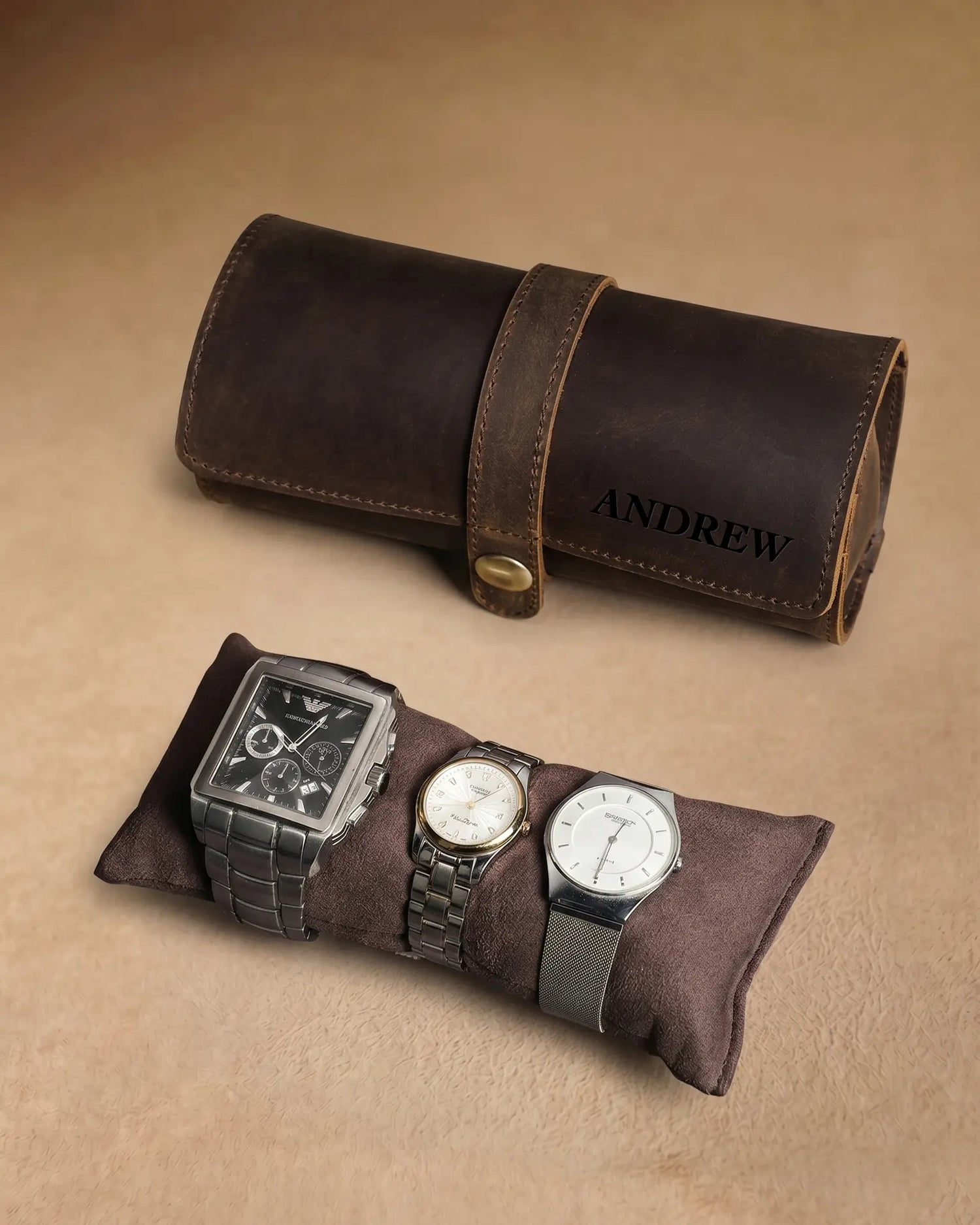

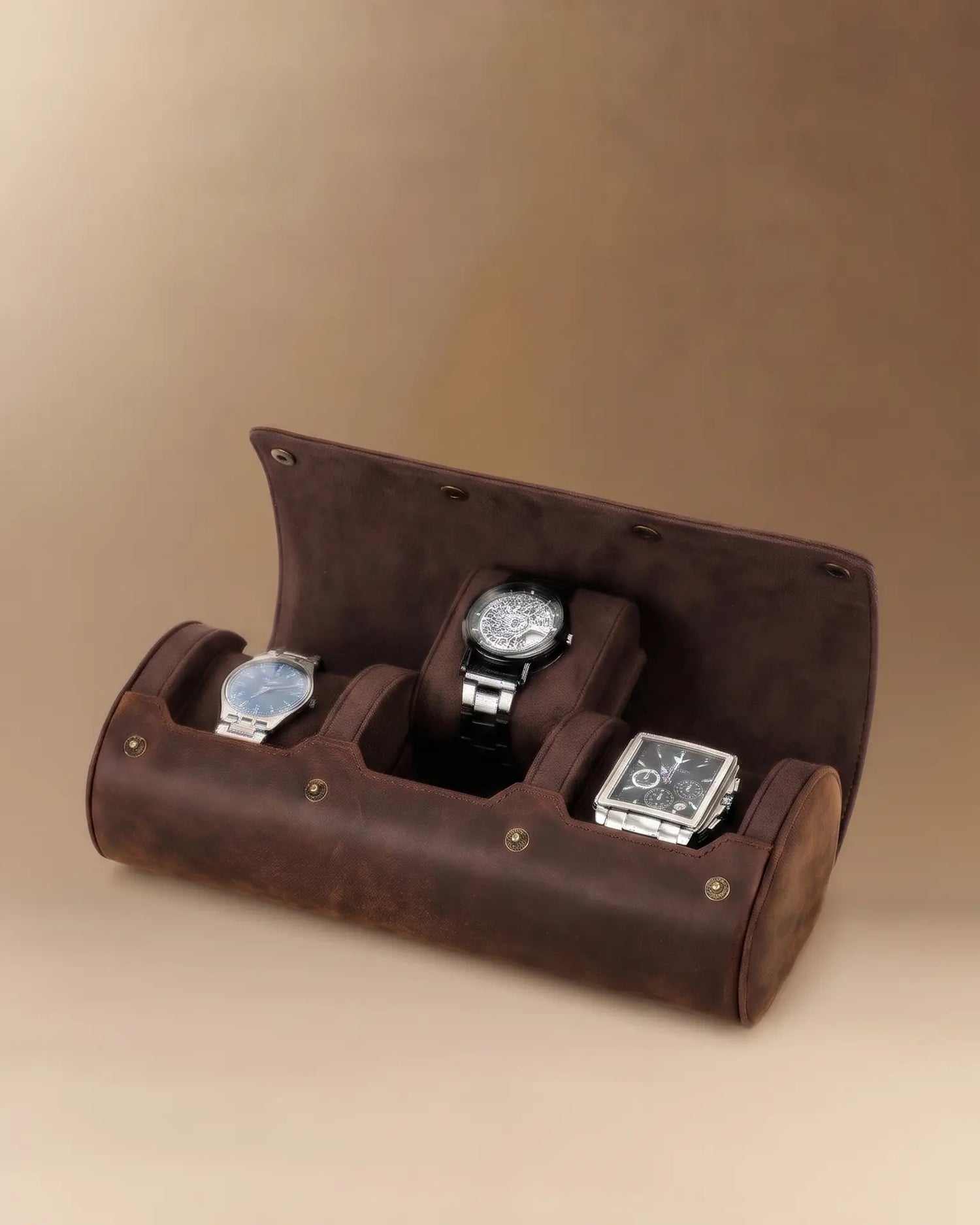
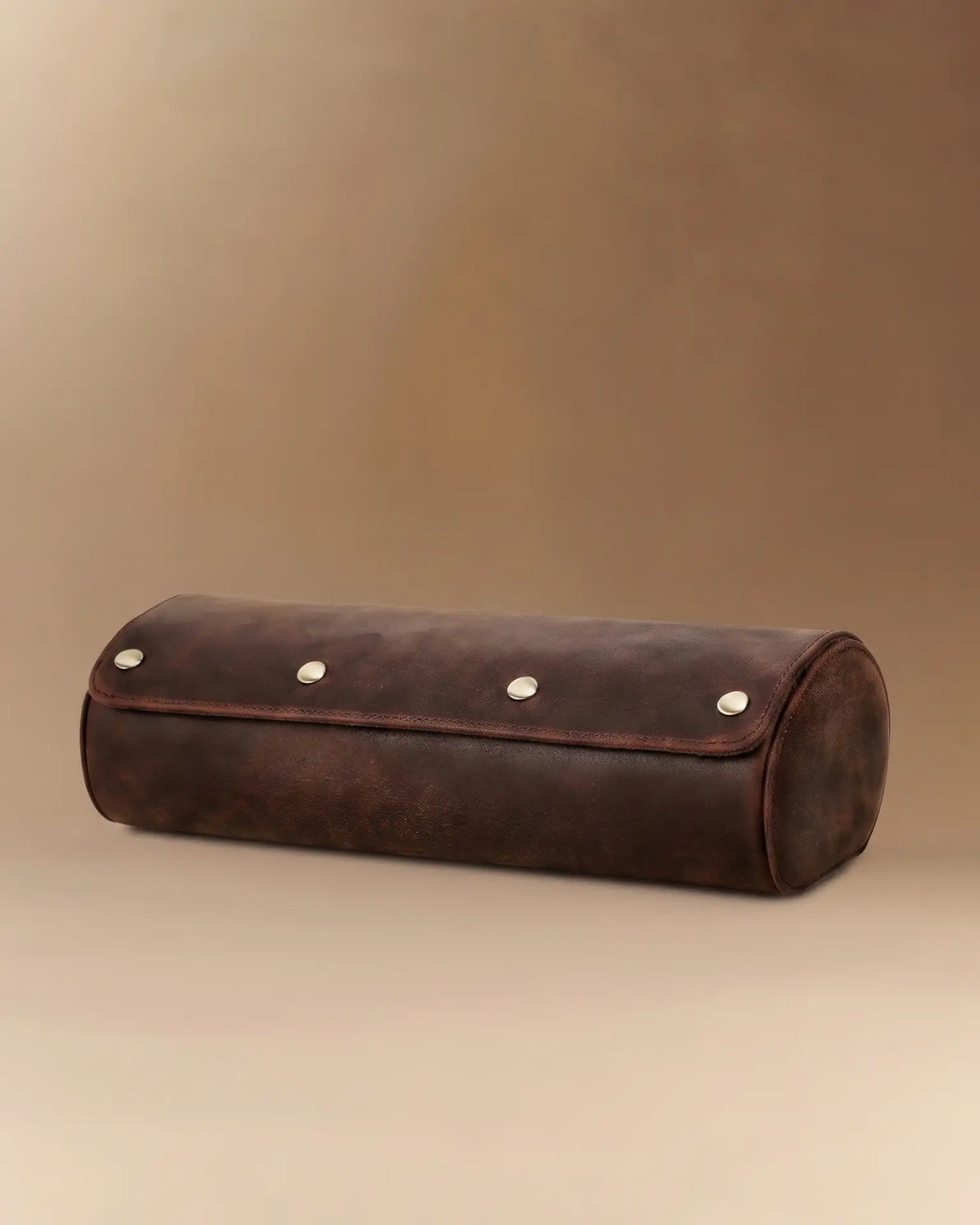
Journey Wrap Triple Watch Roll
Regular price
$59.95 USD
Regular price
Legacy Rivet Triple Watch Roll
Regular price
$119.00 USD
Regular price
$128.00 USD
Sale price
$119.00 USD
Available in
 Dark Brown
 Dark Brown
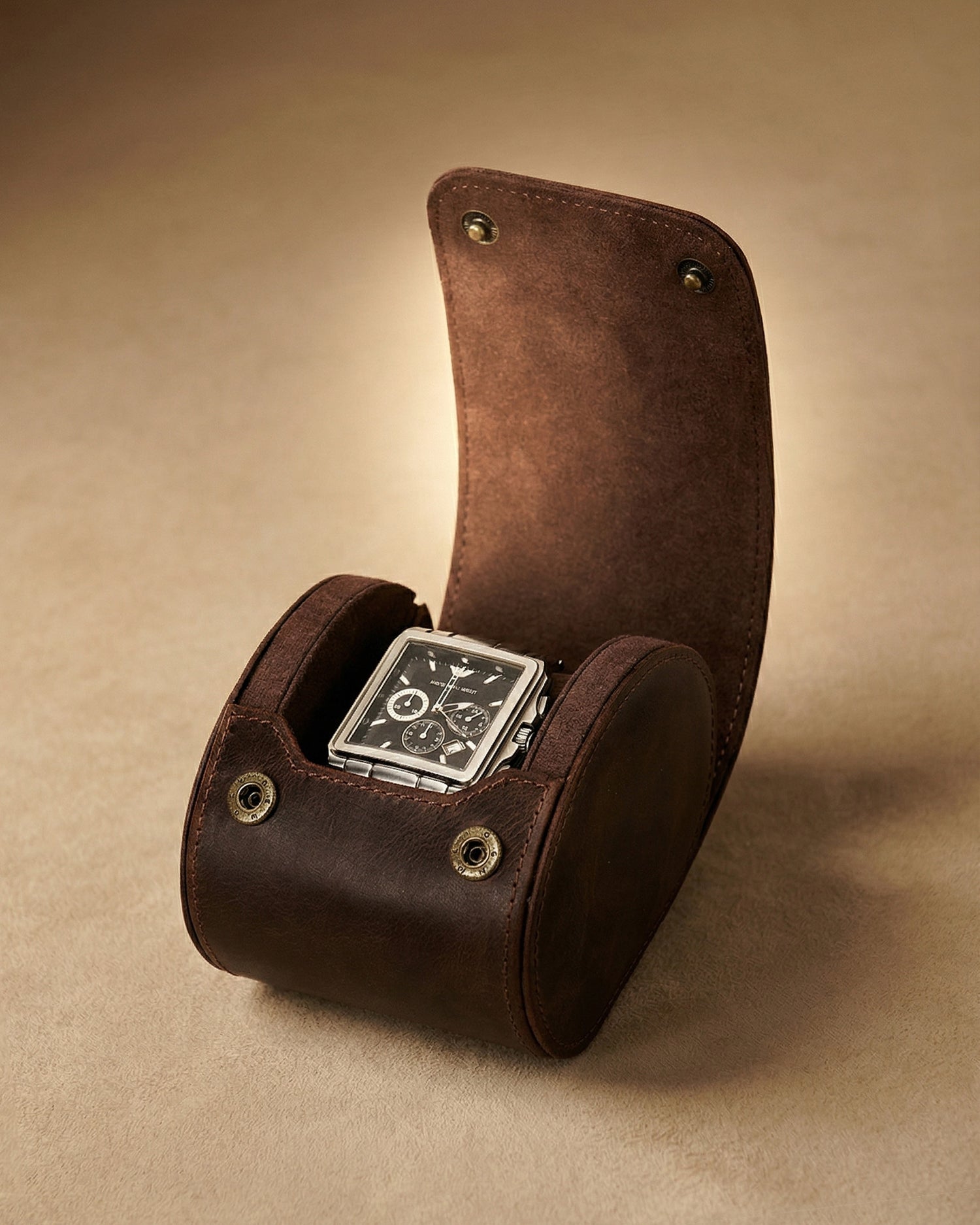
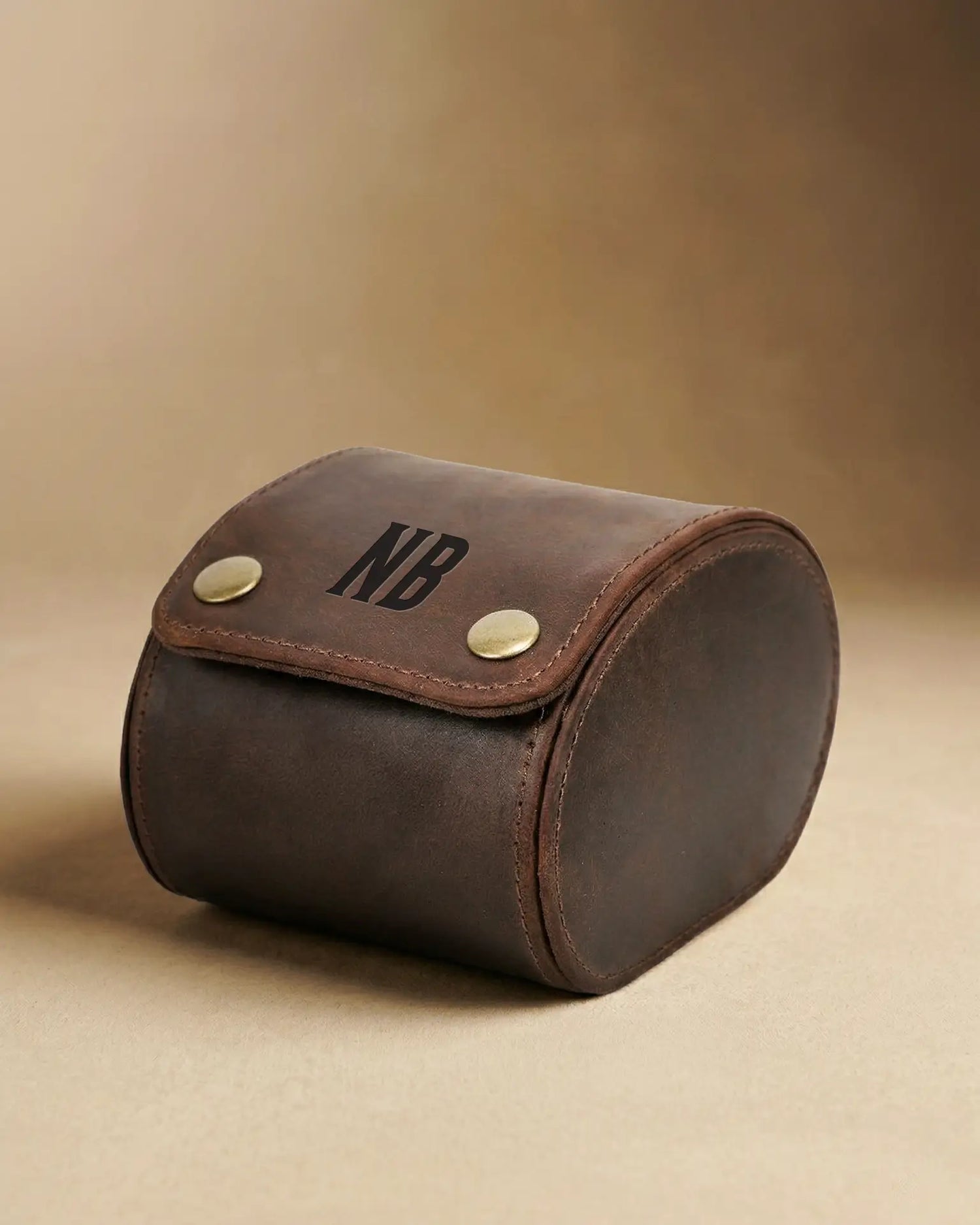
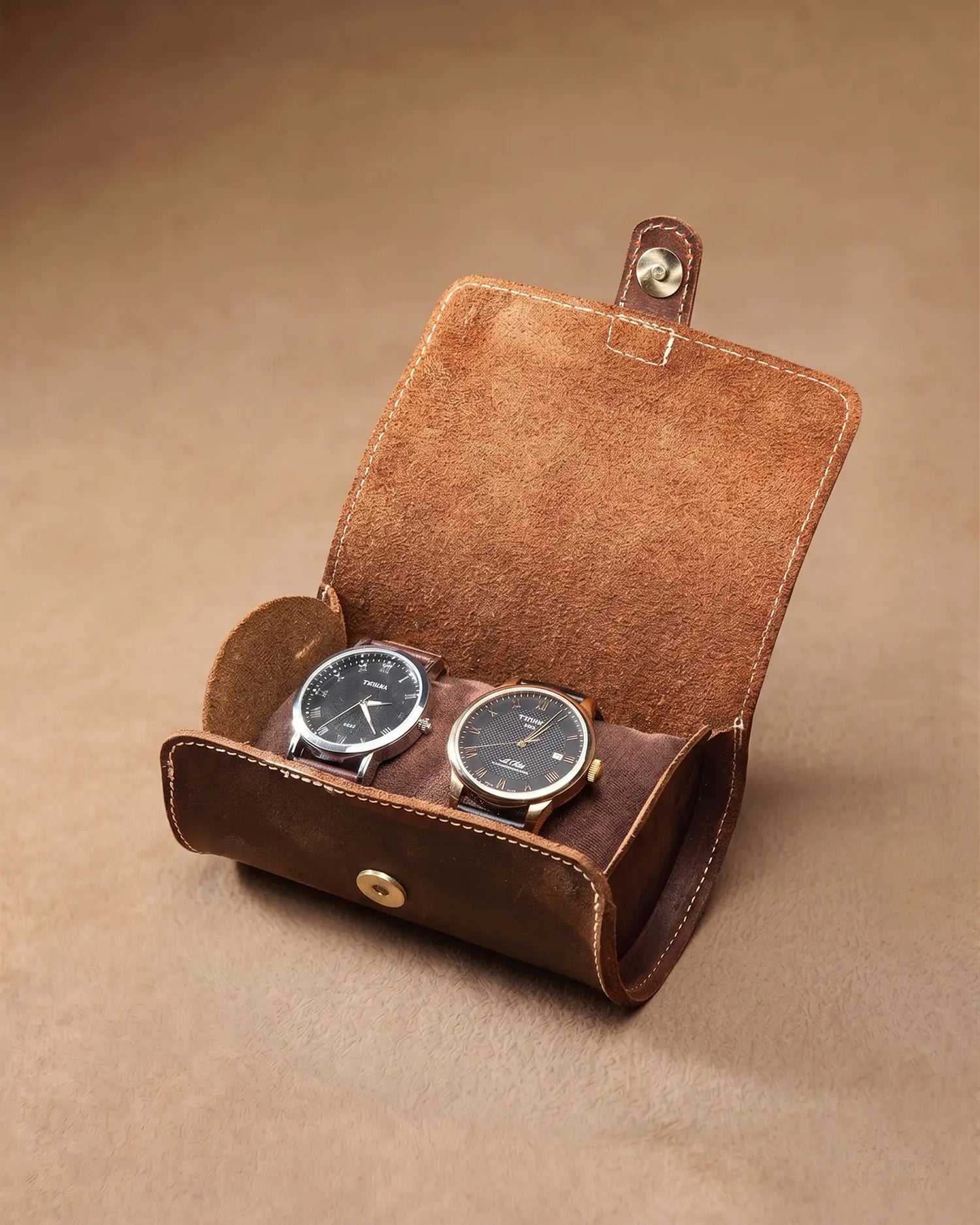
Legacy Rivet Single Watch Roll
Regular price
$79.00 USD
Regular price
$86.00 USD
Sale price
$79.00 USD
Available in
Dark Brown
Dark Brown
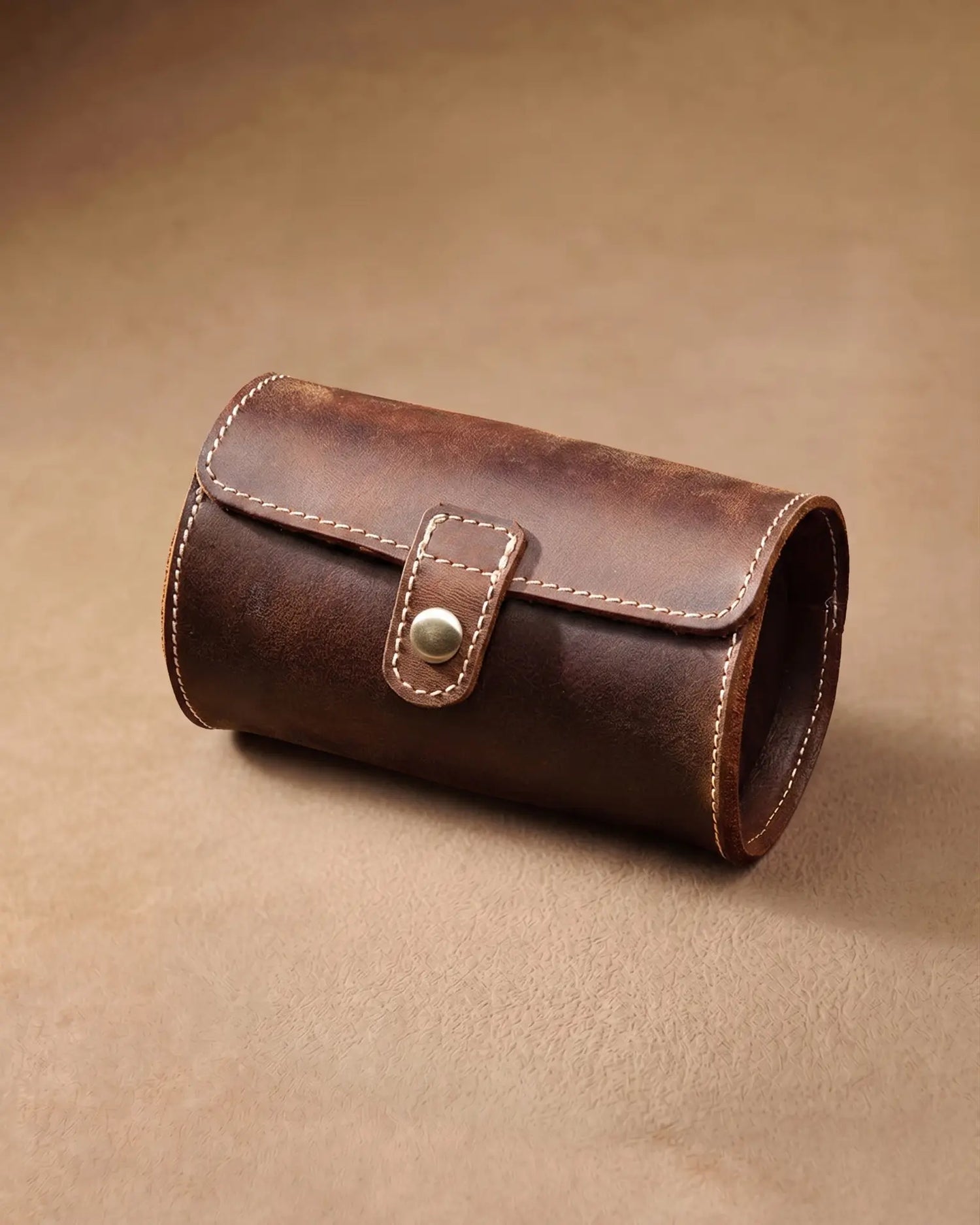
Journey Wrap Double Watch Roll
Regular price
$49.90 USD
Regular price
More Leather Guides
Explore practical guides to choosing, using and caring for leather goods.

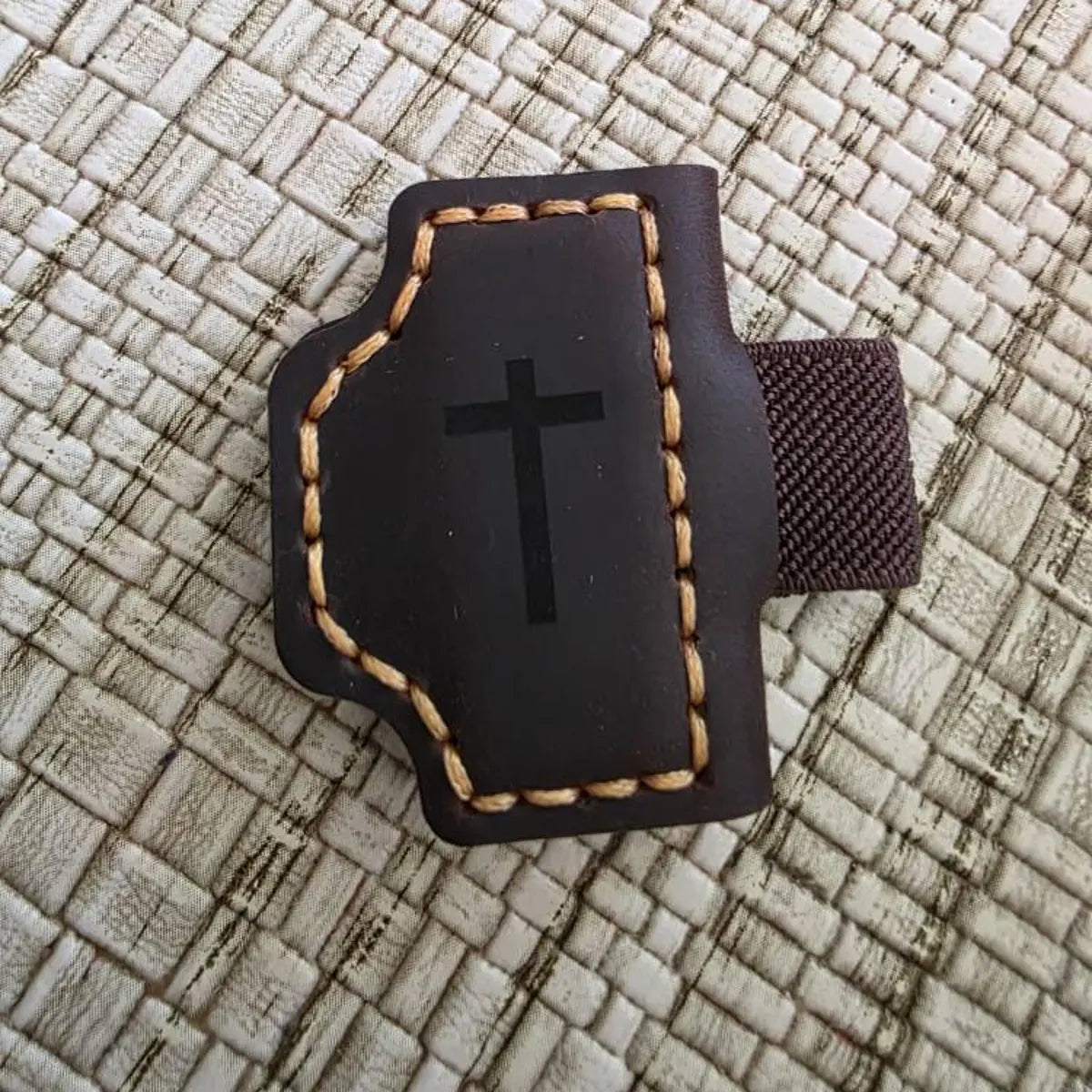
Custom Leather Bookmark Guide: Thickness, Engraving and Magnet Options

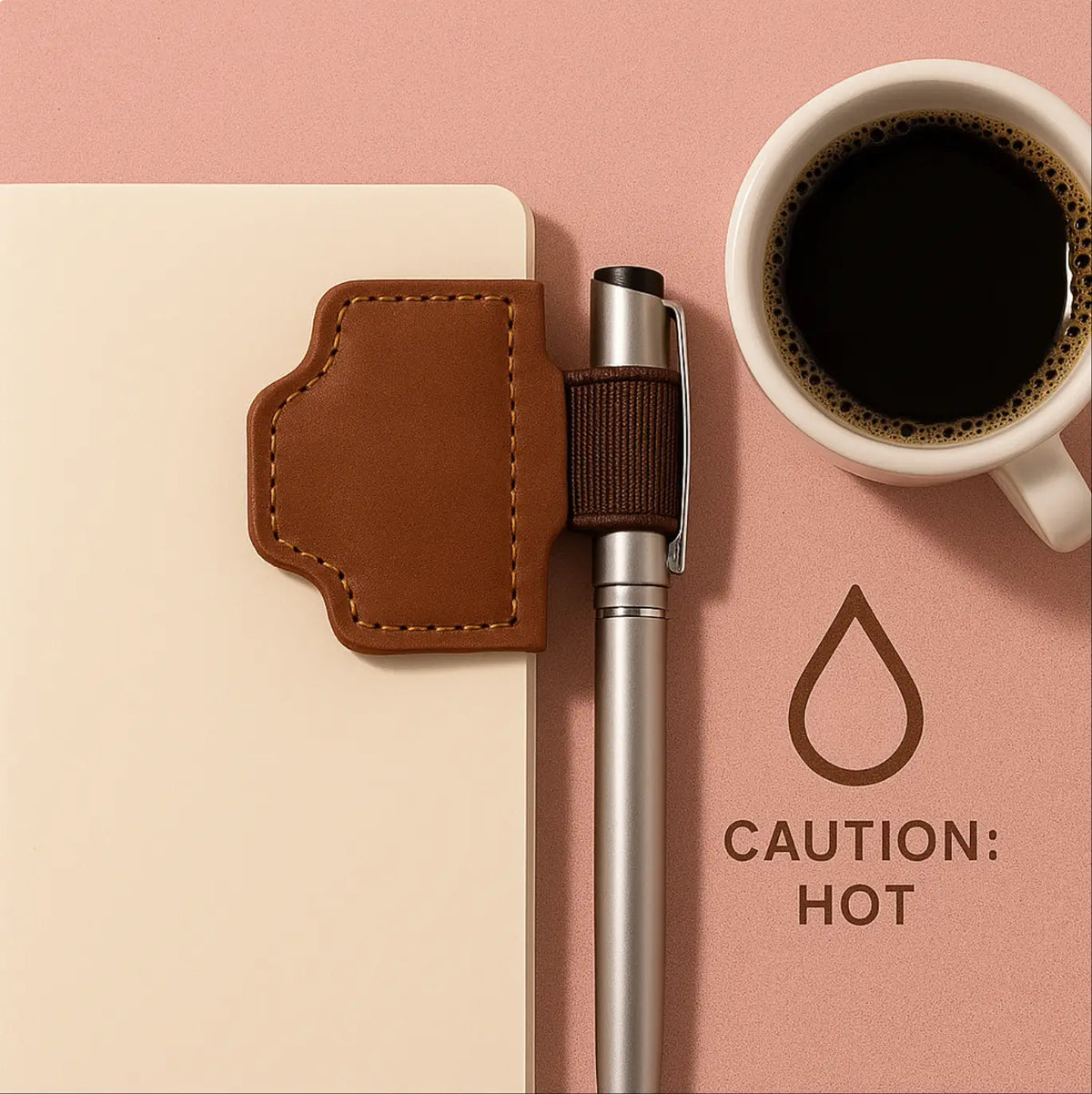
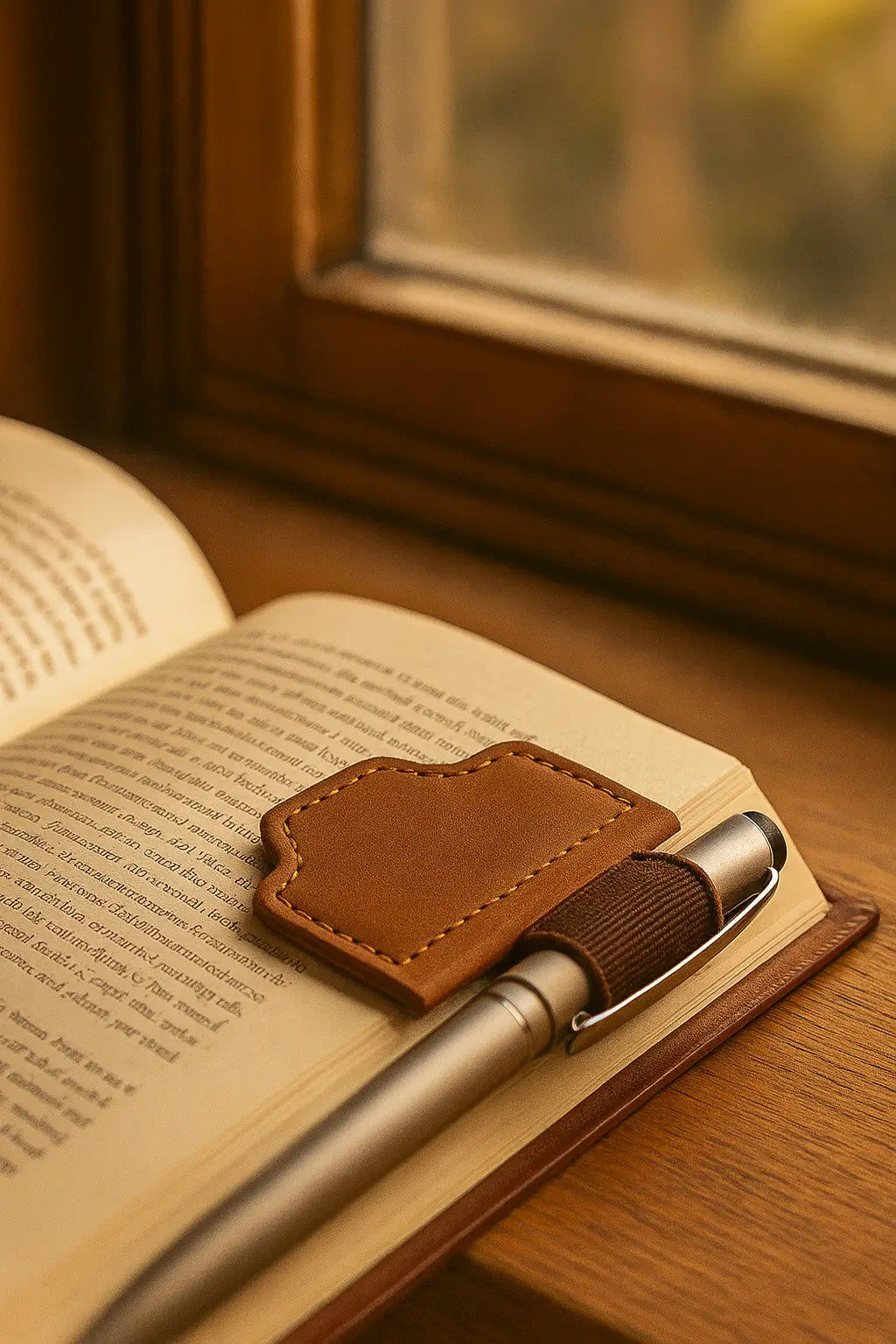
Magnetic Bookmark With Pen Holder: Who It Is For and How to Use It
