
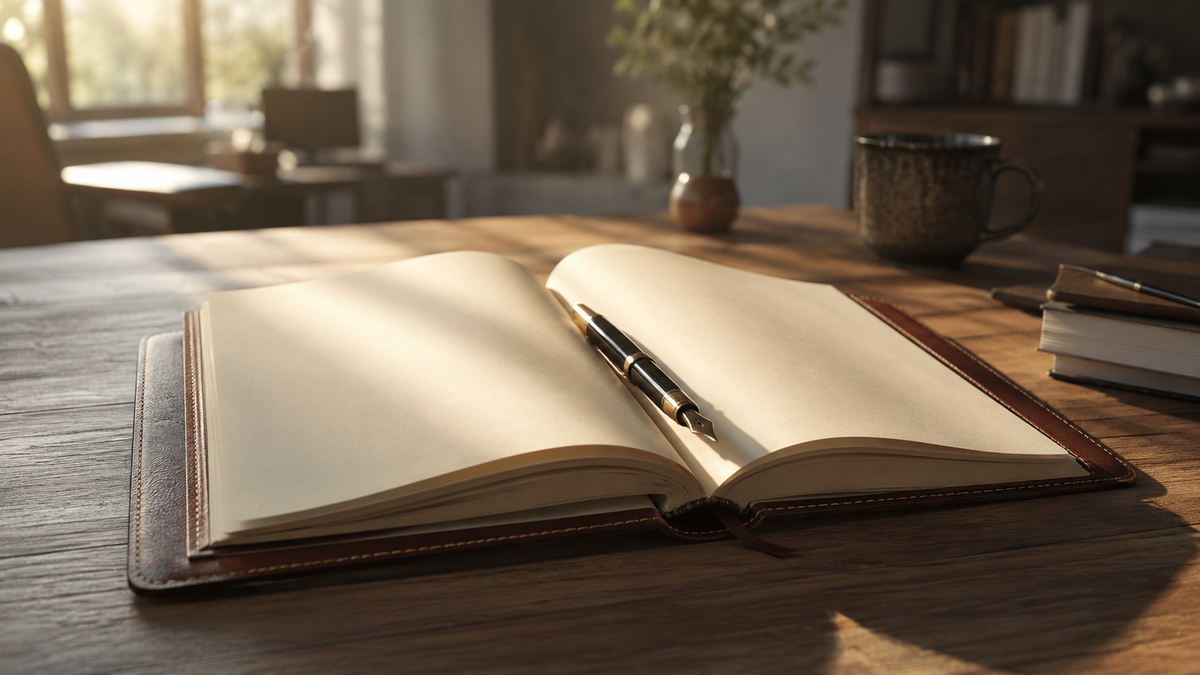
Leather Journals Explained: Leather, Binding, Paper and Use Cases
Six journals compared on published paper weight, binding type and whether the page block is fixed or refillable. Leather grade came last.
By the Editorial Desk · Updated 25 August 2026 · Prices checked 25 August 2026 · ~4,300 words · 17 min read
|
HOW THIS GUIDE IS FUNDED
Store name [REPLACE_WITH_HOMEPAGE_URL] sells leather journals, so treat this as a guide written by a party with an interest. None of the six picks below is ours. They are here because their makers publish enough specification to check, which is the whole point of this comparison. No brand paid for placement. We name competitor products and do not link to them.
|
Our Picks at a Glance
|
BEST FOR FOUNTAIN PENS
|
BEST FOR TRAVEL
|
BEST FOR ARCHIVAL RECORDS
|
|
Galen Leather Notebook A5
 $39
|
TRAVELER'S notebook Regular
 $60
|
Oberon Design Refillable Journal, Large
 From $65.75
|
Every pick in this guide, ranked by how much of its paper specification the maker actually publishes.
|
Pick
|
Construction
|
Paper published
|
Size
|
Price
|
|
Galen Leather Notebook A5
|
Fixed, hand-sewn, veg-tan cover
|
Tomoe River 52 gsm, 400 pages
|
145 × 210 × 20 mm
|
$39
|
|
Moonster Handmade Leather Journal
|
Fixed, hand-stitched Coptic
|
125 gsm recycled cotton, 240 pages, acid-free
|
8 × 6 in
|
Not published on brand site
|
|
TRAVELER'S notebook Regular
|
Refillable, elastic insert system
|
MD paper, 64-page refill; gsm not published
|
Cover approx. 230 × 145 mm
|
$60
|
|
Oberon Design Refillable Journal, Large
|
Refillable, hardbound insert
|
Recycled heavy bond, acid-free, archival, 208 pages
|
Cover 6 × 9 in
|
From $65.75
|
|
Galen Leather Refillable Wrap Cover
|
Refillable wrap, strap closure
|
None. Cover only, takes A5 softcovers
|
22 × 16 × 2.5 cm
|
$49
|
|
Galen Leuchtturm1917 A5 Cover + notebook
|
Cover plus thread-bound notebook
|
80 gsm FSC acid-free, 251 numbered pages
|
Notebook 5.71 × 8.27 in
|
Cover $69, notebook sold separately
|
Two entries here are not journals in the strict sense. The Galen wrap cover and the Leuchtturm1917 cover ship without any paper at all, and they stay in because for a certain buyer the cover is the only part worth paying for. One entry does not publish a price on its own brand site, and we have said so rather than quoting an Amazon figure that changes weekly.
Which Leather Journal Wins?
For most people who write with a fountain pen, the Galen Leather Notebook A5 ($39) is the right buy, because it publishes its paper by name and weight, Tomoe River 52 gsm, and lies completely flat. If the journal will travel, the TRAVELER'S notebook Regular ($60) has a vegetable-tanned cowhide cover and an elastic system that lets you carry three slim refills at once. If the pages have to survive being read in fifty years, the Oberon Design Refillable Journal (from $65.75) ships a hardbound insert on recycled acid-free archival paper and a cover you refill instead of replace.
Damage to a journal is rarely dramatic. It is a glued spine that cracked at page ninety, or a page you can no longer read because the ink went through it.
Paper is the problem. Not the hide, not the stitching, not the embossed tree on the cover. Most journals sold as leather publish nothing at all about the sheet inside, and the ones that do are usually the ones worth buying. Only two picks in this guide name their paper by weight, and both are in the fixed-page group.
Format is the usual first fork in a journal guide. Here it is the second. Whether the maker publishes a paper spec comes first, and the six picks below are grouped by construction.
Pick by use
|
You mainly want to
|
Buy this
|
Why
|
|
Write with wet fountain pen ink
|
Fixed journal with a named paper
|
A gsm number alone will not tell you about feathering
|
|
Travel and collect tickets and maps
|
Refillable cover with a strap or elastic
|
One cover carries several inserts and closes over loose paper
|
|
Keep a record for decades
|
Acid-free archival insert, sewn
|
Paper stability outlives any cover finish
|
|
Sketch and use light washes
|
Heavier cotton paper, Coptic bound
|
Thin paper buckles; a glued spine will not open flat
|
|
Take numbered professional notes
|
Cover plus a numbered thread-bound notebook
|
Indexing matters more than the cover material
|
|
Spend as little as possible on paper
|
Cover only, refill with what you like
|
The cover survives many rounds of cheap inserts
|
How We Judged These Journals
Paper first. This is a desk-researched comparison built on manufacturer-published paper specifications, dimensions and binding descriptions, with prices checked on 25 August 2026. Where a maker does not publish a figure, the card says "Not published" rather than guessing at one.
Paper specification. Whether the maker names the paper, its weight, and whether it is acid-free. A named mill and a gsm figure scored higher than a claim about being fountain pen friendly.
Binding behavior. Whether the journal opens flat without being forced, and whether the page block is sewn or glued. Glued spines fail first and fail worst.
Refill path. What happens when the paper runs out. A fixed journal becomes a finished volume. A refillable cover has to have inserts you can still buy in three years.
Everyday use. Closure security, weight once loaded, and how the journal behaves half-full in a bag.
Every card carries an evidence line naming manufacturer specifications or authorized dealer listings. Marketing adjectives on their own settle nothing.
What Counts as Usable Paper

Trouble starts when a maker will not say what the paper is. Above that, weight bands tell you roughly how the sheet will behave.
People quote gsm. The sheet cares about a second variable, surface sizing, which controls how fast liquid ink soaks into the fibers. Two papers at the same weight can behave completely differently under the same nib. Tomoe River is the standard example, since 52 gsm is thinner than most notebook paper and still resists bleed-through better than plenty of 100 gsm stock.
|
Paper weight
|
Category
|
Behaves like this
|
Implication
|
|
Under 70 gsm
|
Very light
|
Thin, translucent, high page count
|
Sizing decides everything. Ask what the paper is
|
|
70 to 90 gsm
|
Everyday
|
Pencil, ballpoint and gel are safe
|
Ghosting visible from the reverse. Wet ink is a risk
|
|
90 to 120 gsm
|
Fountain pen band
|
More body, less show-through
|
The safest general choice for mixed pens
|
|
120 to 160 gsm
|
Mixed media
|
Takes pressure and light moisture
|
Page count drops fast at the same thickness
|
|
Above 160 gsm
|
Art weight
|
Handles wash and repeated working
|
Bulky. Check it is sized for water-based media
|
The Galen pick sits in the first band and still outperforms most of the third, which is the clearest evidence there is that weight alone is a poor filter. The Moonster pick sits in the fourth. Neither figure means anything without the paper name attached.
Why the Wrong Journal Fails

Four failure modes. All of them structural or chemical.
Bleed-through. Liquid ink passes to the reverse side and takes that page out of service. It is not caused by thin paper on its own. Absorbent, unsized paper does it at any weight, which is why a 52 gsm sheet can beat a 100 gsm one.
Spine failure. Perfect binding holds the block with adhesive along one edge. Open it flat a few hundred times and the glue line cracks, usually somewhere around the middle of the book, and pages start migrating. Sewn signatures spread that stress across many folds instead.
Block separation. The pages stay sewn but the whole block pulls away from the cover, which happens when the block is attached only through a paper hinge. Owners describe the journal as feeling loose long before anything visibly breaks.
Acid yellowing. Paper that is not acid-free browns and embrittles from the edges in. It takes years, which is exactly why nobody catches it at the point of purchase, and it is unrecoverable once the sheet starts flaking.
|
WATCH OUT
Do not treat "premium leather" or "fountain pen friendly" as specifications. Neither phrase is defined by anyone, and both appear on journals that publish no paper weight, no tanning method and no binding type. Ask the seller for those three things. A brand that knows its product answers in one line.
|
Best Fixed-Page Leather Journals
A fixed journal is one complete object. The paper is sewn in, the block is attached to the cover, and when you finish it you shelve it as a finished volume. That construction is the only one where the maker controls the paper, which is why both picks that publish a paper weight are in this group.
BEST FOR FOUNTAIN PENS
1. Galen Leather Notebook A5

The only pick in this guide that names its paper mill, its weight and its page count in the same sentence. Tomoe River 52 gsm, 200 sheets, hand-bound into a vegetable-tanned cow leather cover that opens completely flat. It is also the cheapest fixed journal here, which is not what you would guess from the specification.
|
Cover
|
Vegetable-tanned cow leather
|
|
Binding
|
Hand-bound, traditional sewn technique, completely flat-lay
|
|
Paper
|
Tomoe River 52 gsm white, blank
|
|
Page count
|
200 sheets (400 pages)
|
|
Size
|
145 × 210 × 20 mm (5.70 × 8.26 × 0.8 in)
|
|
Extras
|
Grid and lined guide sheets, blotter, magnetic closure box
|
|
Weight
|
Not published
|
|
Refillable
|
No. Fixed block, though it also fits Galen A5 covers as a refill
|
WHAT WORKS
✓ Names the paper by mill and weight, which almost nobody else does
✓ Tomoe River handles sheening and shading ink better than heavier stock
✓ 400 pages in a 20 mm block, so page density is exceptional
✓ Completely flat-lay, with guide sheets included for blank-page writers
WHAT TO WEIGH
– 52 gsm is thin, and ghosting is visible with wet nibs
– Ink dries slowly on this paper, so left-handed writers should test first
– Blank only in this configuration
– Some owners report the block loosening from the cover late in a 400-page fill
Best for: A fountain pen user who wants one journal to last a year and cares more about ink behavior than about cover hardware.
Compare it against the A5 sewn journal [REPLACE_WITH_PRODUCT_URL] if you want lined pages rather than blank.
$39 Price checked 25 August 2026 Check price at Galen Leather
Evidence: Manufacturer specifications, cross-checked against two authorized dealer listings.
BEST HANDMADE CHARACTER
2. Moonster Handmade Leather Journal

Full-grain buffalo hide, hand-cut, with a hand-stitched Coptic binding that leaves the thread visible along the spine. The paper is the interesting part: 125 gsm cotton milled from garment-industry offcuts, tree-free and acid-free, which is a heavier and more absorbent sheet than anything else in this comparison.
|
Cover
|
Full-grain water buffalo leather, hand-cut, crazy horse finish
|
|
Binding
|
Hand-stitched Coptic, lies flat
|
|
Paper
|
125 gsm recycled cotton, unlined, acid-free and tree-free
|
|
Page count
|
120 sheets (240 pages); 320 and 400-page versions also sold
|
|
Size
|
8 × 6 in, also sold as 7 × 5 in
|
|
Closure
|
Leather wrap strap
|
|
Weight
|
Not published
|
|
Refillable
|
No in this version; the brand sells separate refillable covers
|
WHAT WORKS
✓ Full-grain buffalo hide is named openly, not hidden behind "genuine leather"
✓ Coptic stitching is the most flat-opening binding in this guide
✓ 125 gsm cotton takes pencil and heavy pressure without buckling
✓ Acid-free and tree-free, so the sheet is stable for long storage
WHAT TO WEIGH
– No price on the brand site. Marketplace pricing moves with bundles and size
– Cotton paper is absorbent, so wet fountain pens can feather
– Unlined only in this configuration
– Deckle-style handmade sheets vary in thickness within one book
Best for: Mixed writing and sketching in pencil, fineliner or ballpoint, by someone who wants the object to look handmade rather than machined.
Not published on brand site Price checked 25 August 2026 Sold through marketplace listings
Evidence: Manufacturer specifications and brand collection pages; paper weight confirmed in the maker's own product listings.
|
VERDICT
The Galen wins this group because it names the mill, the weight and the page count, and because 400 pages of 52 gsm in a 20 mm block is a page density nothing else here comes near. Take the Moonster if you want visible hand work, a Coptic spine and heavier cotton paper for mixed use, and accept that you will be checking the price on a marketplace listing rather than a brand page.
|
Best Refillable Leather Covers
The second approach separates the two problems. Buy the leather once, and change the paper as often as you like. The cover outlives four or five page blocks, which changes the math on what a good cover is worth. Two of these three ship with paper. One ships with nothing at all.
BEST FOR TRAVEL
3. TRAVELER'S notebook, Regular Size

A vegetable-tanned cowhide wrap, made in Chiang Mai, with an elastic band running down the spine and a tin clasp holding it. Add connecting bands and one cover carries three slim refills at once, which is why the format survived two decades and spawned an entire refill ecosystem.
|
Cover
|
Vegetable-tanned cowhide, made in Chiang Mai, Thailand
|
|
System
|
Elastic band insert system with tin clasp and wrap band
|
|
Included refill
|
Blank MD paper, 64 pages, saddle-stitched
|
|
Refill size
|
8.3 × 4.3 × 0.15 in
|
|
Cover size
|
Approx. 230 × 145 mm
|
|
Cover weight
|
Approx. 94 g
|
|
Paper weight
|
Not published in gsm; MD paper described as bleed and feather resistant
|
|
Refillable
|
Yes. Large catalogue of planners, grid, sketch and lightweight refills
|
WHAT WORKS
✓ Lightest cover here at about 94 g, so the loaded book stays pocketable
✓ Takes tri-folded A4 paper, tickets and maps inside the cover
✓ Refill range still in production, including sketch and lightweight paper
✓ Untreated cowhide patinas faster than any other cover in this guide
WHAT TO WEIGH
– No published paper weight for MD refills, only a behavior claim
– Slim format at 4.3 in wide, so wide-margin writers will feel cramped
– Untreated leather can transfer color when wet or heavily rubbed
– Three refills at once makes the book thick and awkward to close
Best for: A traveler who wants one cover to carry a diary, a planner and loose paper on the same trip.
$60 Price checked 25 August 2026 Check price at authorized dealers
Evidence: Manufacturer specifications; cover weight and refill dimensions from the brand's own listings, price from an authorized US dealer.
BEST FOR ARCHIVAL RECORDS
4. Oberon Design Refillable Leather Journal, Large

Hand-tooled domestic leather, made in Santa Rosa, California, closed with a cast pewter button and a leather thong. The insert is the reason it is here: a hardbound blank book on recycled heavy bond paper that the maker describes as acid-free and archival, which is a stronger and more checkable claim than acid-free alone.
|
Cover
|
Domestic leather, custom tanned for tooling, hand crafted in California
|
|
Cover size
|
Large 6 × 9 in; Small 5 × 6.875 in
|
|
Insert
|
Hardbound blank book, 5.5 × 8.5 in, 208 pages (Small: 4.25 × 6.25 in, 220 pages)
|
|
Paper
|
Recycled heavy bond, acid-free, archival quality; gsm not published
|
|
Closure
|
Hand-cast pewter button and leather thong
|
|
Weight
|
Large 1.6 lb with book; Small 0.80 lb
|
|
Refillable
|
Yes. Fits standard A5 inserts with a spine of 7/8 in or less
|
|
Extras
|
Lined template sheet for straight writing on blank pages
|
WHAT WORKS
✓ Only insert in this guide described as archival, not merely acid-free
✓ Takes standard A5 notebooks, so refills are easy to source anywhere
✓ Published spine depth limit, which removes the usual refill guesswork
✓ Tooled leather is left less coated, so it takes patina rather than peeling
WHAT TO WEIGH
– Heaviest pick here at 1.6 lb loaded
– Paper weight in gsm is not published, only the archival description
– Blank pages as standard; lined and dotted are separate purchases
– Embossed artwork is decorative by design, which not every desk suits
Best for: A diary or family record that has to stay readable long after the cover has softened.
From $65.75 Price checked 25 August 2026 Check price at Oberon Design
Evidence: Manufacturer specifications; insert dimensions, page counts and loaded weights from the brand's own product pages.
BEST ON A BUDGET
5. Galen Leather Refillable Leather Wrap Journal Cover

No paper at all. A slim vegetable-tanned wrap, hand stitched with waxed polyamide thread, with a leather strap that goes around the whole thing and holds a pen against the spine. Buy it once, then fill it with whatever A5 softcover you feel like, which is the cheapest honest way into a leather journal.
|
Cover
|
100% vegetable-tanned leather, crazy horse and undyed finishes
|
|
Construction
|
Hand stitched with waxed polyamide thread, handmade in Turkey
|
|
Size
|
22 × 16 × 2.5 cm (8.6 × 6.3 × 1 in)
|
|
Closure
|
Wrap-around leather strap, holds a pen
|
|
Paper
|
None supplied. Takes A5 softcover notebooks
|
|
Weight
|
Not published
|
|
Refillable
|
Yes, by design
|
|
Personalization
|
Monogram embossing offered, up to three characters
|
WHAT WORKS
✓ Cheapest route to vegetable-tanned leather in this comparison
✓ Strap closure holds a pen without a separate loop
✓ Published dimensions, so you can check a refill fits before buying
✓ Nothing to outgrow. The cover survives any number of paper changes
WHAT TO WEIGH
– You still have to buy paper, so the real entry price is higher than $49
– Slim by design. It will not close over a thick hardbound insert
– Crazy horse finish scuffs quickly, which is the point but surprises buyers
– No pockets or card slots
Best for: Someone who already knows which notebook they like and wants to stop replacing the cover with it.
$49 Price checked 25 August 2026 Check price at Galen Leather
Evidence: Manufacturer specifications; dimensions and material confirmed on the brand product page and an authorized European dealer listing.
|
VERDICT
The TRAVELER'S notebook takes this group on the insert ecosystem, since almost no other cover has that many refill formats still in production twenty years on. Oberon is the better buy when the record matters more than the trip, because the included insert is the only one here described as archival. The Galen wrap is the honest budget answer: no paper, no pretense, and a vegetable-tanned cover at $49 that will outlast whatever you put inside it.
|
Best Cover-Plus-Notebook Systems
The third approach treats the notebook as the product and the leather as a jacket for it. You lose the handmade look entirely and gain something no handmade journal in this guide offers: numbered pages, a printed index and a paper spec you can look up.
BEST FOR PROFESSIONAL RECORDS
6. Galen Leather Leuchtturm1917 A5 Cover, with the Leuchtturm1917 Medium notebook

A vegetable-tanned cover cut to one specific notebook, which sounds limiting until you look at what that notebook publishes. Leuchtturm1917 states the weight, the certification, the page count and the binding type, and every page is numbered with a blank table of contents at the front. For meeting notes and project records, indexing beats texture.
|
Cover
|
Vegetable-tanned leather, cut for the Leuchtturm1917 A5 hardcover
|
|
Notebook paper
|
80 gsm FSC-certified, acid-free, ink-proof
|
|
Page count
|
251 numbered pages, 8 perforated and detachable sheets
|
|
Binding
|
Thread-bound, opens flat
|
|
Notebook size
|
5.71 × 8.27 in (145 × 210 mm)
|
|
Notebook weight
|
423 g (0.93 lb)
|
|
Extras
|
Blank table of contents, two page markers, gusseted pocket, elastic band
|
|
Refillable
|
Yes. Cover accepts each new Leuchtturm1917 A5 hardcover
|
WHAT WORKS
✓ Full published paper spec: weight, certification, acid-free and ink-proof
✓ Numbered pages and an index, which nothing else in this guide offers
✓ Thread-bound and opens flat, so it is not a glued spine in disguise
✓ Replacement notebooks are stocked everywhere, indefinitely
WHAT TO WEIGH
– Two purchases, and the notebook price is not part of the $69 cover
– 80 gsm is the lightest of the standard writing bands; very wet nibs still ghost
– Locked to one notebook size, so a format change means a new cover
– The paper block is not leather-bound. The leather is a jacket
Best for: Client notes, project records and anything you will need to find again by page number.
Cover $69 Price checked 25 August 2026 Notebook sold separately
Evidence: Manufacturer specifications from both makers; paper weight, page count, dimensions and notebook weight from the Leuchtturm1917 product pages.
|
VERDICT
This is the pick for people who would rather have a searchable record than a beautiful one. Nothing else here publishes a paper certification, and nothing else numbers its pages. The catch is honest and worth repeating: you are buying a cover and a notebook, not a leather-bound book, and the total lands above the Oberon once both parts are in the basket.
|
Paper Check: The Two Minutes That Prevent a Return

Paper is the weakest part of almost every journal guide online. A journal can use superb leather and still be the wrong purchase because the sheet cannot take your ink. Test with the pen you actually own.
-
Load the pen you use most, with the ink you use most. Not your neatest pen. Your usual one.
-
Write four lines on a back page, the way you normally write, without slowing down.
-
Wait sixty seconds, then drag a fingertip across it. If it smears, the paper is holding ink on the surface and you will smudge your own work.
-
Turn the page over. Ghosting you can see through is fine. Ink you can feel or read clearly is bleed-through, and that page is now single-sided.
-
Check the line edges with the page tilted to the light. Fuzzy edges spreading into the fibers is feathering, and no cover fixes it.
-
Open the journal flat at the middle and let go. If it closes itself, you will be holding it open for every entry you ever write.
|
Measure
|
Take it from
|
Compare against
|
|
Paper weight
|
The maker's published gsm
|
Your wettest pen, not an average
|
|
Paper name
|
The product page, not the review
|
Whether the mill is named at all
|
|
Binding type
|
Product description
|
Sewn or Coptic, never glued alone
|
|
Spine depth
|
Refillable covers only
|
The insert you plan to use
|
|
Page count
|
Published figure
|
How long you want one volume to last
|
|
Loaded weight
|
Published figure
|
The bag you actually carry
|
|
TIP
Keep your test line in a note on your phone: pen, ink, and which papers passed. Ours reads "broad steel nib, wet ink, fails below 80 gsm unsized." It has ruled out more journals than any other spec.
|
Construction Details That Matter More Than Leather Grade
Leather decides how the journal looks in year five. Construction decides whether it is still in one piece by then. Different questions.
|
Feature
|
What it actually does
|
What to check
|
|
Binding type
|
Holds the block together under repeated opening
|
Sewn or Coptic beats glued, every time
|
|
Block attachment
|
Keeps the pages joined to the cover
|
Ask whether it is stitched through or hinged on paper
|
|
Lay-flat behavior
|
Decides whether you hold the book or write in it
|
Open it at the middle and let go
|
|
Acid-free paper
|
Predicts whether the record survives decades
|
Acid-free is a floor. Archival is the stronger claim
|
|
Edge finish
|
Stops the cover fraying at the corners
|
Burnished, folded or painted, never raw and loose
|
|
Closure
|
Keeps the book shut in a bag
|
Test it loaded, never empty
|
Permanence is the spec that separates a good archival claim from a marketing one. ISO 9706 sets requirements for permanent document paper in terms of tear strength, alkali reserve, oxidizable content and pH, so a maker quoting the standard is telling you something checkable. A maker promising paper that lasts forever is not. Only one pick in this guide, the Oberon insert, is described as archival rather than merely acid-free.
Which Materials Are Worth Paying For
Leather is a loose word on a product page. The Leather Working Group defines full grain as leather that has kept its entire grain with no surface removed by corrective mechanical treatment, and corrected grain as leather where the grain has been partly buffed away and refinished. Split leather comes from a lower layer created when a hide is divided horizontally. Genuine leather is none of those. It confirms real leather is present and says nothing about which layer or how it was prepared.
Tanning is checkable too. The Canadian Conservation Institute identifies vegetable-tanned goatskin, calfskin, sheepskin and pigskin as the principal leathers used for bookbindings, and notes that vegetable-tanned leather holds impressions from decorative tooling. Four of the six picks here name vegetable tanning openly. That is not a coincidence, and it is a reasonable filter on its own.
Crazy horse and pull-up finishes hide scuffs better than smooth leather and darken faster where your hand rests. Interior details matter more than buyers expect. On a fixed journal, check how the block is attached. On a refillable cover, check the published spine depth, because a cover that grips a 20 mm block will fight a 25 mm one.
What You Should Expect to Pay
|
Tier
|
Typical price
|
What you get
|
Watch out for
|
|
Entry
|
Under $30
|
Bonded or PU covers, glued spines, unnamed paper
|
Coating cracks at the fold within a year
|
|
Mid
|
$30 to $70
|
Real hide, sewn or Coptic binding, published paper on the better ones
|
Paper still unnamed on plenty of listings
|
|
Upper mid
|
$70 to $130
|
Tooled or hand-stitched covers, archival inserts, refill systems
|
Paying for hardware and artwork, not paper
|
|
Premium
|
$130 plus
|
Zip folios, compendiums, bespoke sizing and personalization
|
Branding priced above function
|
A $69 cover does not automatically write better than a $39 journal. In this guide the $39 Galen publishes a fuller paper specification than anything above it, and the $49 wrap cover publishes no paper specification because it contains no paper. Specifications decide performance. Price decides finish.
Fixed Journal vs Refillable Cover vs Cover Plus Notebook
|
|
Fixed journal
|
Refillable cover
|
Cover plus notebook
|
|
Who controls the paper
|
The maker
|
You do, insert by insert
|
The notebook brand
|
|
Paper spec published
|
Sometimes, and best when it is
|
Not applicable
|
Almost always
|
|
When it is full
|
Shelve it as a finished volume
|
Swap the insert, keep the cover
|
Swap the notebook, keep the cover
|
|
Best for
|
Diaries, sketchbooks, permanent records
|
Travel, planners, multiple projects
|
Numbered professional records
|
|
Weak point
|
You are stuck with the paper choice
|
Insert sizes can be discontinued
|
It is not a leather-bound book
|
|
Entry cost
|
One purchase
|
Cover plus paper
|
Cover plus notebook, ongoing
|
How to Choose in Seven Steps
-
Name the pen you write with most. That, not your taste in leather, is the brief.
-
Filter to journals that publish a paper name or a gsm figure. Silence is an answer.
-
Decide fixed or refillable by asking what happens when it is full. Shelve it, or refill it.
-
Check the binding word for word. Sewn, Coptic and thread-bound are fine. Glued alone is not.
-
Match paper weight to the medium, then check the surface. Sizing decides feathering, weight does not.
-
Choose the size you will actually fill. A5 suits most people; A4 mostly stays on a desk.
-
Inspect the stress points last: edge finish, closure, and how the block joins the cover.
How to Carry a Leather Journal Without Wrecking It

-
Spine inward against the flat side of a bag, not spine down in a side pocket where it takes every knock.
-
Never wedge it under a laptop. Sustained pressure distorts the cover and crushes a sewn spine out of shape.
-
Loose tickets and cards go in a pocket or an insert, not between random pages, because they leave a permanent bulge.
-
Refillable covers travel best with two inserts, not four. The strap stops closing flat past that.
-
Keep it out of the outer pocket in rain. Untreated vegetable-tanned leather takes water marks quickly and can transfer color.
-
Looking After a Leather Journal
Leather needs far less treatment than most care advice suggests, and the standard advice on leather-bound books is now the opposite of what it was.
-
Dust with a soft dry cloth. Damp cleaning only if the maker permits it, and test on a hidden area first.
-
Do not oil a leather-bound book on a schedule. The Library of Congress states that leather dressings are no longer considered best practice in the conservation of leather-bound books and advises against oiling or dressing them with oils or waxes of any sort.
-
A modern journal cover in daily use is a different case. If it feels dry, a thin layer of a conditioner the maker recommends is reasonable. Thin, and only when needed.
-
If it gets wet, blot rather than rub, dry at room temperature, and keep it away from radiators and hair dryers.
-
Store cool, dry and out of direct sun. The Canadian Conservation Institute treats books as objects designed to move, which is exactly why shelf pressure and unstable conditions do slow damage.
-
Let the patina happen. Darkened edges and marks where your hand rests are aging, not failure.
Six Mistakes We See Most Often
-
Buying the cover and never checking the paper. It is the part you touch every day.
-
Reading "genuine leather" as a quality mark. It confirms real hide is present and nothing else.
-
Chasing the highest gsm available. Sizing beats weight, and heavier paper costs you page count.
-
Buying refillable without checking insert availability. An unusual size becomes a problem on the day the first insert runs out.
-
Oiling a leather journal because an old care guide said to. Current conservation guidance says otherwise.
-
Choosing a size that impresses rather than one you will fill. A4 is superb on a desk and tiring in a bag.
Glossary: What the Spec Sheet Means
|
Term
|
What it means
|
|
GSM
|
Grams per square meter. Paper weight, not paper quality.
|
|
Sizing
|
Surface treatment controlling how fast paper absorbs liquid ink.
|
|
Feathering
|
Ink spreading sideways along the fibers, widening the written line.
|
|
Ghosting
|
Writing visible from the reverse side without ink passing through.
|
|
Bleed-through
|
Ink actually reaching the reverse side and taking that page out of use.
|
|
Signature
|
A folded group of sheets sewn as one unit inside the book block.
|
|
Coptic binding
|
Exposed chain stitching linking signatures directly to the cover.
|
|
Paring
|
Thinning leather at joints and turn-ins so the book still opens easily.
|
|
Alkali reserve
|
Buffering compound in paper that neutralizes acid over time.
|
|
Patina
|
The color and texture change natural leather develops with handling and light.
|
Key Takeaways
-
The published paper specification, not the leather grade, is the number that decides fit.
-
Only two picks here name their paper by mill and weight, and both are fixed-page journals.
-
Sewn, Coptic and thread-bound spines survive. Glued spines fail first, usually near the middle of the book.
-
Acid-free is the floor. Archival is the stronger claim, and only the Oberon insert makes it.
-
Genuine leather is a trade term, not a grade. Full grain, corrected grain and split are the defined ones.
-
Price does not predict paper. The $39 pick publishes more than anything above it in this guide.
-
Routine oiling of leather-bound books is no longer recommended practice.
Final Word: Paper First, Leather Last
The best leather journal is the one whose paper takes your ink and whose spine stays open while you write in it. Not the most expensive one, and not the one with the most convincing story on the product page.
Name your pen. Filter on published paper. Treat silence about the sheet as information, because a maker who will not tell you what the paper is has usually not chosen it carefully. One specification settles almost every return in this category, and it takes two minutes to check.
Full specifications for our own leather journals built for daily writing [REPLACE_WITH_CATEGORY_URL] sit on the collection page, with paper weight and binding type listed on every product. Prices checked 25 August 2026.
Frequently Asked Questions
What Are Leather Journals Used For?
Leather journals are used for personal writing, diaries, travel records, work notes, sketching, planning and study. The cover mostly supplies protection and feel. Paper and binding decide what the journal is genuinely good at. Lined pages suit daily reflection and meeting notes, blank pages suit drawing, and dotted or grid pages support trackers and diagrams. Travelers often prefer refillable designs because inserts change without replacing the cover, while artists need heavier sheets and a spine that opens flat.
Practical tip: Decide what will go on the pages before choosing a cover style, because paper and binding affect daily usability far more than decoration.
How Do You Bind a Journal With Leather?
Most leather journals are made by folding paper into groups called signatures, sewing those groups together, then attaching the block to a leather cover or to leather-covered boards. The method changes with the style. A Coptic journal links sections with visible stitching along the spine. Traditional case bindings use boards, sewn sections, adhesive, hinges and leather pared thin around joints and turn-ins so the finished book still opens easily. Binders control thickness by paring, not by one fixed measurement.
Practical tip: Practice the sewing and cover structure on inexpensive material first, because paring mistakes in good bookbinding leather cannot be undone.
What Are the Different Types of Leather Journals?
Leather journals group by construction and by use. Common formats include fixed-page bound journals, refillable leather covers, travel journals, writing diaries, sketchbooks, professional notebooks and handmade exposed-stitch designs. The leather descriptions differ too. Full grain keeps the natural grain surface intact. Corrected grain has had part of that surface buffed away and refinished. Split leather comes from a lower layer created when a hide is divided. A name such as genuine leather journal does not tell you which of those you are buying.
Practical tip: Check the journal format and the exact leather description separately, since one product title rarely covers both accurately.
What Are the Four Main Types of Journals?
No industry rule divides journals into exactly four types. For buying purposes, four practical groups work: personal journals, work and learning journals, travel journals and creative journals. Personal covers diaries, gratitude writing and reflection. Work and learning covers meeting notes, study records, goals and project planning. Travel covers records made on the move, often with pockets or replaceable inserts. Creative covers sketchbooks, art journals and idea books. Many leather journals sit across two or three groups.
Practical tip: Treat the four categories as a starting filter, then choose paper, binding and size around your specific writing or drawing habits.
What Is the Recommended Thickness for a Leather Journal?
There is no single recommended leather thickness. The right figure depends on whether the leather wraps rigid boards, forms a flexible standalone cover, bends at a spine or needs paring around joints and edges. Traditional bookbinding often uses relatively thin leather, because excess thickness stiffens joints and produces bulky turn-ins, and binders pare selected areas thinner still. A soft wrap cover is a different structure altogether and can use heavier leather without hurting how the journal opens.
Practical tip: Ask for the finished leather thickness together with the binding design, because a thickness figure alone tells you nothing about quality.
What Leather Is Good for Journals?
Full grain and well-chosen vegetable-tanned leather are strong picks when natural texture, long service and visible aging matter. Goatskin and calfskin both have a long record in bookbinding. The Canadian Conservation Institute lists vegetable-tanned goatskin, calfskin, sheepskin and pigskin among the principal bookbinding leathers. That does not make traditional binding leather compulsory. Softer chrome-tanned hide, corrected grain and synthetic alternatives all make sense when flexibility, consistent color, price or animal-free material outranks patina.
Practical tip: Match the leather to the journal construction and expected use rather than assuming the most expensive hide is automatically right.
What Kind of Leather Is Used for Book Binding?
Traditional leather bookbinding commonly uses vegetable-tanned goatskin, calfskin, sheepskin and pigskin, each with different grain, strength and finishing behavior. The Canadian Conservation Institute identifies these as principal bookbinding leathers and notes that vegetable-tanned leather holds impressions from decorative tooling. Goatskin is favored for fine bindings because it pairs strength with flexibility, while calfskin gives a smoother and more formal surface. The leather is usually pared in selected areas so it turns around edges and moves at the joints.
Practical tip: If you want traditional construction, buy from a seller who names the animal skin, the tanning method and the binding structure, not just real leather.
How Do You Care for a Leather-Bound Journal?
Keep a leather-bound journal clean, dry, away from strong heat and out of prolonged harsh light. Prevention beats treatment. The Library of Congress states that leather dressings are no longer considered best practice in the conservation of leather-bound books and advises against oiling or dressing them with oils or waxes of any sort. Stable storage does more good than any product you can apply. Dust with a soft dry cloth and keep the journal away from radiators and damp cupboards.
Practical tip: Follow the maker's care instructions where they exist, and never speed up drying with a hair dryer, a radiator or direct sun.
Sources
- Leather Working Group. 74 Need-to-Know Leather Industry Terms. 2026. Definitions of full grain, corrected grain and split leather used throughout the materials section, and the basis for treating genuine leather as a trade description rather than a grade.
- Canadian Conservation Institute. Caring for Leather, Skin and Fur. Carole Dignard and Janet Mason. Species differences, grain surfaces, vegetable and mineral tanning, and the identification of vegetable-tanned goatskin, calfskin, sheepskin and pigskin as principal bookbinding leathers.
- Canadian Conservation Institute. Basic Care of Books, CCI Notes 11/7. Revised 2022. The framing of books as objects of use subject to structural stress, and the storage guidance used in the care section.
- Library of Congress. Preserving Your Books: Repairing Your Books. The statement that leather dressings are no longer considered best practice for leather-bound books, used in the care section and in the eighth FAQ.
- International Organization for Standardization. ISO 9706:2025, Information and Documentation, Paper for Documents, Requirements for Permanence. The distinction drawn between an acid-free claim and a checkable permanence standard covering tear strength, alkali reserve, oxidizable content and pH.
- Guild of Book Workers. Standards of Excellence Presentation Archive. Leather paring and goatskin covering in hand bookbinding, used to explain why binders thin leather at joints rather than working to one fixed thickness.




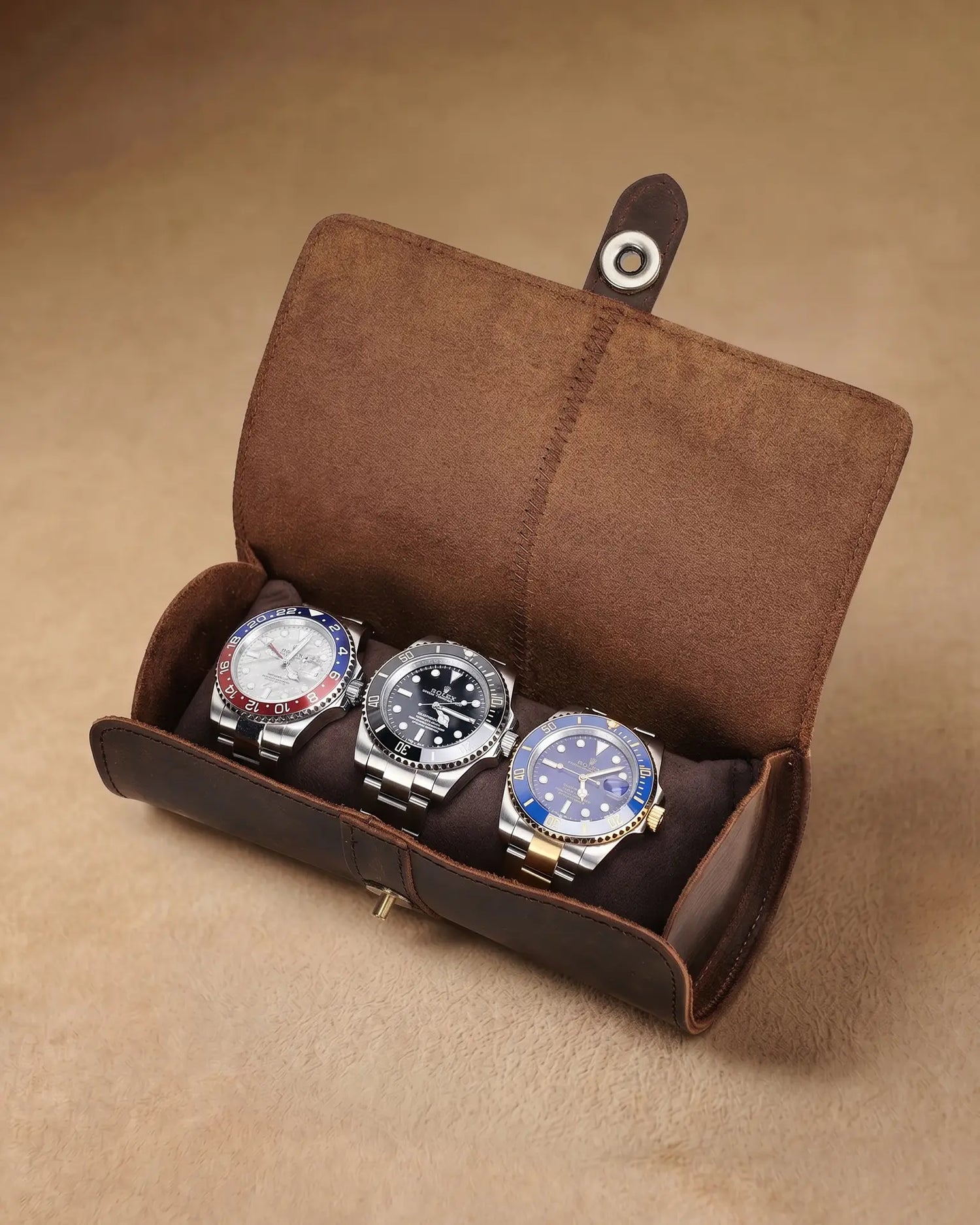
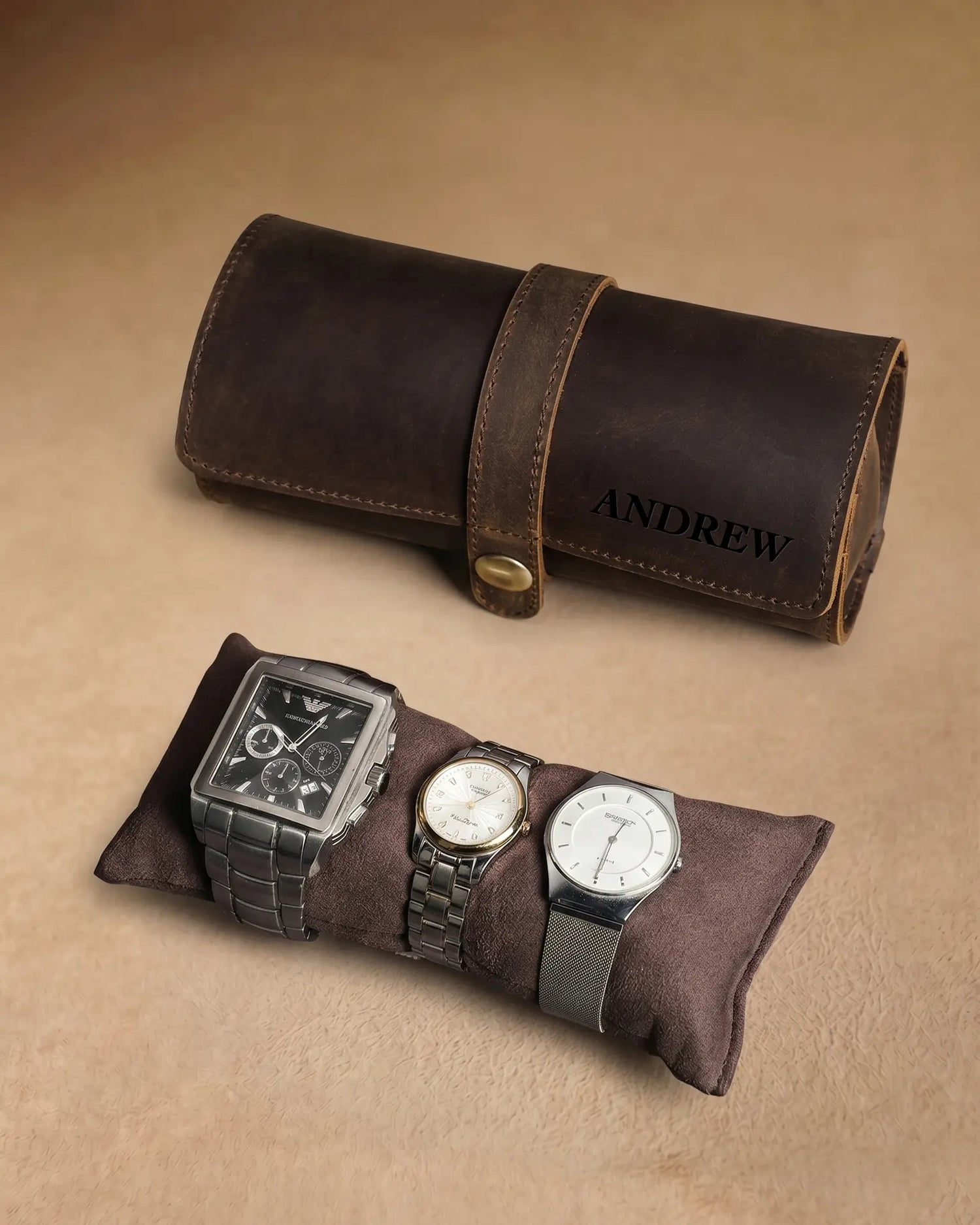

Journey Wrap Triple Watch Roll
Regular price
$59.95 USD
Regular price
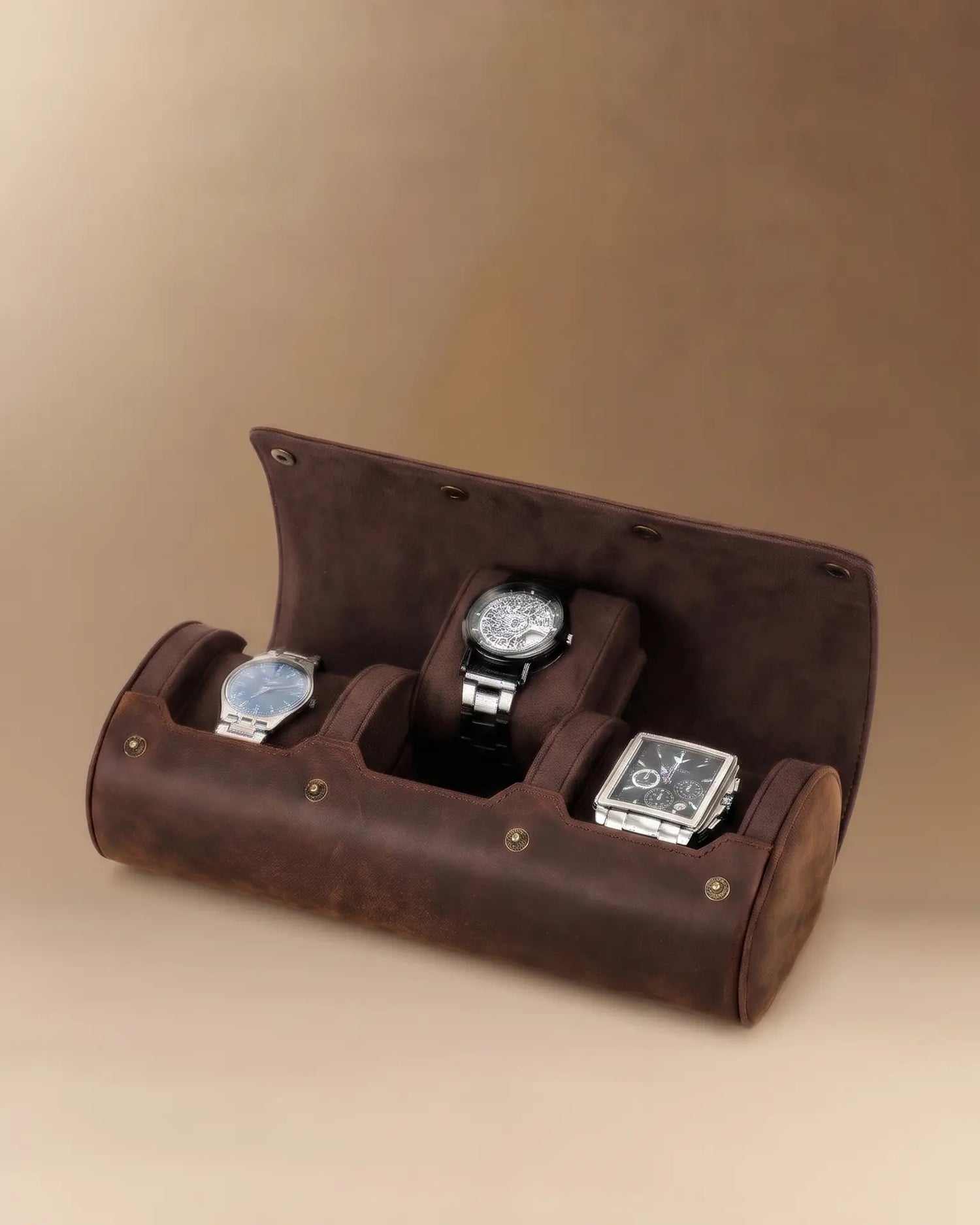
Legacy Rivet Triple Watch Roll
Regular price
$119.00 USD
Regular price
$128.00 USD
Sale price
$119.00 USD
Available in
 Dark Brown
 Dark Brown
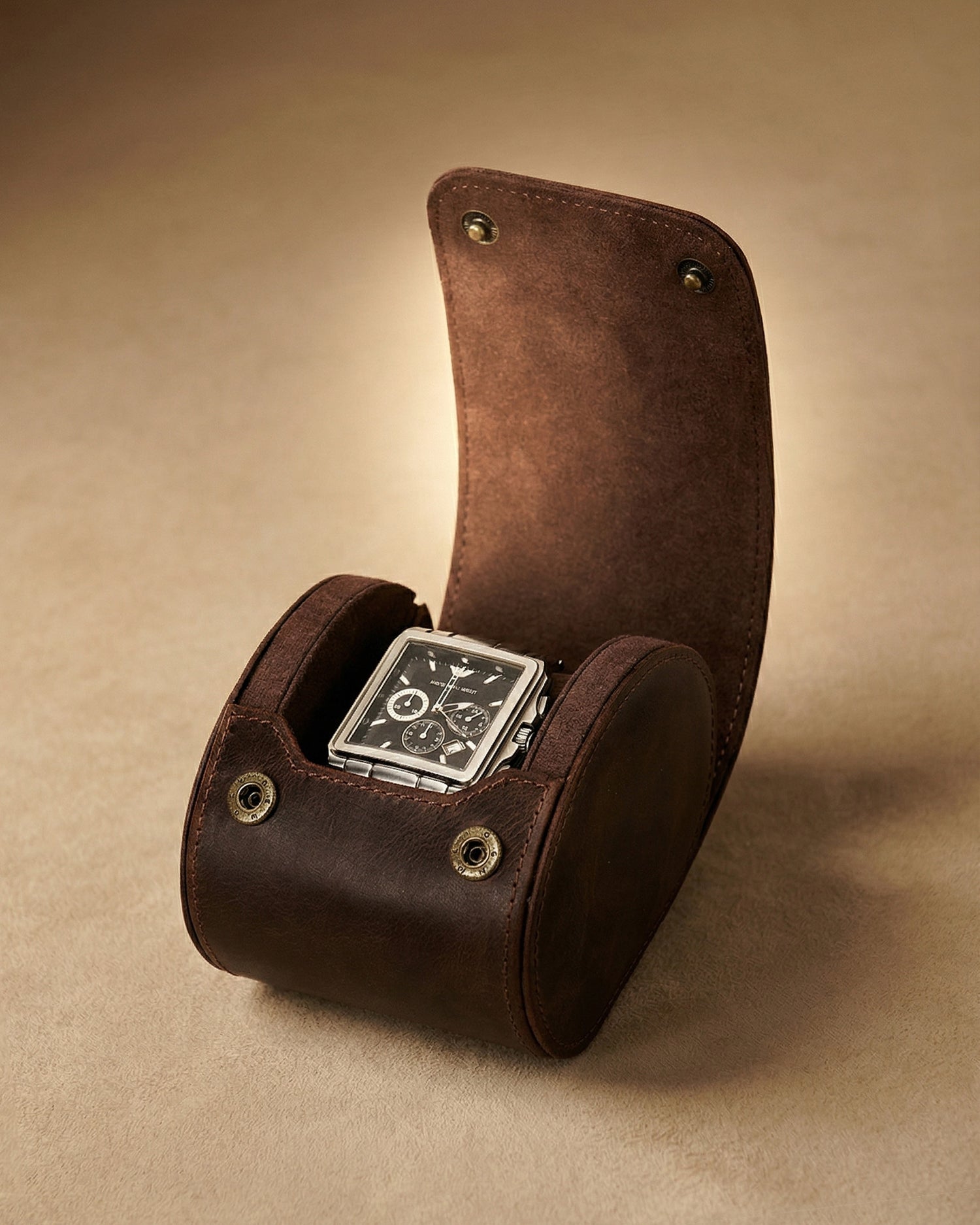
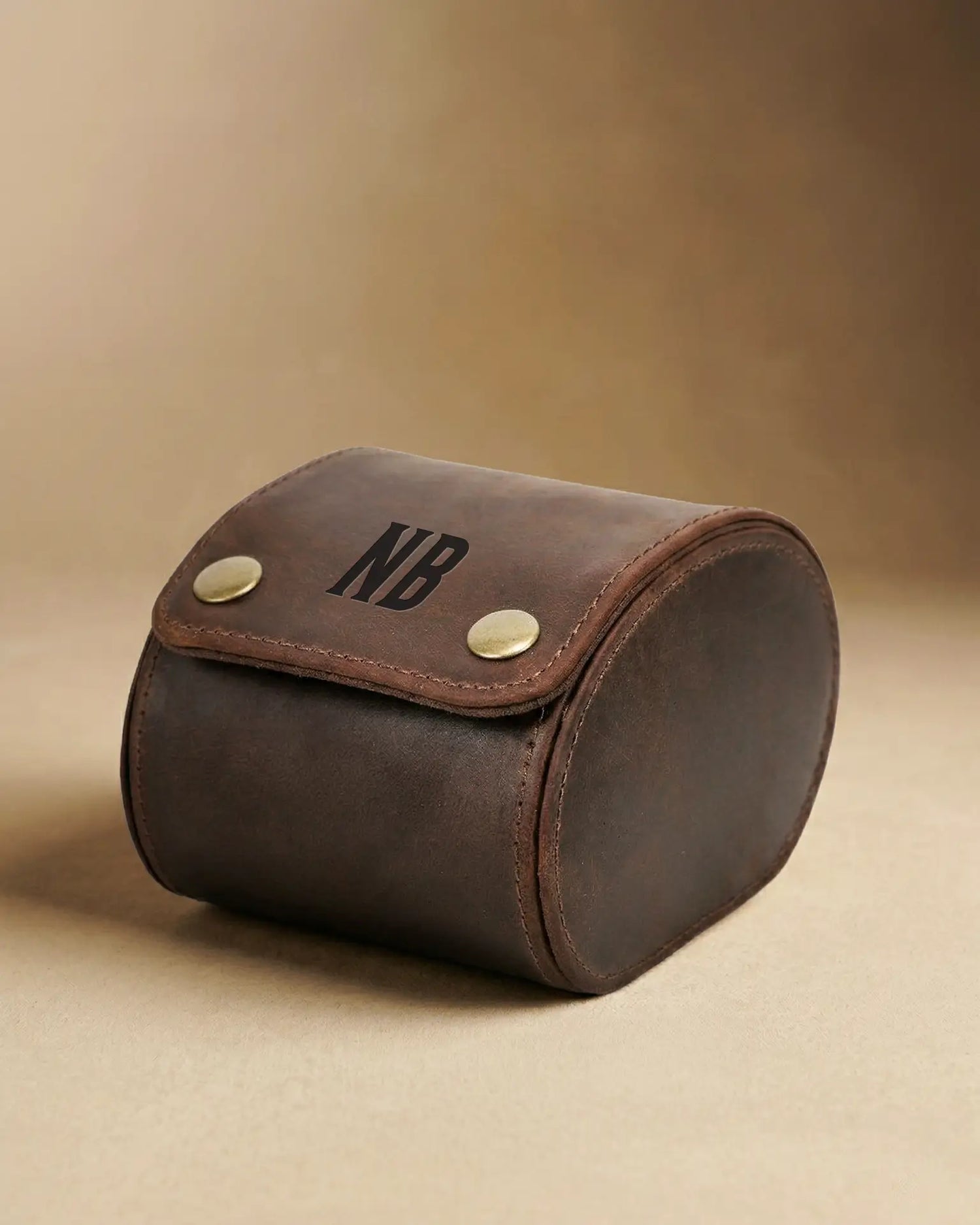
Legacy Rivet Single Watch Roll
Regular price
$79.00 USD
Regular price
$86.00 USD
Sale price
$79.00 USD
Available in
Dark Brown
Dark Brown
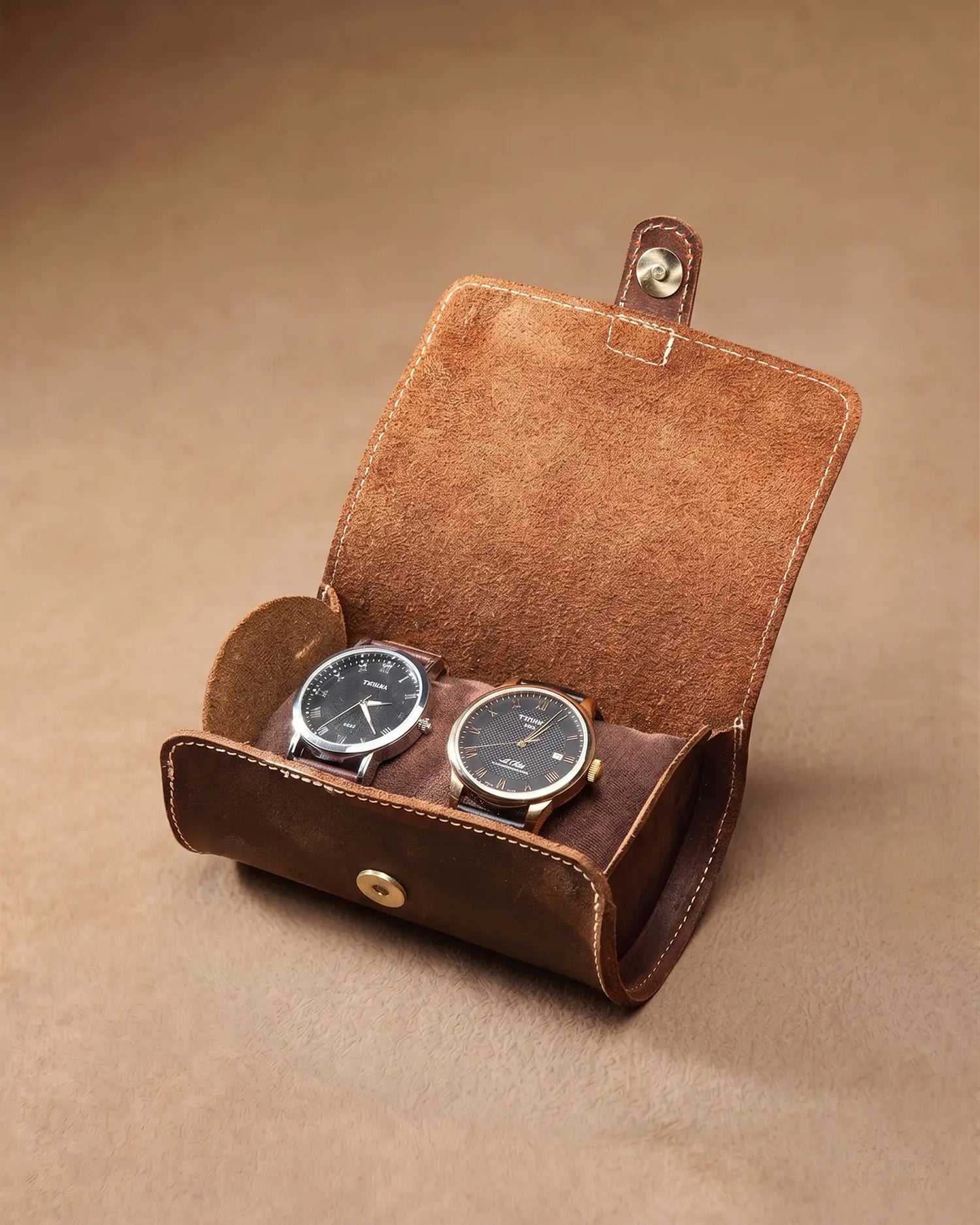
Journey Wrap Double Watch Roll
Regular price
$49.90 USD
Regular price
More Leather Guides
Explore practical guides to choosing, using and caring for leather goods.

Custom Leather Bookmark Guide: Thickness, Engraving and Magnet Options

Magnetic Bookmark With Pen Holder: Who It Is For and How to Use It
