
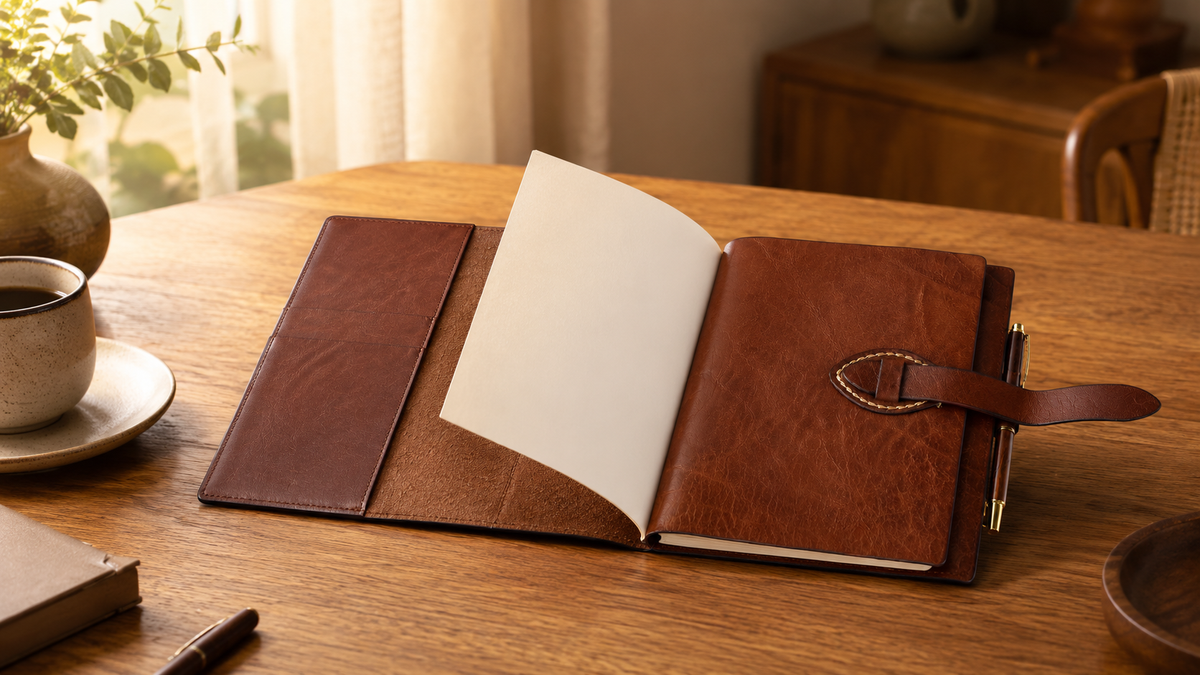
Refillable vs Bound Leather Journal: Which Is Better for You?
Six journals ranked on published paper weight, refill system and whether replacement inserts will still be easy to buy in three years. Cover looks came last.
By BygoneMark Editorial · Updated 25 August 2026 · Prices checked 25 August 2026 · ~4,300 words · 17 min read
|
HOW THIS GUIDE IS FUNDED BygoneMark makes leather journals, and all six picks below are ours. That is a conflict of interest and you should read the guide with it in mind. What we can control is honesty about the numbers. Every price is dated. Every specification comes from the live product listing. Where a listing does not publish a figure, the card says Not published rather than guessing. Where two BygoneMark pages disagree with each other, we print both. We name competitor products but do not link to them. The full range sits at BygoneMark.
|
Our Picks at a Glance
|
BEST OVERALL REFILLABLE
 BygoneMark Legacy Refillable Journal A5
$79.90
|
BEST ON A BUDGET
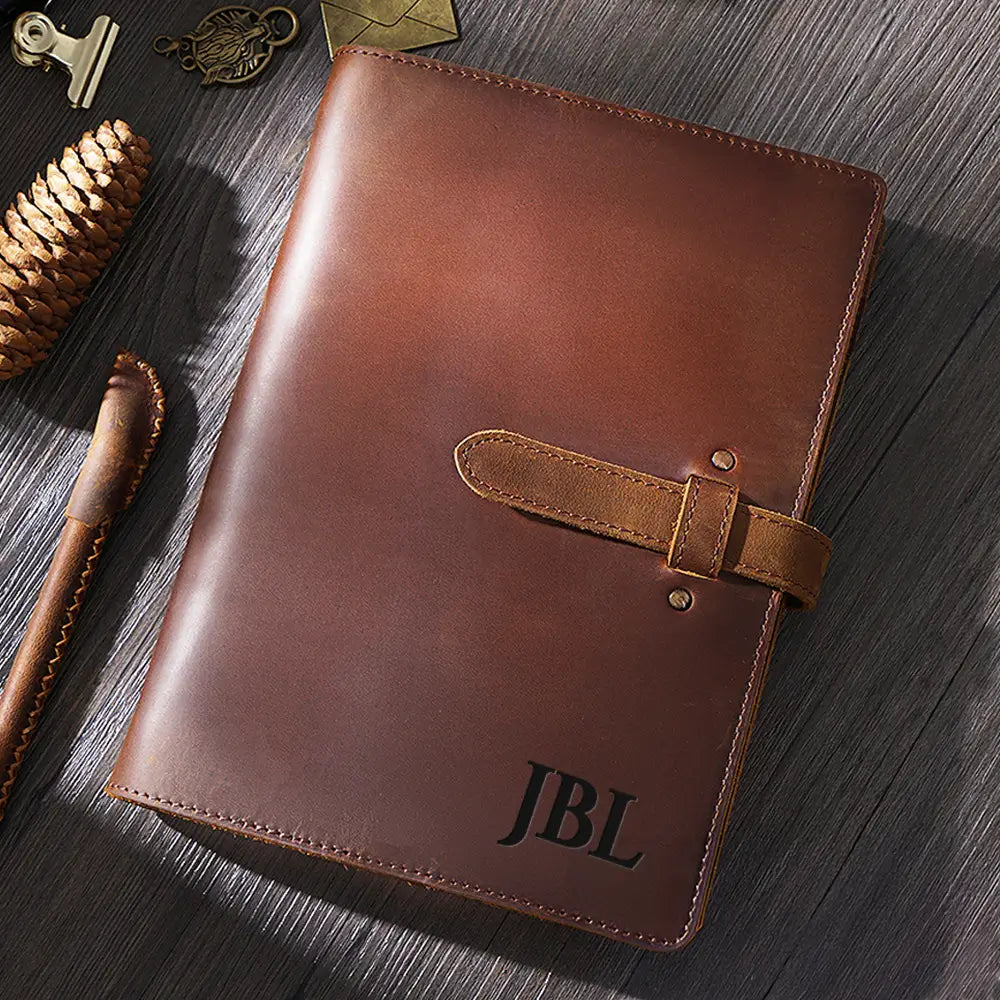
 BygoneMark Legacy Strap Journal B6
$59.00
|
BEST BOUND JOURNAL
 BygoneMark Buckle Closure Journal
$99.00
|
Every pick in this guide, ranked by how long the leather stays in service after the paper runs out.
|
Pick
|
Refill system
|
Published paper
|
Packed size
|
Price
|
|
Legacy Refillable Journal A5
|
Five removable notebooks
|
300 pages, 120gsm
|
9.06 × 6.5 × 0.79 in
|
$79.90
|
|
Legacy Strap Journal B6
|
Replaceable B6 or A5 inserts
|
300 pages, gsm not published
|
7.0 × 5.0 × 1.96 in
|
$59.00
|
|
Embossed Lock Journal
|
Refillable, mechanism not detailed
|
480 pages, 100gsm blank
|
Not published
|
$109.00
|
|
Refillable Strap Journal A5
|
Six-ring binder, standard A5 6-hole
|
168 pages kraft, gsm not published
|
9.17 × 6.89 in
|
$133.20
|
|
Loose-Leaf Journal
|
Loose-leaf, single sheets removable
|
400 pages, 120gsm kraft
|
Two sizes, not published
|
$64.00
|
|
Buckle Closure Journal
|
None. Pages permanently bound
|
192 pages, 100gsm acid free
|
6.9 × 9.0 × 0.79 in
|
$99.00
|
One entry does not refill at all. The Buckle Closure Journal stays in because BygoneMark states plainly on its own page that the pages are permanent, and that is the only straight answer to the refill question anywhere in the range. Two picks do not publish a paper weight and one publishes no dimensions at all. We have said so rather than filling the gaps with estimates.
Which Format Wins for Most Writers?
For anyone filling more than two notebooks a year, the BygoneMark Legacy Refillable Journal A5 ($79.90) is the right buy, because it publishes 120gsm paper and holds five removable notebooks behind a one-handed magnetic closure. On a tight budget, the Legacy Strap Journal B6 ($59.00) is full grain crazy horse, refillable, and carries the largest review sample in the range. If you write a few pages a month and like shelving finished volumes, buy the Buckle Closure Journal ($99.00) and stop thinking about refills entirely.
A journal rarely fails in a dramatic way. It runs out of paper in week ten of a project, and a cover with years of wear left in it goes into a drawer because nothing fits inside it any more.
The refill is the deciding spec. Not the leather, not the closure, not the price. A cover that takes standard paper stays useful for a decade, while a cover built around a proprietary insert lasts exactly as long as the maker keeps selling it. A5 six-hole refill paper starts at $12.00 against $59.00 to $133.20 for a complete journal, which is the whole refillable argument in one line, and it only pays back if you genuinely finish notebooks.
Capacity is the usual first fork in a journal guide. Here it is the second. Refill system comes first, and the six picks below are grouped by it.
Pick by writing habit
|
You are
|
Buy this
|
Why
|
|
Writing most days, one notebook every two months
|
A removable insert cover
|
Paper is the recurring cost. The cover should not be.
|
|
Writing a few pages a month
|
Bound
|
One volume may last a year. Refill admin is wasted effort.
|
|
Running work, personal and planning at once
|
A multi-insert cover
|
Each subject gets a booklet and retires on its own schedule.
|
|
Reordering and filing pages after writing them
|
Six-ring or loose-leaf
|
Only ring and post systems let a single sheet move.
|
|
Writing with fountain pens or brush markers
|
Whichever publishes the higher gsm
|
Bleed is a paper problem. No cover fixes it.
|
|
Buying a gift with no idea of their habits
|
Bound
|
No sizes to learn. They open it and write.
|
How We Judged These Journals
Refill first. This is a desk-researched comparison built on manufacturer-published paper counts, dimensions, weights and closure types, with prices checked on 25 August 2026. Where a listing does not publish a figure, the card says Not published rather than inventing one.
Refill honesty
A journal counts as refillable only if the listing says how the paper is held and what replaces it. Ring count, insert count, hole pattern. Language about being built to last is not a refill system.
Published paper data
Sheet count, page count and gsm where stated. Paper weight is the most useful number for anyone writing with anything wetter than a ballpoint, and it is the number most sellers leave out.
Leather grade in industry terms
Full grain is a definition, not an adjective. A listing either commits to it or it does not. Three of these six do not.
Closure and everyday survival
How the journal stays shut in a bag, whether hardware sits under your writing hand, and how the closure copes once the paper block has swollen with use.
Every card carries an evidence line naming the manufacturer specification it came from. Marketing copy on its own settles nothing.
What Counts as a Heavy Writer

Refill economics start working above roughly two finished notebooks a year. Below that, bound is cheaper and simpler, and no amount of clever mechanism changes it.
People quote their intentions. The maths cares about a different number, the notebooks you actually finished last year, and for most of us that figure is lower than the one in our heads.
|
Notebooks per year
|
Pages per year
|
Category
|
Format implication
|
|
0 to 1
|
Under 200
|
Occasional
|
Bound. A refill system adds cost and admin you will not use.
|
|
2 to 3
|
400 to 600
|
Regular
|
Refillable pays back inside two years. Insert covers suit best.
|
|
4 to 6
|
800 to 1,200
|
Heavy
|
Refillable is clearly cheaper. Check that refills are standard.
|
|
7 and up
|
1,400 and up
|
Very heavy
|
Six-ring or loose-leaf, and buy refill paper in bulk.
|
Two people who both describe themselves as daily journalers can land three bands apart. Count the finished books, not the good intentions.
Why the Wrong Format Costs You Twice

Four failure modes. All of them mechanical.
Spine failure
Adhesive bindings hold pages with glue along the spine. Open the same book flat a few hundred times and that glue line cracks, so pages release from the middle first. Sewn signatures resist it longer. Neither lasts forever, and the Library of Congress says as much in its own preservation work.
Insert slip
A refill a few millimetres under size slides around inside the cover while you write. It shows up as wobbly handwriting near the spine and scuffed page edges where the paper sits proud of the leather.
Bleed-through and feathering
Thin or poorly sized paper lets ink spread sideways and soak into the next page. A beautiful cover does not rescue it. This is the most common regret in the category and the reason gsm belongs on every listing.
Closure strain
A paper block swells once it has been written in. A fixed strap or a magnet sized for an empty journal then sits under permanent tension, which stretches leather and pops magnets open in a packed bag.
|
WATCH OUT Do not fix a loose insert by folding paper in behind it. That lifts the writing surface off the cover and makes the middle pages worse. Too small means you need a correctly sized refill, not packing.
|
Best Insert-Cover Journals, Where the Paper Lifts Out
Removable notebook inserts are the simplest refill system there is. Nothing to punch, nothing to unclip, and the cover keeps its shape whether it holds one booklet or five. These three publish the clearest numbers in the range, and one of them has the heaviest paper in the guide.
BEST OVERALL REFILLABLE · OUR OWN PRODUCT
1. BygoneMark Legacy Refillable Journal A5

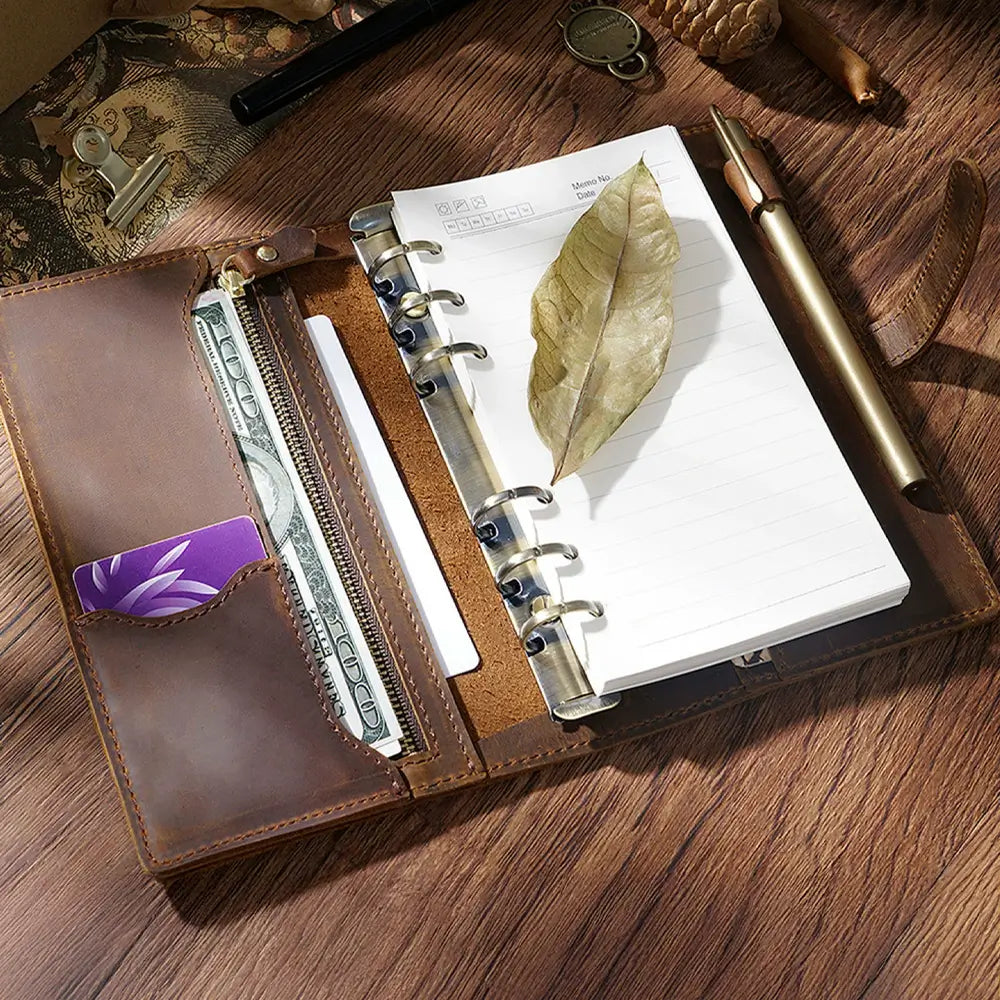
Five separate notebooks sit inside a crazy horse cover that shuts on hidden magnets, so nothing has to be unwound or unbuckled before you write. At 120gsm it publishes the heaviest paper in this comparison, which matters more day to day than anything else on the card.
|
Exterior
|
100 percent full grain crazy horse leather
|
|
Lining
|
Plush velvet microfiber
|
|
Refill system
|
Five removable notebooks, 60 pages each
|
|
Packed size
|
9.06 × 6.5 × 0.79 in
|
|
Weight
|
1.1 lbs
|
|
Paper
|
150 sheets, 300 pages, 120gsm Daolin
|
|
Closure
|
Hidden magnetic snap
|
|
Colours
|
Seven. Cognac, Espresso, Teal Blue, Crimson, Forest Green, Purple, Black
|
WHAT WORKS
✓ Heaviest published paper weight in this guide at 120gsm
✓ Opens one handed, so it gets used on a train and in a meeting
✓ Five booklets means work, personal and planning retire separately
✓ Widest colour range in the BygoneMark line
WHAT TO WEIGH
– Magnets can pop under sustained pressure. BygoneMark says so on its own buckle page
– Five loaded booklets add real thickness. Most people carry two
– The insert format is house-specific, so plan on buying replacement notebooks
Best for: A daily writer with a fountain pen and more than one subject running at once.
$79.90 Price checked 25 August 2026 View the Legacy Refillable Journal
Evidence: Manufacturer specifications and product FAQ, read 25 August 2026.
BEST ON A BUDGET · OUR OWN PRODUCT
2. BygoneMark Legacy Strap Journal B6

The cheapest journal here and still full grain crazy horse, with the same 300 pages packed into a B6 body. A leather cord wraps the cover, which is slower than a magnet and adjusts as the paper block swells. Fifty reviews at 4.96 out of 5 is the largest sample in the range.
|
Exterior
|
100 percent full grain crazy horse leather
|
|
Refill system
|
Replaceable inserts, standard B6 and A5 paper
|
|
Packed size
|
7.0 × 5.0 × 1.96 in (178 × 127 × 50 mm)
|
|
Weight
|
1.1 lbs (500 g)
|
|
Paper
|
150 sheets, 300 pages. Lined, blank or dotted
|
|
Paper weight
|
Not published
|
|
Closure
|
Leather rope wrap
|
|
Colours
|
Listing shows Espresso, Cognac, Black. Specification table shows Dark Brown, Brown, Black
|
WHAT WORKS
✓ Cheapest pick here and still a stated full grain hide
✓ 300 pages in a B6 footprint, so it is short on width rather than on paper
✓ A cord wrap has nothing to tarnish and no fixed length to outgrow
✓ Takes standard B6 and A5 paper, per the manufacturer
WHAT TO WEIGH
– The listing and the specification table use different colour names. Confirm the shade before engraving
– At 1.96 in thick it is chunky for its footprint
– Unwinding a cord is the slowest way into a journal
– No published gsm figure
Best for: A commuter, a first refillable, or anyone whose bag will not take a full A5.
$59.00 Price checked 25 August 2026 View the Legacy Strap Journal
Evidence: Manufacturer specifications and variant listing, read 25 August 2026. Colour discrepancy printed on both sides rather than resolved.
BEST PAGE COUNT · OUR OWN PRODUCT
3. BygoneMark Embossed Lock Journal

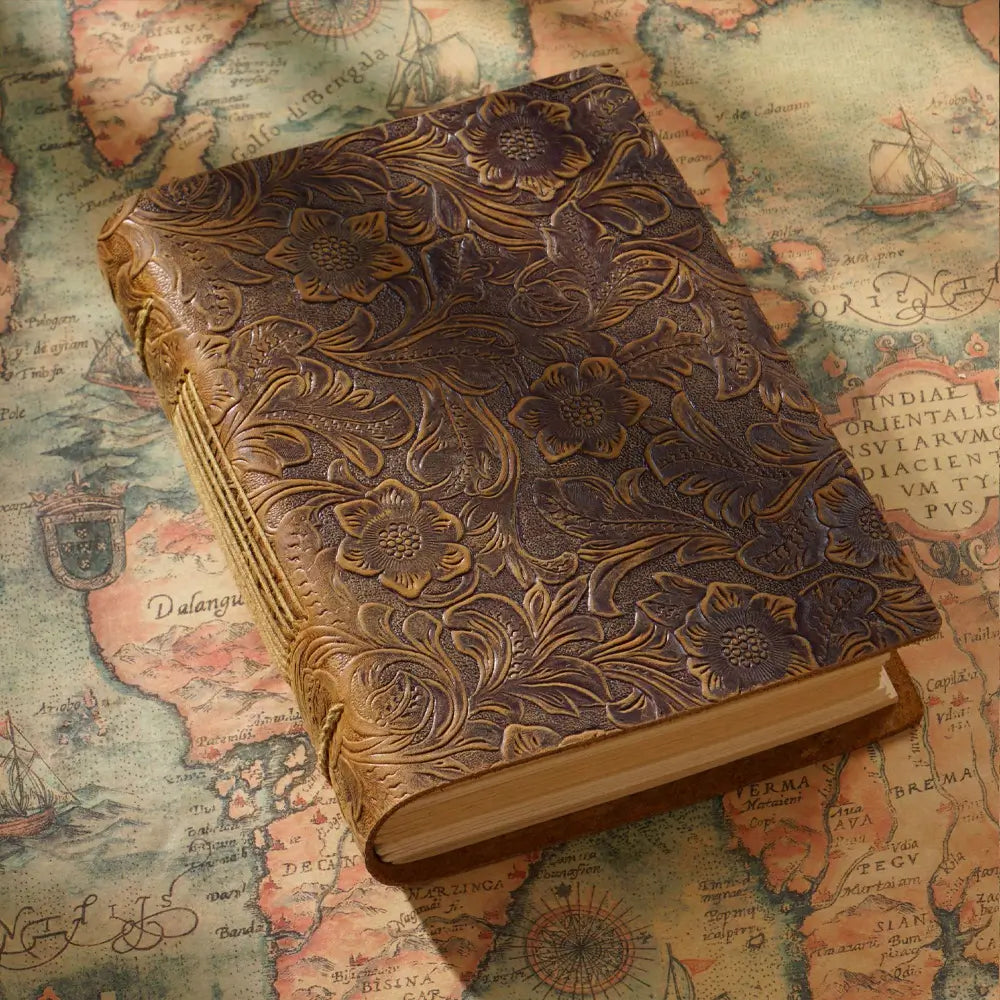
Four hundred and eighty refillable pages behind an antique metal clasp, in an embossed or smooth brown finish. Roughly a year of daily morning pages before the first refill, and the most reviewed journal BygoneMark sells. It also has the thinnest specification sheet in this group.
|
Refill system
|
Refillable. Mechanism not detailed on the listing
|
|
Paper
|
480 pages, 100gsm blank
|
|
Closure
|
Antique metal clasp lock
|
|
Finish
|
Two options. Brown Embossed, Brown Smooth
|
|
Packed size
|
Not published
|
|
Leather grade
|
Not published
|
|
Weight
|
Not published
|
WHAT WORKS
✓ Highest page count in the guide at 480
✓ The clasp reads as a keepsake rather than stationery, which matters for gifting
✓ Blank stock suits sketching, lettering and mixed layouts
✓ 100gsm handles gel and ballpoint without show-through
WHAT TO WEIGH
– No dimensions and no leather grade published on a $109.00 journal
– Blank only. No lined or dotted option is listed
– A metal clasp is a hard point that presses into pages in a tight bag
Best for: A gift buyer, or a long-form writer who wants one cover to carry several hundred pages.
$109.00 Price checked 25 August 2026 View the Embossed Lock Journal
Evidence: Manufacturer collection listing and product imagery captions, read 25 August 2026.
|
VERDICT The Legacy Refillable A5 wins this group on the one number that changes daily writing, and 120gsm is a real figure rather than a marketing claim. Take the Legacy Strap B6 if the budget is $59.00 or the bag is small, and accept a cord closure in exchange. The Embossed Lock is the gift pick and the page-count pick, but two of its core specifications are missing, so ask before ordering if dimensions matter to you.
|
Best Ring and Loose-Leaf Systems, Where a Single Page Moves
The second way to solve the refill problem is to stop thinking in notebooks and start thinking in sheets. Rings and binding posts let one page come out, go back in a different order, or get filed on its own. Both picks below trade a little writing comfort for that freedom.
BEST REFILL SUPPLY · OUR OWN PRODUCT
4. BygoneMark Refillable Strap Journal A5

The only pick here that takes commodity paper. A six-ring binder in full grain cowhide, sized to A5, and the listing says plainly that it accepts most A5 six-hole refill paper sold in office supply stores. That single sentence is worth more over ten years than any leather grade.
|
Exterior
|
100 percent full grain cowhide
|
|
Refill system
|
|
|
Refill compatibility
|
Most A5 6-hole paper. Lined, blank, dotted or grid
|
|
Packed size
|
A5, 9.17 × 6.89 in
|
|
Paper
|
168 pages kraft, replaceable
|
|
Paper weight
|
Not published
|
|
Hardware
|
Vintage brass
|
|
Closure
|
Hand-stitched leather strap with loop
|
|
Colours
|
Two. Cognac, Black
|
WHAT WORKS
✓ Standard six-hole A5 paper, so you are never dependent on one seller
✓ Pages can be reordered, pulled out or archived one at a time
✓ A strap loop and brass hardware hold better in a crowded bag than a magnet
✓ Kraft stock takes pencil and ballpoint well
WHAT TO WEIGH
– Most expensive pick in this guide at $133.20
– Rings sit under your hand near the spine, which everyone who has used a binder knows
– Lowest starting page count here at 168
– No published gsm for the included kraft refill
Best for: A planner or student who reorganizes notes after writing them.
$133.20 Price checked 25 August 2026 View the Refillable Strap Journal
Evidence: Manufacturer specifications and refill compatibility note, read 25 August 2026. Listed down from $148.00.
BEST VALUE PER PAGE · OUR OWN PRODUCT
5. BygoneMark Loose-Leaf Journal

A wide-format loose-leaf cover with a tie strap, sold in two sizes and seven colours, holding 400 pages of 120gsm kraft. At $64.00 it is the best page-per-dollar figure in the guide, and closer to a working file than a diary.
|
Refill system
|
Loose-leaf. Single sheets removable
|
|
Paper
|
400 pages, 120gsm kraft refills
|
|
Sizes
|
Two offered
|
|
Closure
|
Vintage tie strap wrap
|
|
Colours
|
Seven. Crimson, Cognac, Espresso, Teal Blue, Forest Green, Purple, Black
|
|
Packed size
|
Not published
|
|
Leather grade
|
Not published
|
WHAT WORKS
✓ 400 pages at $64.00 is the strongest value in this comparison
✓ A finished section can be pulled and filed without disturbing anything else
✓ Two sizes, so it matches a desk or a bag rather than whatever A5 gives you
✓ 120gsm kraft, the joint-heaviest published stock here
WHAT TO WEIGH
– Leather grade is not stated. If full grain matters, ask before ordering
– A tie strap takes two hands and a few seconds every single time
– Loose sheets can slip out if the posts are not fully closed
– No published dimensions
Best for: Someone who treats a notebook as a working document to file, reorder and prune.
$64.00 Price checked 25 August 2026 View the Loose-Leaf Journal
Evidence: Manufacturer collection listing and product imagery captions, read 25 August 2026.
|
VERDICT Buy the Refillable Strap A5 when refill supply is the thing that worries you, because commodity six-hole paper outlives any one seller and that is the whole point of a refillable cover. The Loose-Leaf is the better number, 400 pages of 120gsm for less than half the price, and it gives up published dimensions and a stated leather grade to get there. Neither lies as flat as a bound book. That is the cost of moving a single page.
|
Best Bound Journal, Where Nothing Comes Out
The oldest approach and still the right one for plenty of people. Fix the paper to the cover, accept the page count, and get a finished object at the end. Only one journal in the BygoneMark range commits to it in writing.
BEST BOUND JOURNAL · OUR OWN PRODUCT
6. BygoneMark Buckle Closure Journal

The proper bound one. BygoneMark states outright in the product FAQ that the pages are permanently bound and the journal is not refillable, then points refill buyers at its own magnetic and rope styles instead. That is unusual enough on a product page to be worth saying twice.
|
Exterior
|
100 percent full grain crazy horse leather
|
|
Refill system
|
None. Pages permanently bound, manufacturer confirmed
|
|
Packed size
|
A5, 6.9 × 9.0 × 0.79 in
|
|
Weight
|
1.1 lbs
|
|
Paper
|
96 sheets, 192 pages, 100gsm acid free cream
|
|
Ruling
|
Lined, blank or dotted
|
|
Closure
|
Vintage brass buckle with adjustable strap
|
|
Colours
|
Six. Cognac, Black, Crimson, Forest Green, Espresso, Teal Blue
|
WHAT WORKS
✓ Most secure closure in the range. A buckle does not pop the way a magnet can
✓ Acid free paper, which is the right call for anything you plan to shelve and reread
✓ Three rulings at the same price, so you are not stuck with lined
✓ The adjustable strap absorbs the swelling that follows a written-in journal
WHAT TO WEIGH
– Full stop at 192 pages. When it is finished, it is finished
– Threading a buckle is slower than a magnet or a wrap
– Highest cost per page here at $99.00 for a single volume
– 100gsm is respectable but a step under the 120gsm refillables
Best for: An archival journaler, a graduation gift, or anyone who wants zero setup.
$99.00 Price checked 25 August 2026 View the Buckle Closure Journal
Evidence: Manufacturer specifications and product FAQ, read 25 August 2026. Non-refillable status stated by the manufacturer. Listed down from $129.00.
|
VERDICT This is the pick with the clearest answer to the refill question, which is the reason it earns a place in a guide about refilling. Acid free paper, a buckle that survives a bag, and 192 pages that end when they end. Buy it if you want the book rather than the system, and if the number of notebooks you finish each year is closer to one than to four.
|
Fit Check: The Two Minutes That Prevent a Return

Fit is the weakest part of almost every journal guide online. A cover can use excellent leather and still be the wrong purchase because the refill does not sit in it properly. Measure before you order paper, not after.
A5 and A6 are fixed by ISO 216:2007, which sets the trimmed sizes of the A and B series, so an A5 sheet is always 148 by 210 mm. The standard covers the sheet. It says nothing about how thick a notebook made from those sheets will be, and thickness is what actually breaks fit.
-
Take the insert the cover shipped with, or the notebook you want to use, and lay it flat.
-
Measure height and width in millimetres. Ignore the size name printed on the cover.
-
Measure the spine thickness of that insert, then count how many the cover is designed to hold at once.
-
If the cover uses rings, count the holes and measure the spacing. Six-hole A5 is standard. Disc and proprietary patterns are not.
-
Add up the spines of every insert you plan to carry. That total is what the closure has to travel over.
-
Close the loaded cover and press it flat. If the closure strains or the page edges sit proud of the leather, you are one insert over.
|
Measure
|
Take it from
|
Compare against
|
|
Insert height and width
|
The notebook you want to use
|
Published cover interior dimensions
|
|
Spine thickness
|
Each insert you plan to carry
|
Stated insert capacity of the cover
|
|
Hole count and spacing
|
The refill paper
|
The ring or post pattern in the cover
|
|
Paper weight
|
The listing, in gsm
|
The wettest pen you own
|
|
Packed thickness
|
The loaded, closed journal
|
The bag pocket you actually use
|
|
TIP Buy the maker’s own refill once and measure it. Those numbers become your reference for every third-party notebook you try afterwards. It is a five minute job that prevents most returns in this category.
|
|
|
Protection Features That Matter More Than Leather Grade
Leather decides how the journal looks in year five. Closure and construction decide whether the pages survive a commute. Different questions.
|
Feature
|
What it actually does
|
What to check
|
|
Closure type
|
Keeps the journal shut under bag pressure
|
Buckle and wrap beat magnets once loaded
|
|
Closure adjustability
|
Copes with a paper block that has swollen
|
Adjustable strap or cord, not a fixed loop
|
|
Hardware position
|
Decides whether metal presses into paper
|
Clasps and buckles away from the writing hand
|
|
Insert retention
|
Stops the paper sliding while you write
|
Sleeves and rings hold better than loose elastic
|
|
Binding type
|
Predicts how the book ages if it is bound
|
Sewn signatures outlast adhesive spines
|
|
Paper weight
|
Decides bleed and show-through
|
A published gsm figure, not a description
|
Binding is the one to understand if you are buying bound. Sewn signatures are groups of folded sheets stitched together and then attached to the cover. Adhesive bindings glue loose page edges at the spine instead. The Library of Congress works with both and notes that even good bindings wear out eventually, which is the honest version of what heirloom means.
Which Materials Last
Leather is a regulated word in an industry sense. The Leather Working Group defines full grain as leather that has kept its entire grain with none of the surface removed by corrective mechanical treatment, and corrected grain as leather whose grain has been partially buffed away and then refinished. Two different materials. Only one shows the pores and marks that make a cover look like yours after five years.
The Leather Research Laboratory says the same thing in the American industry wording, describing full grain as the grain split with nothing removed except hair and epidermis. If a product page will not use that language, the safest reading is that it cannot. Three picks in this guide do not, and their cards say so.
Crazy horse, which four of these six use, is full grain finished with waxes. Rub a scratch and it lightens, then settles back into the surface. That pull-up effect is why a crazy horse cover reads as lived-in rather than damaged after a year in a bag. Cowhide with a plain finish behaves differently, holding a more even colour and showing wear more slowly.
Thickness has no single correct answer, because a structured cover and a soft one want different numbers. Roughly 1.5 to 2.0 mm suits most notebook covers. Tandy Leather puts 4 oz leather at about 1.6 mm and groups 4 to 6 oz as the medium band used for wallets, bags and small cases. Thicker adds structure. Too thick and a fully loaded refillable cover will not close comfortably.
|
WATCH OUT Genuine leather is not a grade. It is a catch-all retail term that usually sits below full grain and top grain. If a listing says genuine leather and nothing more specific, treat that as the ceiling rather than a promise.
|
What You Should Expect to Pay
|
Tier
|
Typical price
|
What you get
|
Watch out for
|
|
Entry
|
Under $70
|
Full grain in smaller formats, high page counts, simple wrap closures
|
Paper weight often unpublished
|
|
Mid
|
$70 to $110
|
Fuller specification sheets, magnetic or buckle closures, 100 to 120gsm
|
Insert formats can be house-specific
|
|
Premium
|
$110 to $150
|
Ring mechanisms, brass hardware, standard refill compatibility
|
Paying for the mechanism, not for more paper
|
|
Refills
|
From $12.00
|
Standard A5 six-hole paper in five page styles
|
Only fits six-ring covers
|
A $133.20 journal does not automatically write better than a $59.00 one. In this guide the $64.00 Loose-Leaf publishes the same 120gsm paper as the $79.90 Legacy Refillable, and more than twice the pages. Specifications decide performance. Price decides finish.
Refillable vs Bound vs Loose-Leaf
|
|
Refillable insert
|
Bound
|
Loose-leaf and ring
|
|
What you replace
|
The notebook insert
|
The whole journal
|
Individual sheets
|
|
Upfront cost
|
$59 to $109 here
|
$99 here
|
$64 to $133 here
|
|
Cost over five years
|
Lower if you write often
|
Highest if you write often
|
Lowest per page
|
|
Paper flexibility
|
Swap ruling between inserts
|
Fixed at purchase
|
Mix rulings in one cover
|
|
Writing surface
|
Good with a well-fitted insert
|
Most stable
|
Rings sit under the hand
|
|
Packed thickness
|
Grows with each insert added
|
Fixed and predictable
|
Grows with the stack
|
|
Archiving
|
Archive paper, keep the cover
|
Shelve the complete volume
|
File individual sections
|
|
Best gift case
|
When you know they write
|
When you do not
|
When they organize everything
|
How to Choose in Seven Steps
-
Count the notebooks you actually finished last year. That number, not your intention, is the brief.
-
Two or more points to refillable. One or fewer points to bound. Write the answer down.
-
Filter to listings that publish a paper weight in gsm. Silence is an answer.
-
Pick a size before a style. A5 for desk and bag writing, B6 for pockets and short notes.
-
For refillables, find the refill before you buy the cover. Standard six-hole A5 beats a house format.
-
Match the closure to the bag. Buckle or wrap for a crowded backpack, magnet for a desk.
-
Inspect the inside before the outside. Paper, insert retention and closure before leather grade.
How to Carry a Journal Every Day

A bound journal has one thickness forever. A refillable cover has whatever thickness you give it, and most people give it too much.
-
Two active inserts is the sensible ceiling for a five-notebook cover. Retire a finished booklet to a drawer instead of letting it ride along.
-
Both the Legacy Refillable A5 and the Buckle Closure Journal weigh 1.1 lbs, which is half a kilo before you add a pen. Fine in a work bag, noticeable in a small crossbody.
-
Loose cards and receipts stuffed into a refillable cover add more bulk than a second notebook does.
-
Measure the pocket you plan to carry it in, then compare it against the listed dimensions rather than the photograph.
-
If the closure is straining, you are over the cover working capacity. That is what wears a strap out.
Looking After Leather and Paper
-
Wipe the exterior with a dry or barely damp cloth. Water and finished leather are a poor combination.
-
Light scratches on crazy horse usually blend if you rub them with your thumb. That is the wax finish doing its job.
-
Conditioner every six to twelve months is optional on a waxed hide, not required.
-
Store finished inserts flat, dry and out of direct sun. Paper fades long before leather does.
-
Date the first and last entry inside the cover of every insert before you archive it. You will not remember later.
Full instructions for each BygoneMark leather type sit on the leather care guide.
Six Mistakes We See Most Often
-
Buying refillable for a habit you do not have. The savings only arrive if you finish notebooks.
-
Trusting the size label. A5 is a paper standard, not a notebook standard. Measure the insert.
-
Loading every insert slot. Five booklets in one cover strain the closure and ruin the middle pages.
-
Ignoring gsm. Beautiful leather around paper that feathers is the most common regret in this category.
-
Assuming leather-bound means well built. It names the covering material. The binding underneath is a separate question.
-
Giving a refillable cover as a blind gift. If you do not know their habits, a bound journal removes every decision.
Glossary: What the Spec Sheet Means
|
Term
|
What it means
|
|
Full grain
|
Leather that keeps its entire grain, with none of the surface removed by corrective mechanical treatment.
|
|
Corrected grain
|
Leather whose grain has been partially buffed away and then enhanced with a finishing treatment.
|
|
Crazy horse
|
Full grain leather finished with waxes, giving a pull-up effect where scratches lighten then blend back.
|
|
Vegetable tanned
|
Leather converted using plant tannins. Often firm at first, and changes noticeably with handling.
|
|
Chrome tanned
|
Leather converted using chromium salts. Generally softer, with a wider colour range.
|
|
gsm
|
Grams per square metre, the weight of a sheet of paper. Higher usually resists bleed, though sizing matters too.
|
|
Signature
|
A group of folded sheets sewn together, then attached to the cover. The basis of sewn binding.
|
|
Adhesive binding
|
A spine where loose page edges are glued rather than sewn. Cheaper, and the first thing to crack.
|
|
Insert
|
The removable notebook or booklet held inside a refillable cover.
|
|
Pull-up
|
The lightening of colour where waxed leather is bent or scratched, which settles back with handling.
|
Key Takeaways
-
The notebooks you finish in a year, not the format you like the look of, is the number that decides this.
-
Under two notebooks a year rules out the refill premium. Bound is cheaper and simpler at that rate.
-
Only three picks here publish a paper weight: the Legacy Refillable at 120gsm, the Loose-Leaf at 120gsm, the Buckle Closure at 100gsm.
-
Three of our six do not publish a leather grade. Ask before buying if that matters to you.
-
Standard six-hole A5 refill paper outlives any one seller. House-format inserts do not.
-
Price does not predict paper. The $64.00 Loose-Leaf publishes the same 120gsm as the $79.90 pick.
Final Word: Refill First, Leather Last
The best leather journal is the one you can still put paper into in five years. Not the most expensive one, and not the one with the deepest embossing on the cover.
Count last year honestly. Filter on published paper weight and a named refill format, and treat silence as information. One number settles almost every regret in this category, and it takes two minutes to find.
Five removable notebooks, 120gsm paper and a magnetic closure that opens with one hand. Full specifications for every format sit on the leather journals built to be refilled collection page. Prices from $59.00, checked 25 August 2026.
Frequently Asked Questions
What is a refillable leather journal?
A reusable leather cover that holds removable notebooks or paper inserts. When the pages run out you replace the insert instead of the whole journal. The insert may be held by elastic cords, interior sleeves, rings or binding posts, and that mechanism is the real difference between two covers that look identical in photographs. It also lets one cover move between lined, blank, dot grid and planner paper as the work changes, which a bound journal cannot do.
Practical tip: Check the exact height, width and thickness of compatible inserts in millimetres before buying, rather than trusting a label like A5 or A6.
Are refillable journals worth it?
Yes, above roughly two finished notebooks a year. Below that the maths does not work and a bound journal is the better buy. The value comes from replacing cheap paper while keeping an expensive cover in service, and A5 six-hole refills starting at $12.00 against $59.00 to $133.20 for a complete journal is the gap that closes fast for frequent writers. Against that you take on refill sizing, availability, and the bulk of carrying extra inserts.
Practical tip: Count how many notebooks you actually filled in the last two years, then compare annual refill cost against buying that many complete journals.
What type of leather is best for journals?
Full grain, for a cover you intend to keep. The Leather Working Group defines it as leather that has kept its entire grain with none of the surface removed by corrective treatment, which is why it shows pores and marks and ages into something specific to you. Grade alone does not make a good journal though. Stitching, thickness, temper, edge finishing and the refill mechanism all decide whether it survives daily handling.
Practical tip: Judge leather grade and construction together. A full grain label on a badly stitched cover is not an upgrade.
Is leather bound better than hardcover?
Neither, because they describe different things. Leather-bound names the covering material and hardcover names the structure, and a journal can be both at once. A rigid board cover gives more protection and a firmer writing surface, while leather changes how it feels and how it ages. Durability comes down to how the pages attach, and sewn signatures behave differently from adhesive bindings regardless of what is wrapped around them.
Practical tip: Compare page attachment, spine construction and cover rigidity rather than choosing on the words leather or hardcover in a product name.
What is the recommended thickness for a leather journal?
Roughly 1.5 to 2.0 mm for most notebook covers, though there is no single correct figure. Tandy Leather puts 4 oz leather at about 1.6 mm and treats 4 to 6 oz as the medium band for wallets, bags and small cases. Thicker leather adds structure and stiffness. Softness matters as much as the number, since two hides of identical thickness can flex very differently depending on how they were tanned and finished.
Practical tip: On a refillable cover, check flexibility as well as thickness. Leather that is too stiff will not close over a fully loaded insert stack.
How long does a leather notebook last?
There is no fixed lifespan. It depends on leather quality, construction, how often you use it, how you store it, and whether the paper is replaceable. A refillable cover stays in service far longer than any single insert, because the part that wears out is the part you replace. For bound journals the binding is usually the failure point, and the Library of Congress notes that even well made bindings wear and eventually need repair.
Practical tip: Keep it dry, away from prolonged heat and direct sun, and repair a loosening binding early rather than after pages start dropping out.
What are the benefits of using a leather-bound journal?
Zero setup and a finished record. The cover and paper arrive assembled, so there is no insert to size and no refill to source before you start writing. When the last page is used the volume stays exactly as written and goes on a shelf, dated and intact. That suits diaries, travel records and chronological notes. A well made sewn binding holds pages securely, and acid free paper is worth looking for on anything you intend to keep.
Practical tip: For a journal you plan to archive, prioritize binding quality and acid free paper as highly as the leather grade.
What are the best quality journals?
The ones that match how you write, judged as a whole system rather than a cover. Look for a clearly named leather grade, even stitching, secure page attachment or a refill mechanism that holds firmly, a stated paper weight, clean edges, and a closure that does not sit under your writing hand. Specific terminology beats vague labels. Full grain, corrected grain, vegetable tanned and chrome tanned all mean something. Genuine leather usually means less.
Practical tip: Before buying, confirm leather, binding or refill system, paper weight, dimensions, closure and refill availability. If a listing skips several of those, treat the gap as information.
Sources
- Leather Working Group. 74 Essential Leather Industry Terms. Leather Working Group, 2025. Definitions of full grain, corrected grain, chrome-tanned and vegetable-tanned leather, used in the materials section and the glossary.
- Leather Working Group. List of Definitions, Version 1.1. Leather Working Group, 2024. Formal definition set behind the full grain and corrected grain entries in the glossary table.
- Leather Research Laboratory. Full Grain and Top Grain. Leather Research Laboratory. Industry-aligned description of full grain as the grain split with nothing removed except hair and epidermis.
- Library of Congress. Why We Bind. Preservation Directorate, 2023. Sewn signature and adhesive binding structures, and the statement that all bindings eventually wear, used in the failure modes and protection sections.
- International Organization for Standardization. ISO 216:2007, Writing paper and certain classes of printed matter, trimmed sizes. ISO, 2007. Fixed A5 and A6 sheet dimensions, used to set the fit check method.
- Tandy Leather. Leather Weights and Thickness Chart. Tandy Leather, 2025. Ounce to millimetre conversion and the 4 to 6 oz medium band, used in the leather thickness discussion.





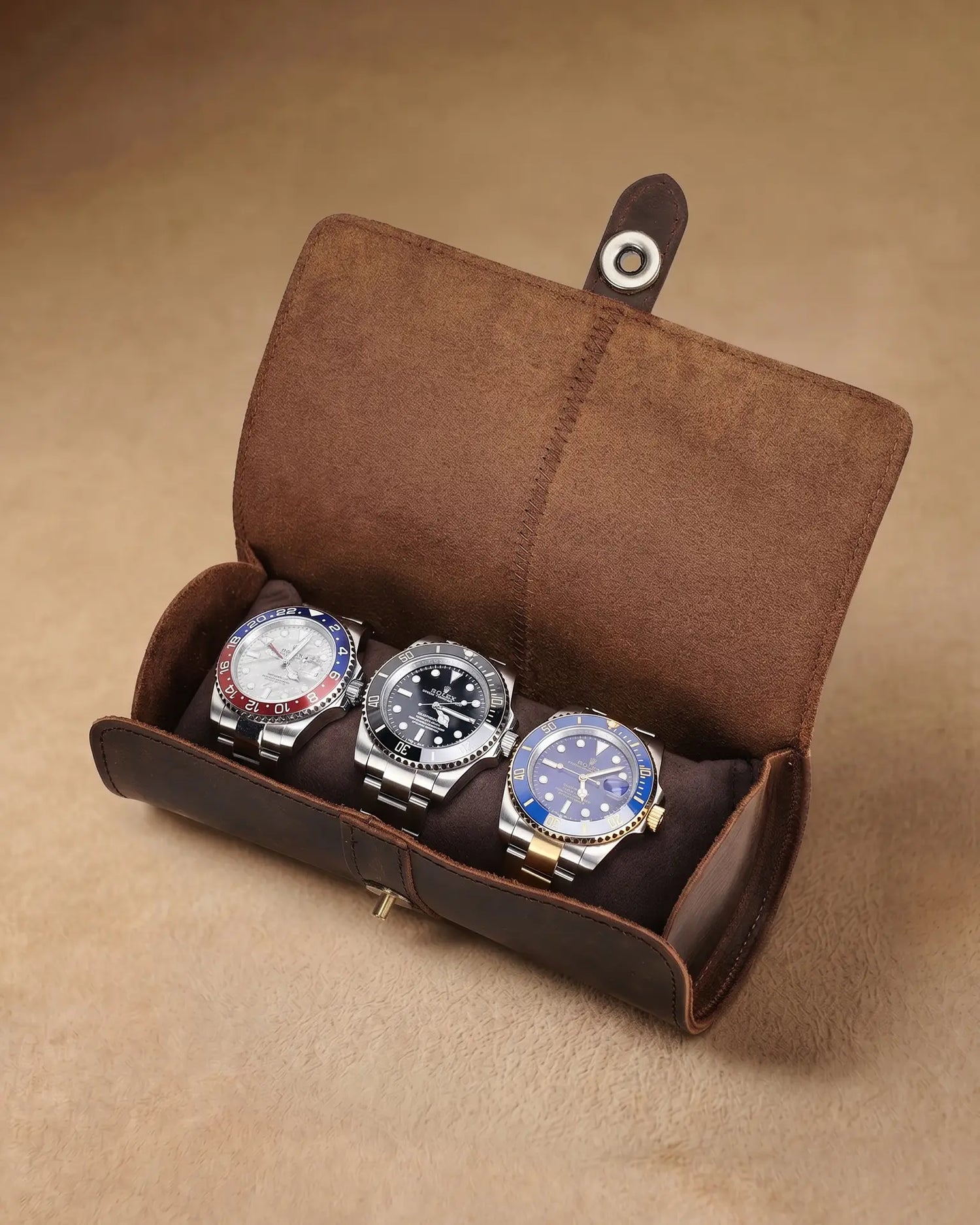
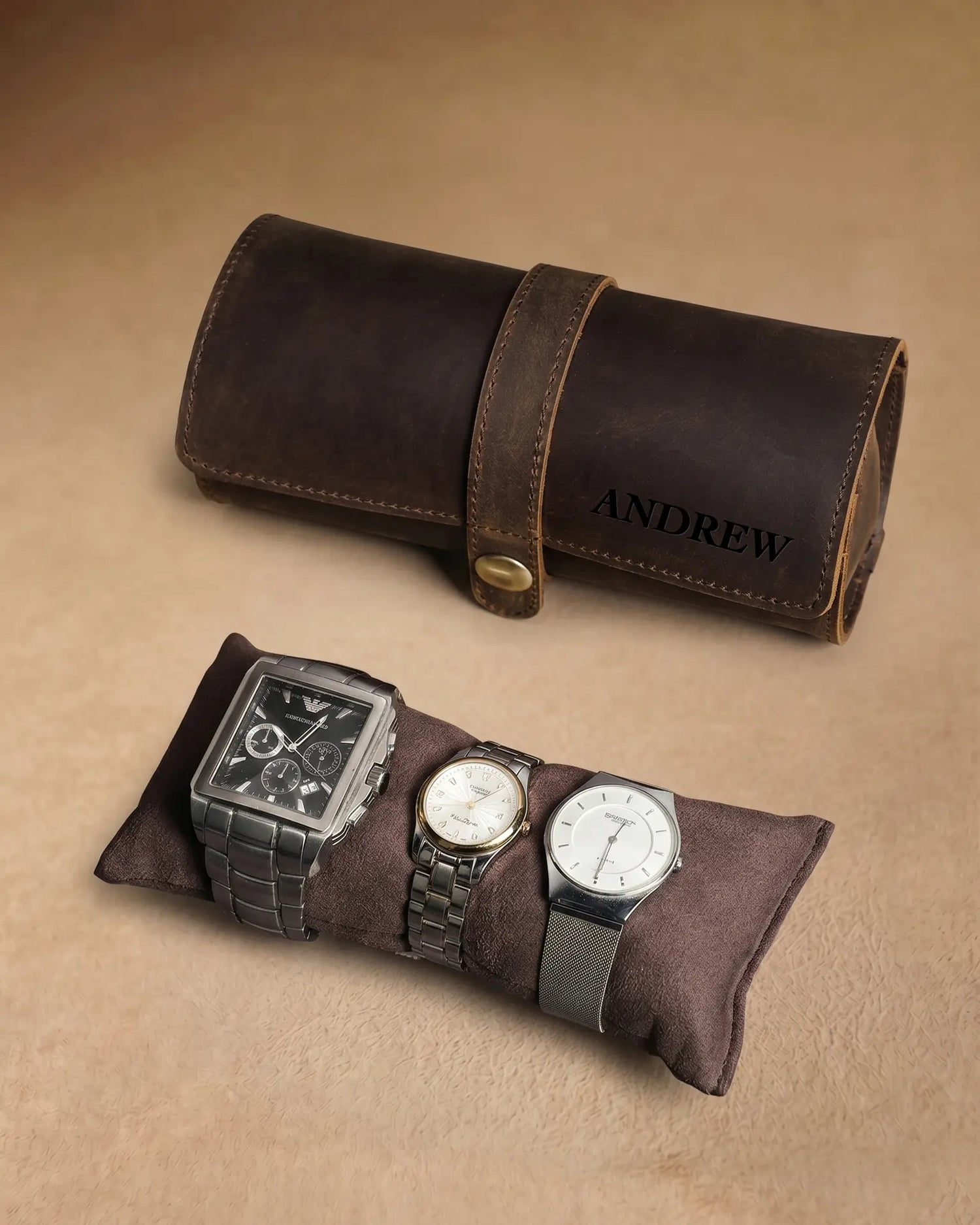

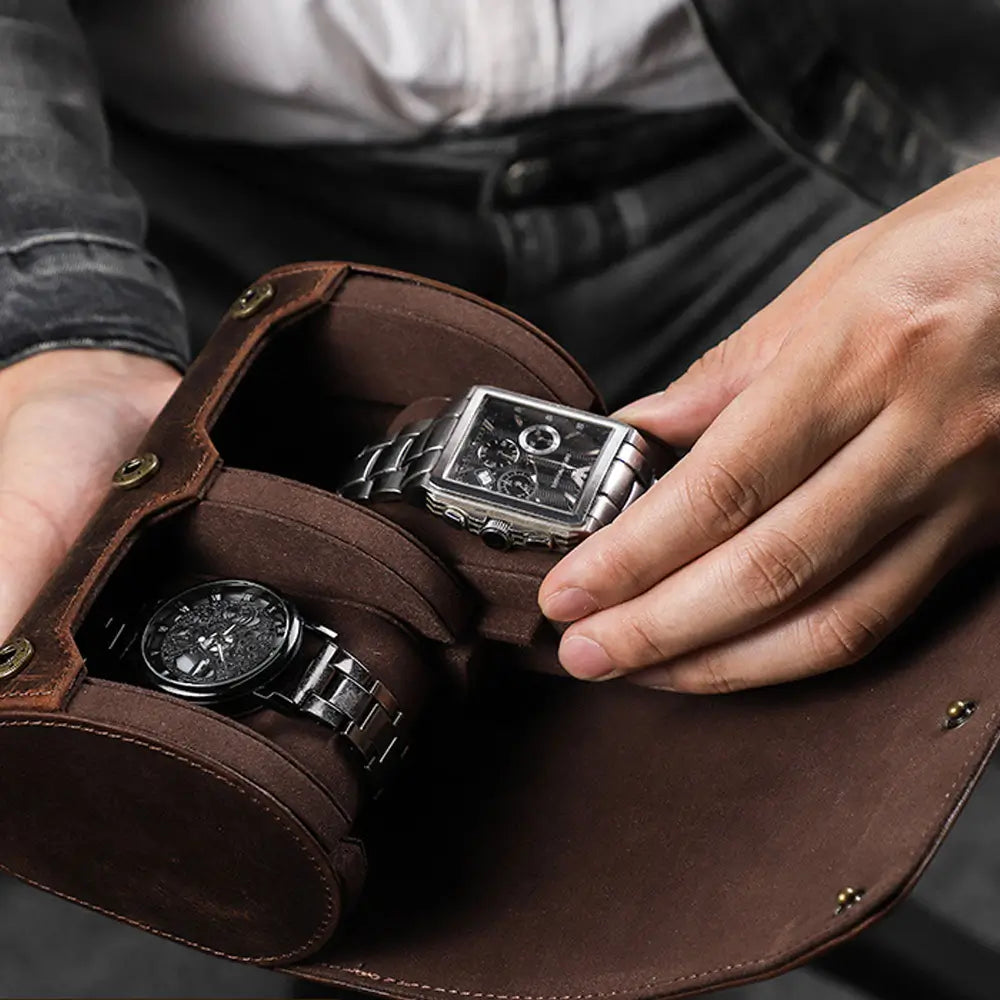
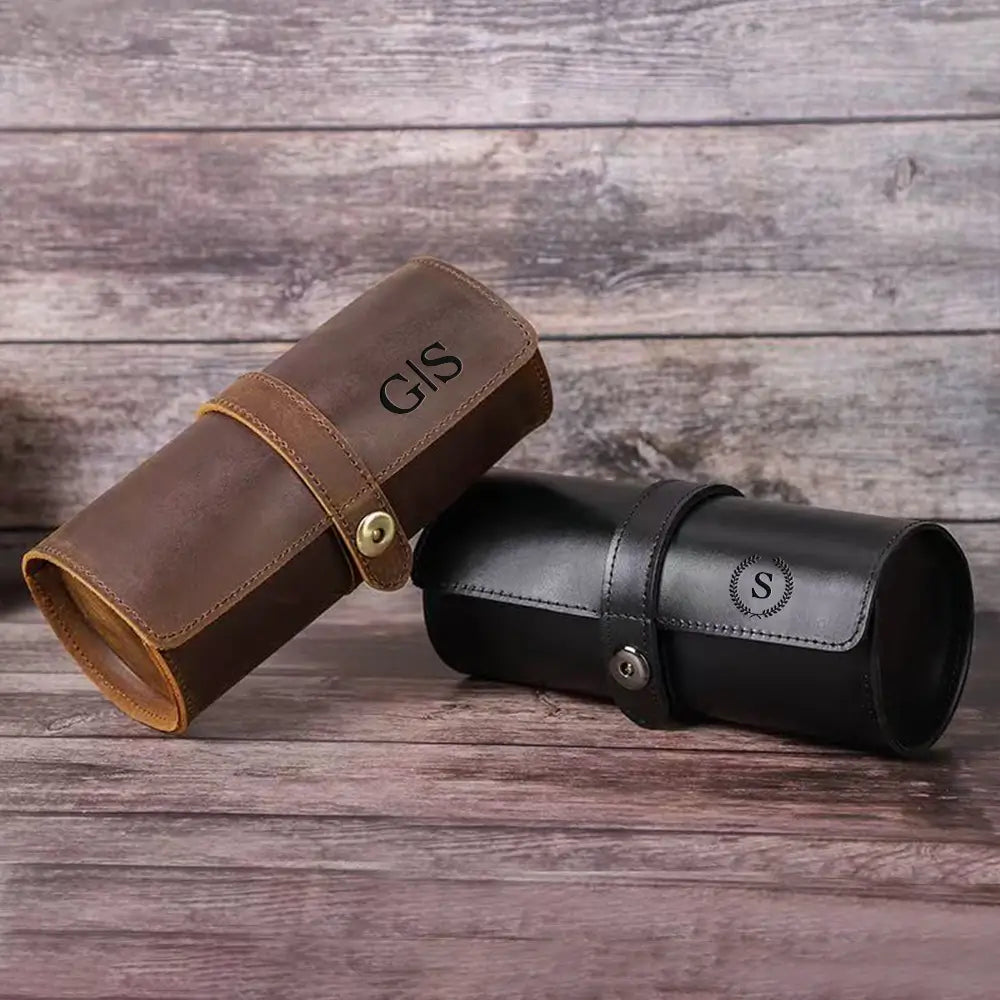
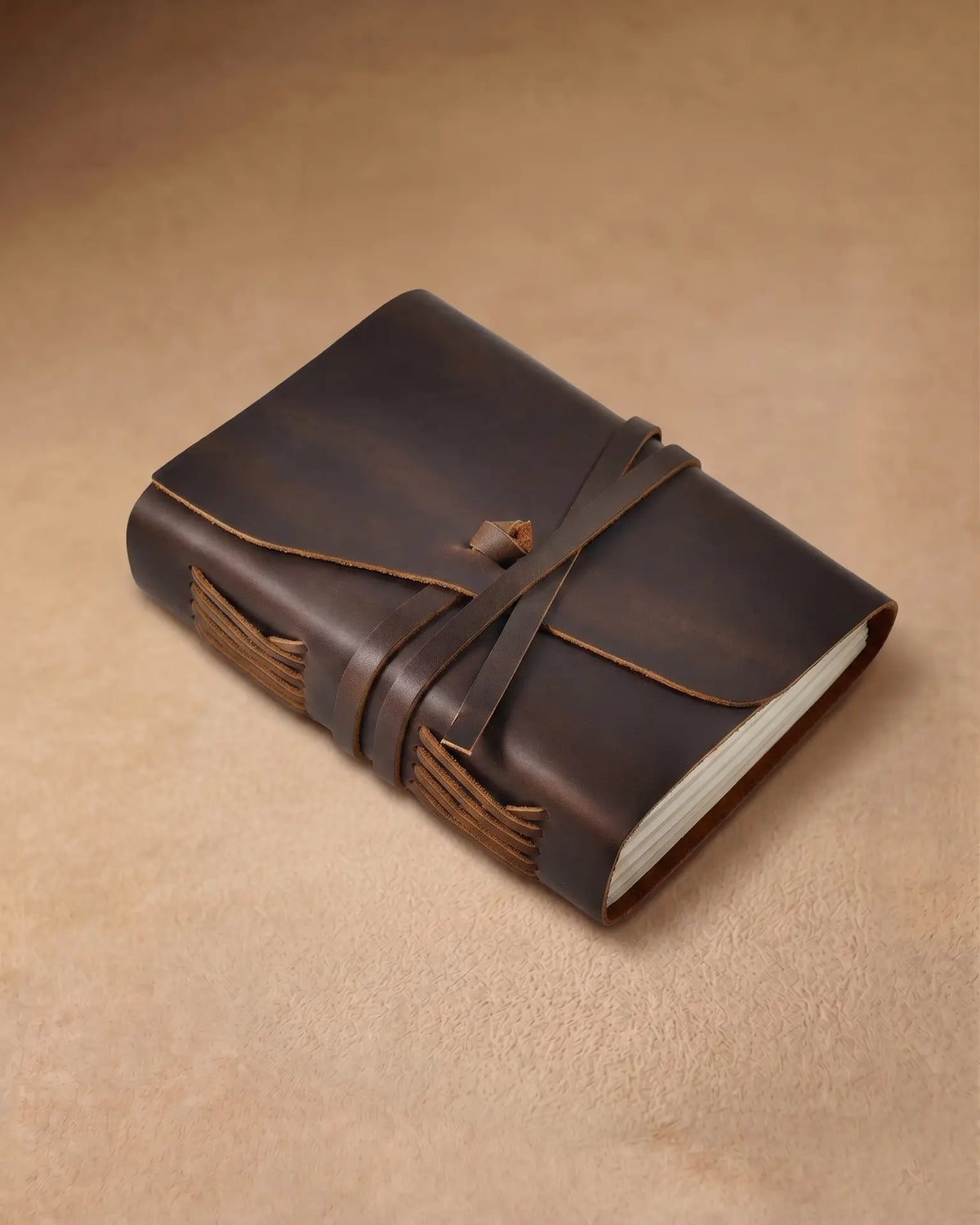
Journey Wrap Triple Watch Roll
Regular price
$59.95 USD
Regular price
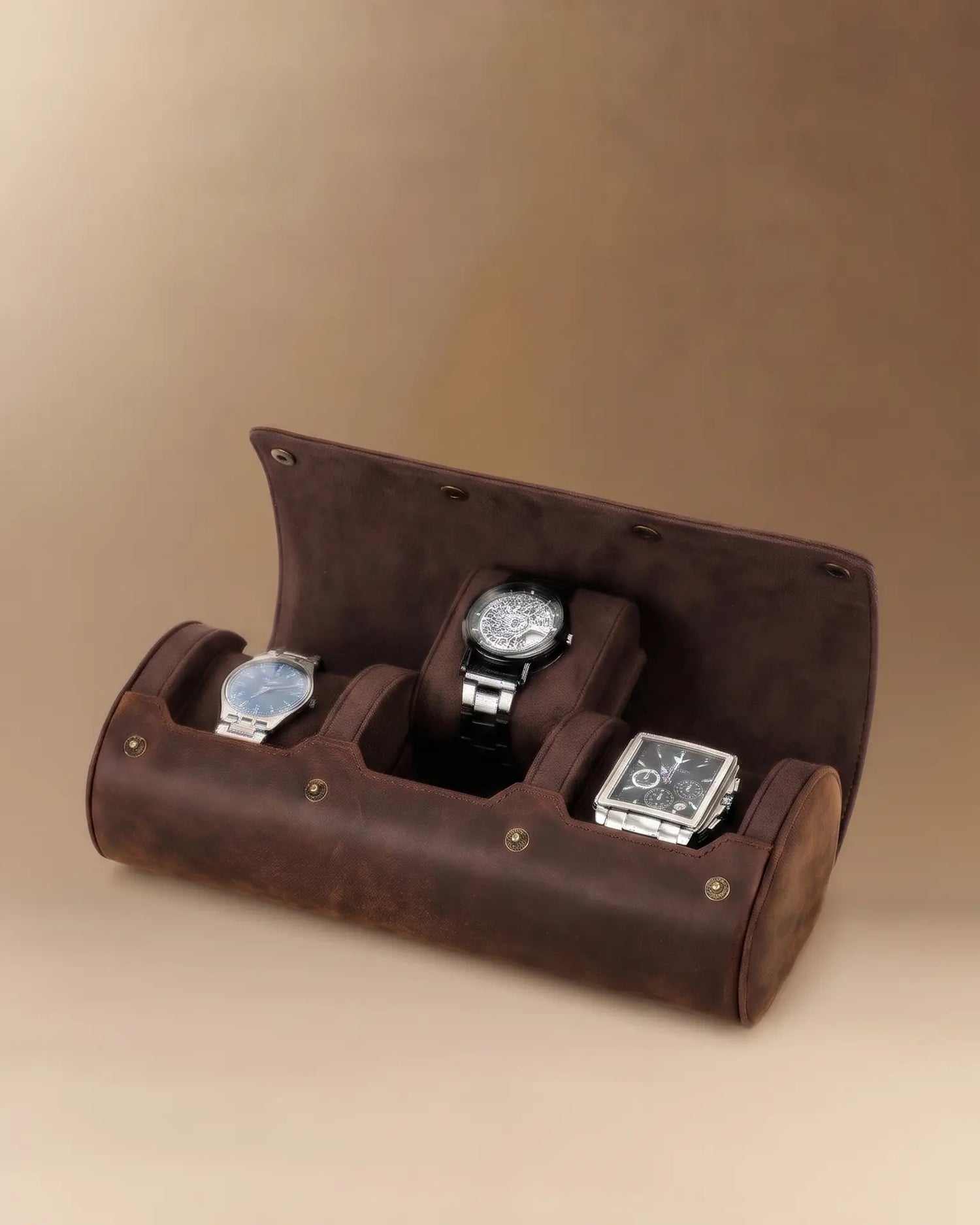
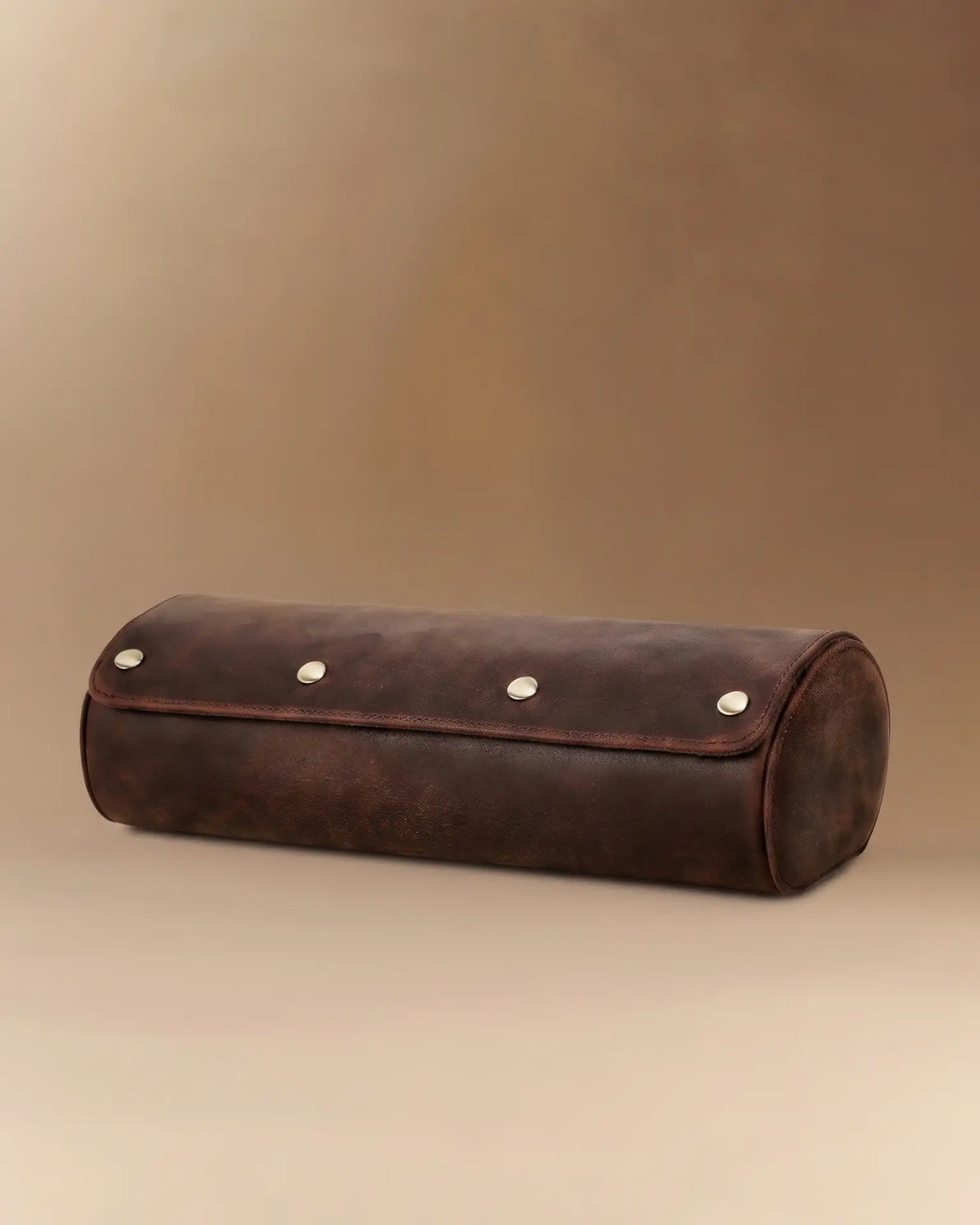
Legacy Rivet Triple Watch Roll
Regular price
$119.00 USD
Regular price
$128.00 USD
Sale price
$119.00 USD
Available in
 Dark Brown
 Dark Brown
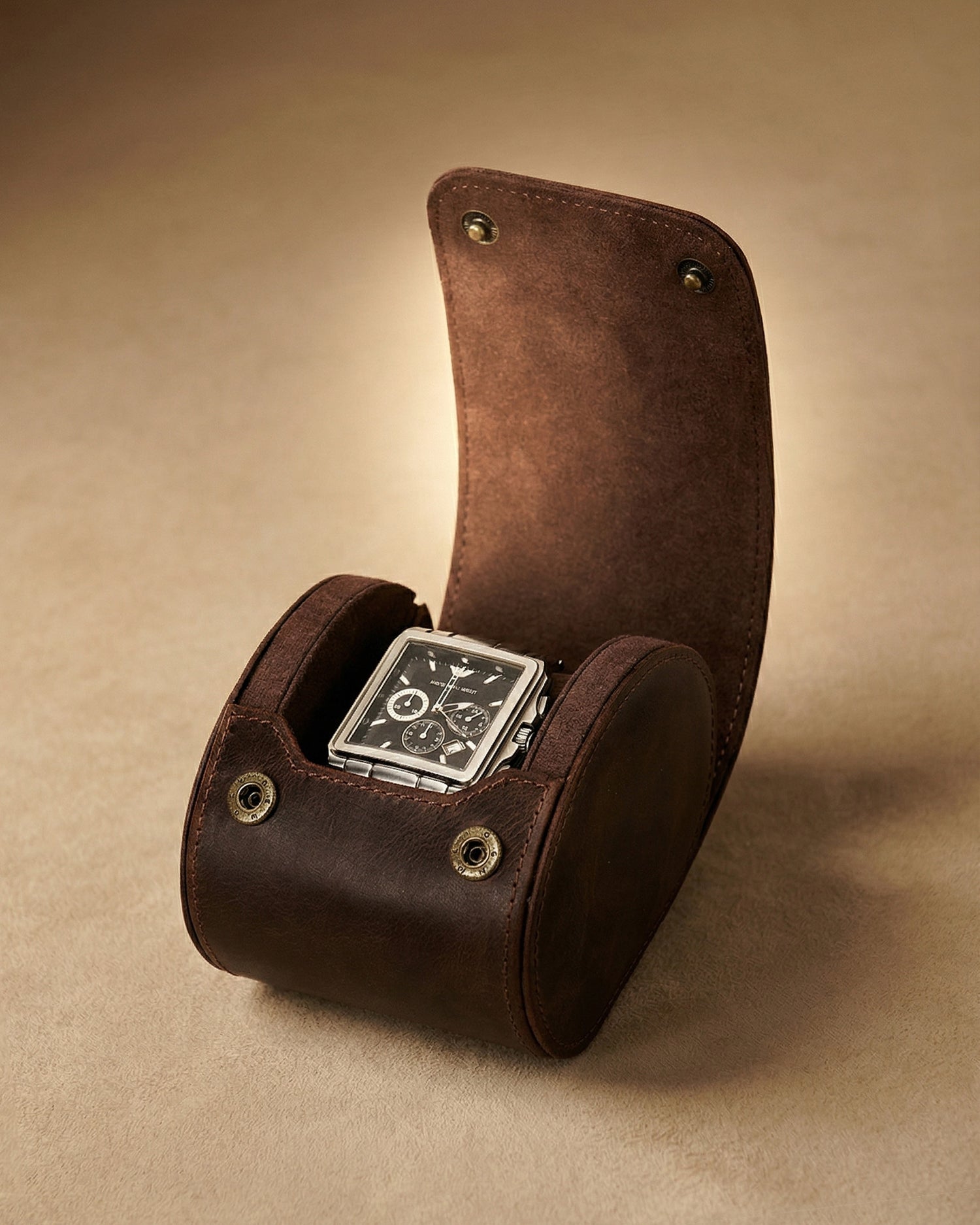
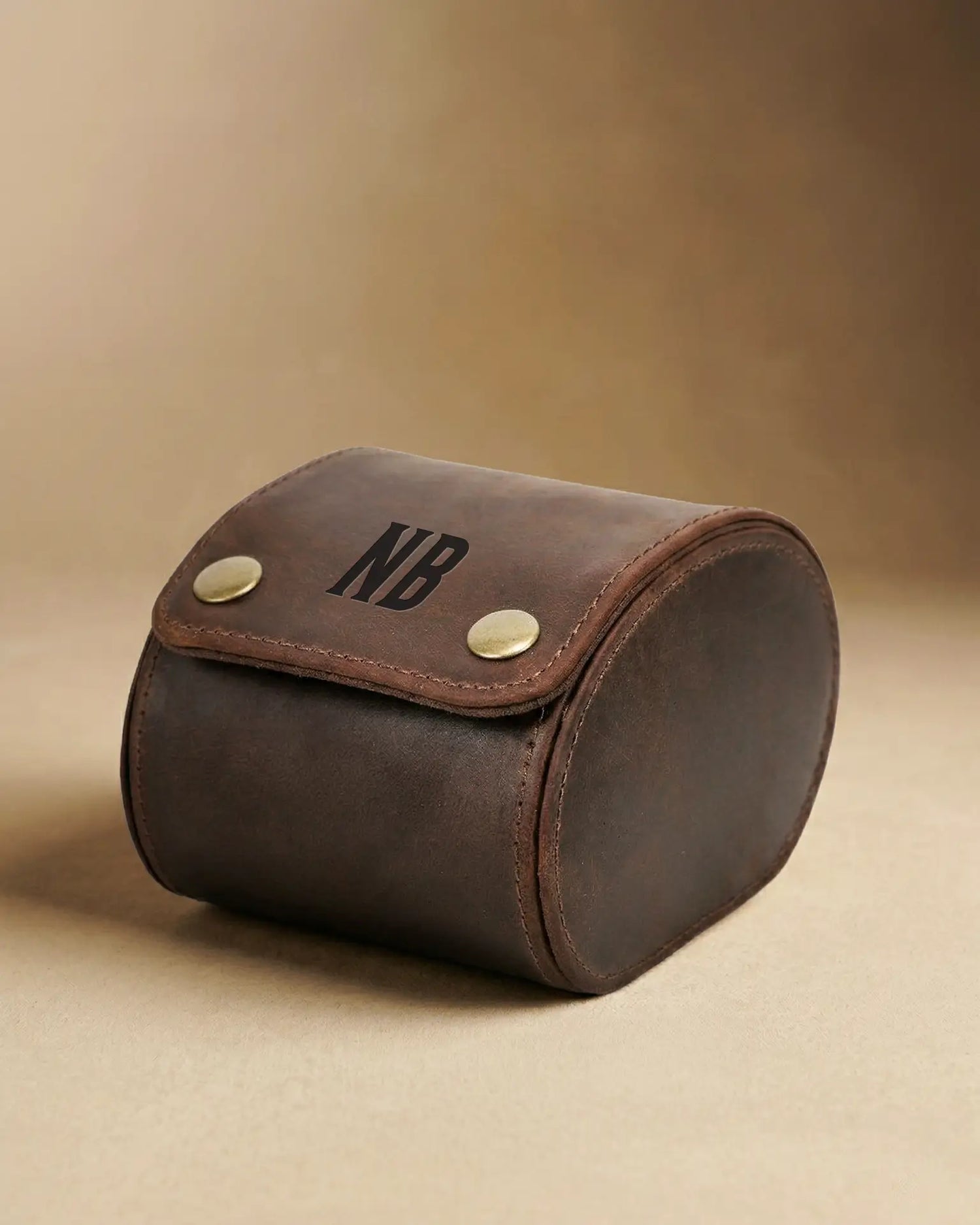
Legacy Rivet Single Watch Roll
Regular price
$79.00 USD
Regular price
$86.00 USD
Sale price
$79.00 USD
Available in
Dark Brown
Dark Brown
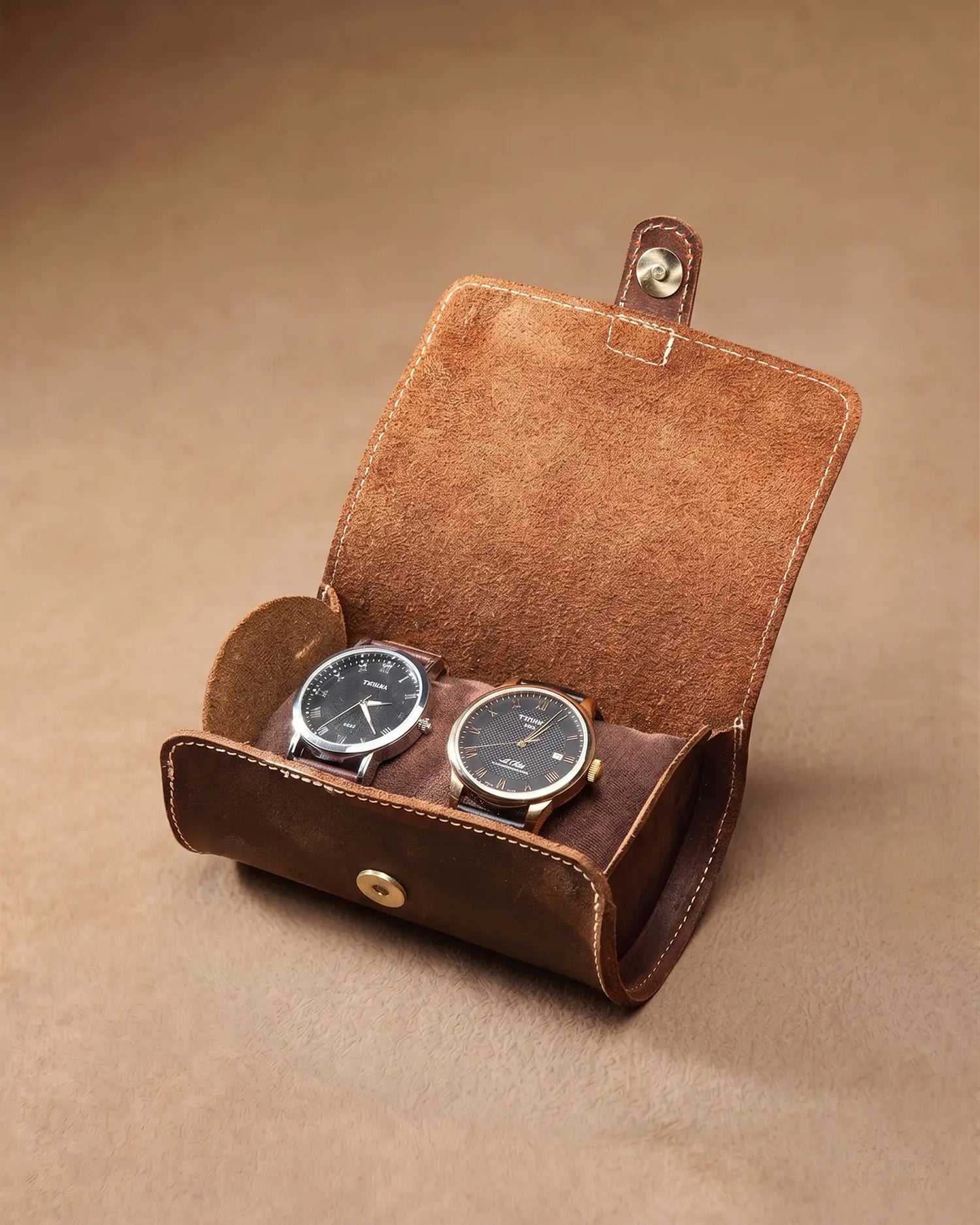
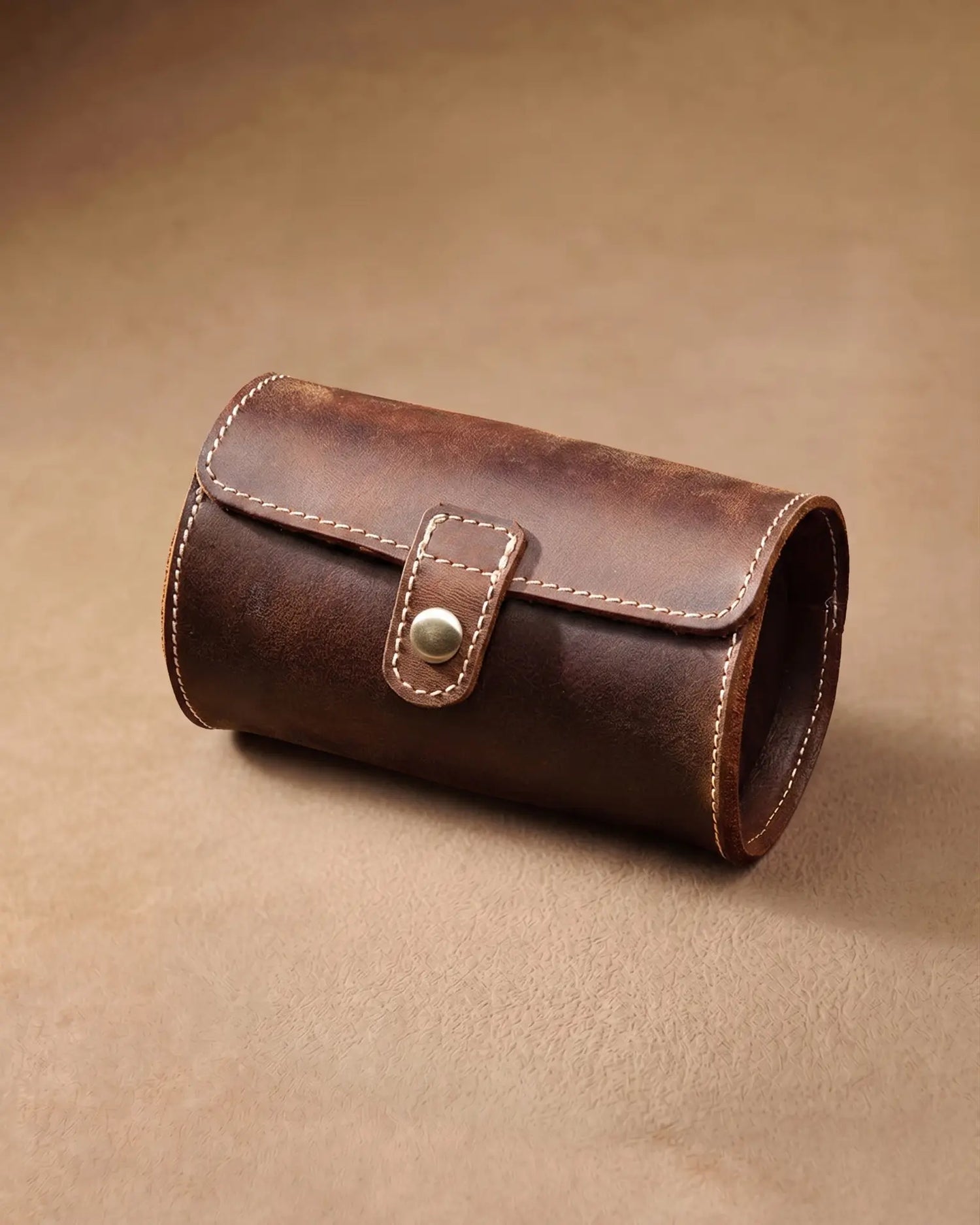
Journey Wrap Double Watch Roll
Regular price
$49.90 USD
Regular price
More Leather Guides
Explore practical guides to choosing, using and caring for leather goods.

Custom Leather Bookmark Guide: Thickness, Engraving and Magnet Options

Magnetic Bookmark With Pen Holder: Who It Is For and How to Use It
