


Wallet
5.0 · 19 reviews
“Worth every penny. Premium feel and excellent attention to detail.”
William · Verified buyer
From ¥11,200
Shop now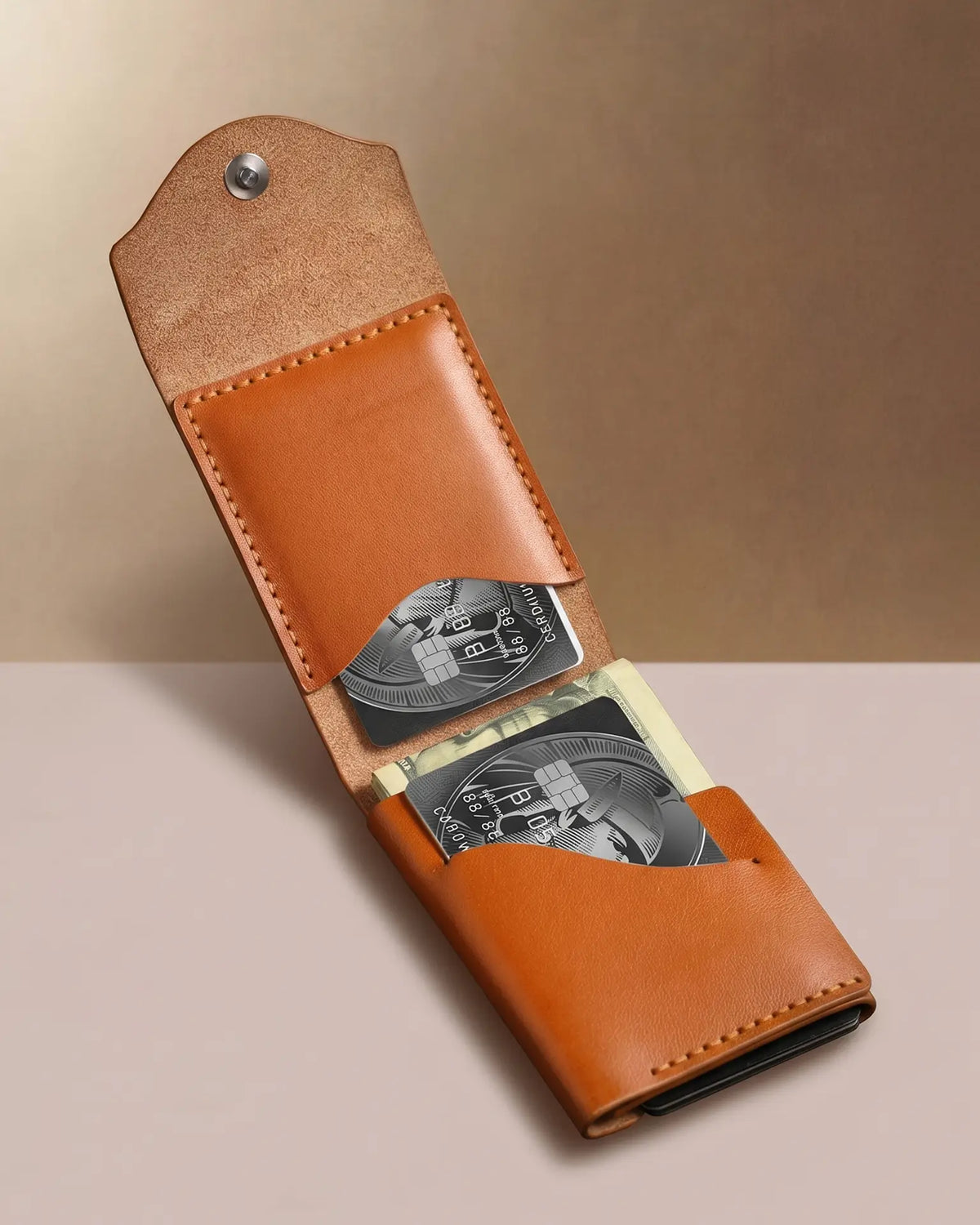
Most leather damage we see isn't from neglect. It's from too much care: a wallet scrubbed with dish soap, a journal rubbed with olive oil, a watch roll dried on a radiator.
Here's the short version of this accessories care guide. Wipe leather with a soft dry cloth. Use a barely damp cloth only if the maker allows it, and let it air dry. Condition only when the leather actually feels dry, with a tiny amount, after a patch test. Everything else in this guide is about the parts that aren't leather: the paper in a journal, the suede in a watch roll, the brass on a tray. That's where things usually go wrong. For the three leathers we use, see our leather care guide.
How this guide works: we make and sell the eight BygoneMark pieces used as examples below, and we picked them because each one is built differently. The two care products come from Bickmore, because we don't make cleaners or conditioners. Nobody paid to be included. Product details and prices were read from each seller's page on 19 October 2026.
| Step | What to do | Why it matters |
|---|---|---|
| 1 | Identify the leather and finish | Crazy horse, vegetable-tanned and smooth cowhide react differently to water and product |
| 2 | Empty it | Cards, paper inserts, watches and pillows can't get damp if they aren't there |
| 3 | Dry clean | Dust and light grime come off with a soft dry cloth |
| 4 | Patch test anything wet or new | Some finishes darken or spot; judge only once it's fully dry |
| 5 | Spot clean with as little moisture as possible | A barely damp cloth, light passes, no scrubbing |
| 6 | Air dry completely | Room temperature, opened up, away from heat and sun |
| 7 | Condition only if needed | Too much product darkens, softens or leaves residue |
Labels often mix three different ideas. "Full grain" describes the surface: the Leather Working Group defines it as leather that has kept its entire grain, with none of the surface removed. "Vegetable-tanned" describes how it was tanned. "Crazy horse" or "pull-up" describes a waxed finish that lightens when you bend or scratch it and darkens back with handling. A full grain crazy horse wallet and a full grain vegetable-tanned keychain can need slightly different handling. The FTC Leather Guides are a good reminder to read the exact material wording on a product page rather than assume.
| Leather or finish | How it behaves | Go easy on | Example below |
|---|---|---|---|
| Crazy horse (pull-up) | Lightens when flexed or scratched; marks often rub back in with a thumb | Wet cloths and solvent cleaners on the wax | Buckle journal, double watch roll, watch box |
| Vegetable-tanned | Firm, takes engraving well, darkens with light and use | Water spots; it can mark where it gets wet | Orbit AirTag keychain |
| Smooth full grain cowhide | Natural grain visible, softens with use | Heavy conditioner that changes the color | Fold Snap wallet, valet tray |
| Embossed cowhide | Pattern traps dust in the recesses | Scrubbing; use a soft brush in the pattern | Floral B5 binder |
For pull-up leather specifically, our crazy horse leather care guide goes deeper into scratches and wax.
| What you see | What it is | What to do |
|---|---|---|
| Darker, softer, a little shinier where you hold it | Patina, normal aging | Leave it |
| Grey film, grit in the seams, a smudge | Dirt | Dry wipe, then spot clean if needed |
| Light scratches on crazy horse leather | Pull-up marks | Rub gently with a clean thumb |
| Cuts, deep cracks, peeling, mold, dye loss | Damage | Stop and ask the maker or a leather repairer |
| Job | Use | Skip |
|---|---|---|
| Dry cleaning | Soft lint-free cloth; soft brush for seams and embossing | Scouring pads, stiff brushes |
| Light cleaning | A barely damp cloth, if the maker allows | Running water, soaking, a wet cloth |
| Deeper cleaning | A cleaner made for that leather and finish | Dish soap, bleach, ammonia, alcohol wipes, acetone |
| Conditioning | A little conditioner, patch-tested first | Kitchen oils as a default, petroleum jelly |
| Drying | Open air at room temperature | Hair dryer, radiator, direct sun, hot car |
The leather part of the job is almost the same. What you need to keep dry is not. Wallets fight hand oil and pocket friction. Journals wrap leather around paper, rings or elastic. Watch rolls put leather and a soft lining right against your watches.
| Wallet | Journal | Watch roll or box | |
|---|---|---|---|
| Take out first | Cards, cash, receipts | Inserts, loose sheets, pens | Watches, removable pillow |
| Main worry | Pocket grime, stretched slots | Moisture on paper, ring hardware | Product on the lining or the watch |
| Moisture rule | Barely damp outside only, if allowed | Nothing near paper or binding | Nothing near the lining |
| Store it | Not overstuffed | Paper dry, cover not squashed | Fully dry before watches go back |
Cards out of the wallet, inserts out of the journal, watches and the pillow out of the roll. Whatever is inside can't pick up moisture or residue if it isn't there.
Check the product page or care card for the leather, finish, lining and hardware. If it says dry cloth only, that's where you stop.
Soft dry cloth over everything. A soft brush only where seams or embossing trap dirt. Don't grind grit into the surface.
Pick a hidden edge, such as the inside of a flap. Wait until it's completely dry before you judge it, because wet leather always looks darker.
If water is allowed, dampen the cloth and wring it out until it barely feels cool. Light passes. No scrubbing, no soaking.
Open it up if you can, at room temperature, away from heaters and sunny windows. Overnight usually covers a light clean.
A pea-sized amount on a cloth, never straight onto the leather. Work it in, wait, then buff off the extra. Keep it away from paper, linings and metal.
| Method | Good for | Limit |
|---|---|---|
| Dry cloth | Dust, light residue, weekly upkeep | Won't lift set-in grime or oily marks |
| Barely damp cloth | Light dirt on a water-tolerant finish | Too much can spot, stiffen or warp |
| Leather cleaner | Dirt water won't shift, on a compatible finish | The wrong formula can change color or feel |
Each of these is built a little differently, which is the point. The leather routine stays the same; what you protect changes.
BygoneMark · Care example: a single-piece wallet
Wallet
5.0 · 19 reviews
“Worth every penny. Premium feel and excellent attention to detail.”
William · Verified buyer
From ¥11,200
Shop nowOne continuous piece of full grain leather, folded and stitched, with a stainless snap. Empty it and leave it open for a few minutes so the card slots relax. Dry wipe inside and out. If an edge is still grubby, patch test, then make one light pass with a barely damp cloth and let it dry open before the cards go back.
The bigger threat is stretch, not dirt. Pack a wallet tight for months and the slots stay stretched. Carry fewer cards and it outlasts any conditioner. Our guide on how to clean a leather wallet covers stains and odors in more detail.
| Detail | What the product page states |
|---|---|
| Material | Full grain leather (top layer cowhide) |
| Construction | Single-piece cut, no internal joining seams |
| Hardware | Brushed stainless steel snap |
| Edges | Burnished and sealed |
| Capacity | Up to 8 cards |
| Price | From $69.90 USD, checked 19 October 2026 |
Skip it if: you carry more than 8 cards; it isn't built for that.

BygoneMark · Care example: vegetable-tanned leather
Leather Accessories
5.0 · 77 reviews
“The holder is high quality. I really like the real leather, the smell and the tanned coating. The leather is thick enough it does not feel...”
Nill · Verified buyer
¥2,800¥3,200
Vegetable-tanned leather is the one most likely to show a water mark, so keep it dry. Take the AirTag out before any wipe, dry clean the leather, and let it darken with use; that honey-brown change is the leather doing what it's supposed to do.
Keys rub against it all day. Light scuffs are part of the look. Deep cuts are not something conditioner fixes.
| Detail | What the product page states |
|---|---|
| Material | Full grain vegetable tanned leather |
| Construction | Hand stitched saddle stitch |
| Hardware | Metal spring ring clip |
| Fits | Apple AirTag (not included) |
| Price | $16.90 USD, checked 19 October 2026 |
Skip it if: you'd rather the leather stay exactly the shade it arrived.
A journal is a mixed-material object. The leather may tolerate a little moisture or product; the paper wants to stay dry, full stop. Never condition a journal while it's lying open. The Library of Congress goes further for leather-bound books and says not to oil or dress them with oils or waxes of any sort. A modern journal cover isn't a rare book, but the caution is worth borrowing for anything you care about.
BygoneMark · Care example: crazy horse journal
レザージャーナル
5.0 · 28 reviews
“Really pleased with this. It has that understated leather look that suits both casual and more polished setups. I would happily give this to someone who...”
Megsreads · Verified buyer
¥15,900¥20,700
The pages here are bound in, so you can't take them out first. Close the journal, hold it shut and dry wipe the cover. The product page allows a slightly damp cloth and air drying; keep that cloth well away from the page edges. Light scratches on crazy horse leather usually rub back in with a finger.
The brass buckle will darken over time. That's normal. Wipe it dry if it gets wet and leave the patina. More on covers like this in our guide to crazy horse leather journals.
| Detail | What the product page states |
|---|---|
| Material | 100% full grain crazy horse leather |
| Pages | 96 sheets (192 pages), 100gsm acid-free cream paper, bound |
| Closure | Brass buckle with adjustable strap |
| Maker's care note | Slightly damp cloth, air dry; avoid prolonged direct sunlight |
| Price | $99.00 USD, checked 19 October 2026 |
Skip it if: you want to swap pages; this one is bound.
BygoneMark · Care example: embossed cover with rings
Leather Journal
Legacy Floral B5 Leather Ring-Binder Journal
5.0 · 1 review
“The floral embossing is beautiful without being too ornate. It feels substantial with plenty of pages, making it a lovely gift journal.”
Auxfan · Verified buyer
¥14,300
Shop nowTake the paper inserts and dividers out first; on a nine-ring binder that takes a minute. Dry wipe the cover, then use a soft brush in the floral pattern, where dust settles in the recesses. Wipe the metal rings separately with a dry cloth and close them gently.
The product page says to dust it with a soft dry cloth and keep it away from prolonged moisture and direct heat. Keep anything damp away from the PVC pouch and the paper.
| Detail | What the product page states |
|---|---|
| Cover | Cowhide leather with an embossed floral pattern |
| Mechanism | Nine-ring loose-leaf |
| Size | 8.07 × 10.63 × 1.18 in (205 × 270 × 30 mm) |
| Included | Two paper inserts (120 sheets), two dividers, one PVC pouch |
| Maker's care note | Dust with a soft, dry cloth; avoid prolonged moisture and direct heat |
| Price | $89.00 USD, checked 19 October 2026 |
Skip it if: you want an engraved cover; this model is sold without personalization.

BygoneMark · Care example: elastic insert system
Leather Journal
Organize writing and planning in a refillable B5 leather traveler’s notebook with lined, grid and...
¥14,400
Shop nowSlide the three notebook inserts and the card organizer out from under the elastic. Now the cover is just leather, and you can dry wipe it front, back and spine. Don't stretch the elastic to clean under it; leave it alone.
The page says to wipe with a clean dry cloth, avoid prolonged water and direct sunlight, let wet leather air-dry naturally, and test any care product on a hidden area first.
| Detail | What the product page states |
|---|---|
| Cover material | Leather |
| Binding | Replaceable elastic insert system |
| Size | 10.28 × 7.28 × 0.98 in (261 × 185 × 25 mm) |
| Maker's care note | Clean dry cloth; air-dry if wet; patch test any product |
| Price | $89.90 USD, checked 19 October 2026 |
Skip it if: you need a pocket-size journal; this one is B5.
The outside is leather. The inside is suede or another soft lining that touches your watch. A product that is fine on the outside can stain suede, so treat the lining as a separate thing and usually just leave it dry.
BygoneMark · Care example: soft roll with a suede pillow
Leather Watch Case
5.0 · 28 reviews
“Really pleased with this. It has that understated leather look that suits both casual and more polished setups. I would happily give this to someone who...”
Midwestmaker · Verified buyer
¥8,000
Shop nowTake both watches out, and the pillow too, since it's removable. Dry wipe the outside. The product page allows a dry or slightly damp cloth and calls conditioner optional, about once a year. Keep both off the suede. Let everything dry fully before the watches go back in; damp leather against a steel case or bracelet is what to avoid.
A soft roll isn't impact protection, so how you store it matters as much as how you clean it. See our comparison of watch roll vs watch box vs pouch.
| Detail | What the product page states |
|---|---|
| Material | Full grain crazy horse leather |
| Interior | Soft suede pillow cushion (removable) |
| Closure | Brass snap button |
| Maker's care note | Dry or slightly damp cloth; optional conditioner once yearly; rub scratches with a thumb |
| Price | $49.90 USD, checked 19 October 2026 |
Skip it if: you only ever travel with one watch.

BygoneMark · Care example: structured box with a suede lining
Leather Watch Case
5.0 · 42 reviews
“Really pleased with this. It gives watches a tidy place to live between wears. Nothing about it feels overdesigned; it just does its job neatly. The...”
DadwithDadWithABookabook · Verified buyer
¥14,400
Shop nowA box holds its shape, so the risk is different: dust in the corners and a lining you can't easily reach. Take the pillow out, turn the box over and tap out any grit. Dry wipe the outside. If the suede lining looks dusty, a soft dry brush is enough.
The two brass snaps just need to stay dry. Leave the box open for an hour after any cleaning before a watch goes back in.
| Detail | What the product page states |
|---|---|
| Material | Full grain crazy horse leather |
| Interior | Soft suede lining with removable pillow |
| Size | 3.3 × 3.7 × 3.5 in (85 × 95 × 90 mm) |
| Closure | Double brass snap buttons |
| Capacity | 1 watch, cases up to 50 mm |
| Price | $89.90 USD, checked 19 October 2026 |
Skip it if: you need something flat for a pocket; this is a box.
BygoneMark · Care example: tray with brass corners
Leather Valet Tray
5.0 · 32 reviews
“Highly recommend! Great value for money and very satisfied with the quality.”
Sophia · Verified buyer
¥4,800¥6,400
Trays collect coins, keys and the occasional damp ring. Tip it out, dry wipe the inside, and check the eight brass snaps are dry. If you're putting it away for a trip, unsnap the corners and store it flat rather than squashed.
Nothing stays on a tray for long, so it rarely needs more than a cloth.
| Detail | What the product page states |
|---|---|
| Material | Full grain cowhide leather |
| Size | 8.66 × 8.66 in (22 × 22 cm) |
| Hardware | 8 solid brass snap buttons; folds flat |
| Stitching | Contrast hand-stitching |
| Price | $29.90 USD, checked 19 October 2026 |
Skip it if: you want a lidded box with compartments.
Verdict: Every one of these starts with the same dry cloth. What changes is what you take out first: cards, inserts, rings, watches or the pillow.
We don't make cleaners or conditioners. Bickmore is a long-running American maker, and its two basic products cover the cleaner-then-conditioner routine. Use them only on smooth finished leather, and patch test first; pull-up and vegetable-tanned leathers can react differently from what any label promises.
Alternative from Bickmore · For dirt water won't lift

Bickmore calls this an aggressive cleaner for removing surface dirt, grime, sweat and salt from smooth finished leathers. That's more than most small accessories need, so it's a last step, not a routine.
The maker's directions: check colorfastness in a hidden area, apply a small amount to a slightly damp textured cloth, rub gently in a circle, let it dry, and follow with a conditioner.
| Detail | What the product page states |
|---|---|
| Use | Smooth finished leathers, per the maker |
| Directions | Small amount on a slightly damp textured cloth; test first |
| Made in | USA, per the maker |
| Price | $8.99 (2 oz) or $10.99 (8 oz) USD, checked 19 October 2026 |
Skip it if: a dry cloth or one damp pass already did the job.
Alternative from Bickmore · For leather that feels dry

Bickmore says Bick 4 is wax-free and won't darken leather. On a wallet or journal cover you need very little: a pea-sized amount on a cloth, worked in, then buffed. The 2 oz bottle will last a long time for accessories.
Read the warning on the page: do not use it on suede, rough-out, distressed or napped leathers. That rules out watch-roll linings, and it's another reason to patch test on waxed crazy horse leather.
| Detail | What the product page states |
|---|---|
| Use | Smooth finished leather, per the maker |
| Formula | Wax-free, per the maker |
| Not for | Suede, rough-out, distressed or napped leather |
| Directions | Shake, test a hidden area, apply with a clean cloth, let dry, buff |
| Price | From $8.99 (2 oz); $14.99 (8 oz) USD, checked 19 October 2026 |
Skip it if: your piece has a suede or napped surface.
| Product | Job | Use on | Keep off |
|---|---|---|---|
| Dry cloth | Routine dust and smudges | Everything | Nothing |
| Bick 1 Leather Cleaner | Grime water won't lift | Smooth finished leather | Paper, suede, linings |
| Bick 4 Leather Conditioner | Leather that feels dry or stiff | Smooth finished leather | Suede, rough-out, napped leather |
A leather oil is usually heavier, soaks in further and darkens leather more. A conditioner is a broader category meant to keep leather flexible, and plenty of conditioners contain oils or waxes anyway. The label matters less than whether the product suits your leather and finish, which is what the patch test tells you.
Not as a go-to. None of them was made for leather finishes. They can darken leather, leave a greasy film, spread past where you put them or age unevenly. If you decide to try a household oil anyway, use the smallest amount on a hidden spot and wait a day before judging.
| Household item | Common risk |
|---|---|
| Olive or coconut oil | Darkening, oily surface, uneven aging |
| Baby oil | Mineral oil and fragrance can change the finish or leave residue |
| Petroleum jelly | Greasy film; changes look and feel |
| Homemade oil and wax mixes | Hard to repeat; behave differently on different finishes |
No household soap is safe for every leather accessory. Dish soap and all-purpose cleaners are out. Saddle soap is a traditional leather cleaner, but it's stronger than most small accessories need, so start with a dry cloth and a barely damp one before you reach for it. If you do use a soap or cleaner, follow its directions exactly and wipe off any residue.
If a journal you write in gets soaked, don't force wet pages apart. Let it dry slowly or ask a book repairer.
| Task | How often | Trigger |
|---|---|---|
| Dry wipe | Whenever you notice dust | Dull surface, grit in seams |
| Spot clean | As needed | A smudge a dry cloth won't lift |
| Condition | Rarely; the double watch roll's page suggests once a year at most | Leather feels dry or stiff, not because a month passed |
Heat and damp do more slow damage than dirt. For books, the Library of Congress suggests a cool, relatively dry room, 70°F or below at 30 to 55% relative humidity, away from vents and radiators. That's a sensible target for leather goods at home too.
| Item | Store it like this |
|---|---|
| Wallet | Clean, dry, spare cards out for long storage; away from heat |
| Journal | Paper dry, cover not squeezed on a tight shelf, never closed while damp |
| Watch roll or box | Fully dry; watches never against damp leather or lining |
| Valet tray | Dust wiped, snaps dry; flat or in its formed shape, not crushed |
| Everything | A cloth bag or open shelf rather than a sealed plastic bag |
One more habit that helps journals: write with clean, dry hands. The Library of Congress recommends freshly washed and dried hands, without lotion for handling books.

Gentle and specific beats thorough. A wallet, a journal and a watch roll share the same leather routine but not the same weak spots, so empty each one, protect what isn't leather, and do less than you think you need to. Most of the time, a dry cloth is the whole job.
Wipe them with a soft dry cloth regularly, keep them away from soaking and direct heat, and use a compatible cleaner or conditioner only when they need it. The maker's care note for that finish comes first.
No single oil is best for every leather. For wallets, journals and watch rolls, a conditioner made for leather is safer than a kitchen oil, because household oils can darken or change some finishes. Patch test anything new.
It isn't recommended. Petroleum jelly can leave a greasy film and change how leather looks and feels. If the leather feels dry, use a small amount of leather conditioner instead.
Not as a routine. Cooking oils aren't made for leather finishes and can darken leather or make it age unevenly. If you've already used some, blot off the excess and leave it.
Avoid soaking, dish soap, bleach, ammonia, alcohol wipes, acetone and direct heat. When you're unsure, a dry cloth is the safer choice.
Close the journal or take the inserts out, then dry wipe the cover only. Keep any moisture or product well away from the page edges, and never condition a journal while it's open.
Take the watches and pillow out, dry wipe the leather outside, and leave the suede dry or use a soft dry brush. Let the roll dry fully before the watches go back in.
Leather oil is usually heavier and darkens leather more. Conditioner is a broader category meant to keep leather flexible, and it may contain oils or waxes. What matters is whether it suits your leather, so read the label and patch test.
Sources and references
5.0 · 32 reviews
Protect a small collection in a personalized 3 slot leather watch case, engraved for a memorable ...
5.0 · 28 reviews
Personalized A5+ leather journal with strap closure in full grain crazy horse leather. 176 pages ...
4.9 · 39 reviews
Carry three timepieces in a personalized 3 watch roll, engraved to create a practical collector g...
5.0 · 65 reviews
Make watch storage personal with a personalized 2 watch roll, engraved for a collector, partner o...
5.0 · 36 reviews
Protect one treasured timepiece in a personalized single watch roll, engraved to create a compact...
5.0 · 21 reviews
Turn notes into a keepsake with a personalized vintage leather journal, engraved for writers, tra...
Legacy Strap B6 レザージャーナル(ひも留め)
5.0 · 50 reviews
Capture plans and ideas in a personalized B6 leather journal with a refillable format and secure ...
パーソナライズ可能 レザーマグネット栞 ペンホルダー付き|7色展開
4.9 · 149 reviews
Keep a page and pen together with a magnetic leather bookmark with pen holder, a practical person...
4.9 · 57 reviews
Save your place without bending pages using a vintage magnetic leather bookmark, a compact person...
 leather-accessories · 2026年10月
8 Essential Leather Travel Accessories for Passport, Watch and Tech8 leather travel accessories for passports, watches and tech: passport holders, watch pouches, AirTag cases and a cab...
 leather care · 2026年10月
How to Clean a Leather Wallet Without Damaging It: 7 Safe StepsHow to clean a leather wallet safely in 7 steps: dry wipe, barely damp cloth, air drying, stain fixes and the 7 house...
 buying guide · 2026年10月
Front Pocket vs Back Pocket Wallet: Which Is Better? 7 Leather PicksFront or back pocket? Compare comfort, sitting, access and card count, take the 60-second pocket fit test, and see 7 ...


