


Leather Valet Tray
5.0 · 32 reviews
“Highly recommend! Great value for money and very satisfied with the quality.”
Sophia · Verified buyer
¥4,800¥6,400
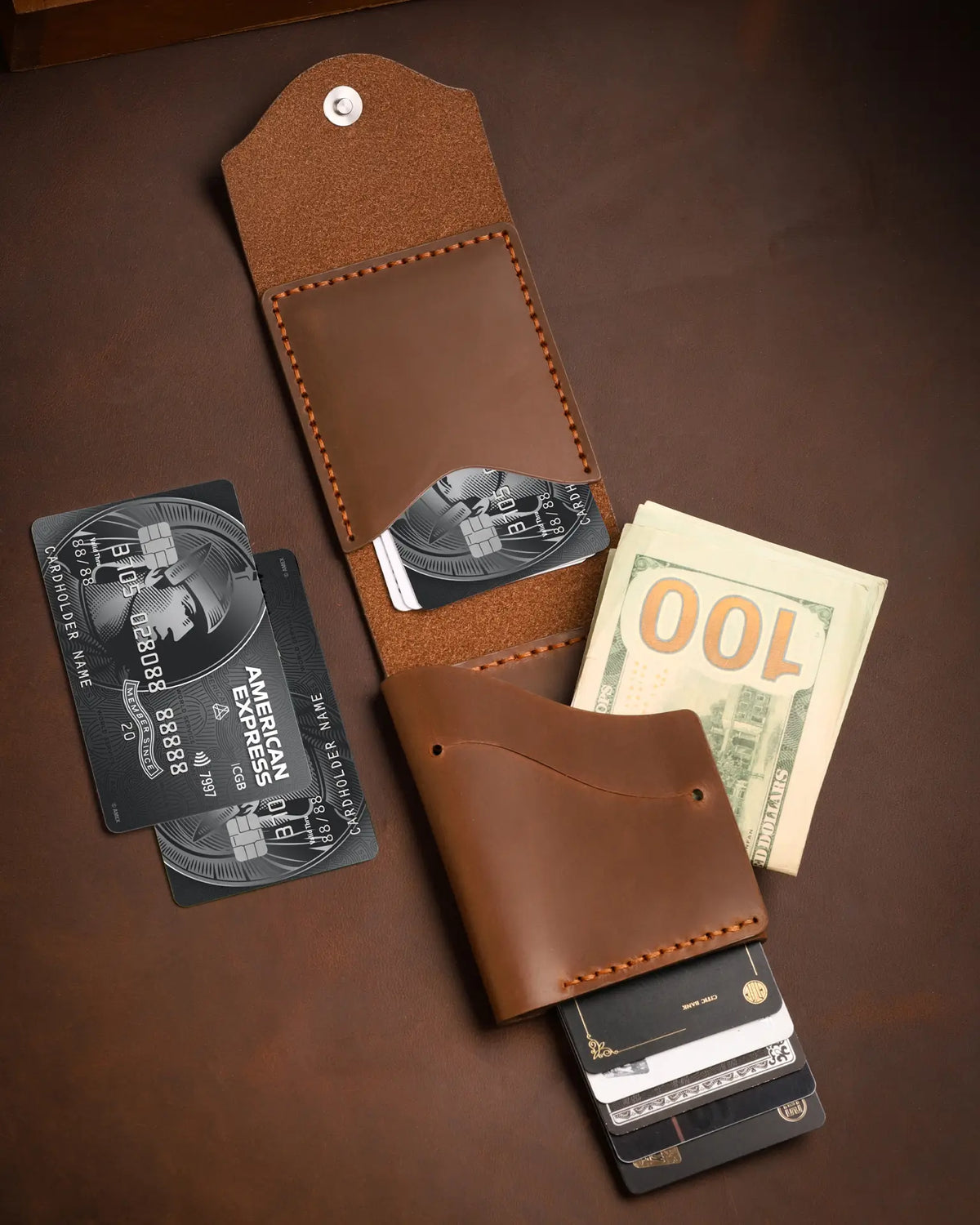
Before you grab anything from the kitchen: the dirt is rarely what ruins a wallet. The quick fix often is: a splash of vinegar, a dab of coconut oil, five minutes on a radiator.
The safest way to clean a leather wallet is to start dry, then add the smallest amount of moisture or product that solves the problem. Wipe it, don't wash it. Let it air dry open, away from heat. Condition only if the leather feels dry, and patch test first. Leather reacts differently depending on how it was tanned and finished, so the maker's care card beats any generic recipe, including this one.
How this guide works: BygoneMark makes leather goods such as the Legacy Fold Snap Wallet. This is a care guide; the few products near the end are ours and are there because they help prevent the problems below, not because cleaning requires them.
| Problem | Lowest-risk first step | Don't do first | Get help when |
|---|---|---|---|
| Dust or surface grime | Soft dry lint-free cloth | Wet scrubbing or a cleaner | Dirt stays embedded after dry wiping |
| Small fresh spot | Blot, then a barely damp cloth if the maker allows | Hard rubbing or soaking | Color comes off or the mark spreads |
| Got wet | Blot and air dry open at room temperature | Heat, sun or wringing | Leather stiffens, warps or dye moves |
| Grease, ink or dye transfer | Blot only; identify the finish | Alcohol, vinegar, baking soda, solvents | It won't lift or the wallet is valuable |
| Leather feels dry | Condition after cleaning and full drying, patch-tested | Kitchen oils or heavy waxes | Leather is cracking |
| Mould or a musty smell | Stop; bag it separately | Bleach or scrubbing indoors | Growth is active or keeps coming back |
| Item | Why | Optional? |
|---|---|---|
| Two clean lint-free cloths | One dry, one barely damp | No |
| Clean water | Only a little, on the cloth | No |
| Soft brush (a clean soft toothbrush works) | Lifts grit out of seams and slots | Yes |
| Leather cleaner or conditioner suited to your finish | Only if dry wiping and water aren't enough | Yes |
Take out cards, cash, receipts and crumbs, and open every pocket. Cards left inside trap moisture and rub grit into the lining.
Check the maker's page or care card. Full grain only tells you the grain surface is intact, not how it's finished: a waxed crazy horse finish behaves differently from smooth pigmented leather. Our guides to crazy horse leather care and full-grain vs genuine leather explain the terms.
Wipe the whole wallet with a soft dry cloth and brush along the stitching and inside the card slots. Grit mixed with water turns into a grinding paste, so get it out first.
Try water, cleaner or conditioner on a small hidden spot, such as inside a card slot. Wait until it's fully dry before judging, because leather looks darker while wet.
If the maker allows it, dampen the cloth, not the wallet. Wring it until it feels cool rather than wet, then wipe gently in small sections. Don't scrub, and don't pour water on the leather.
Leave the wallet open at room temperature, away from radiators, hair dryers and direct sun. Don't put cards back until it's completely dry, usually several hours.
If the leather feels dry once it's fully dry, apply a pea-sized amount of a conditioner made for your finish with a clean cloth, then buff off the excess. Conditioners usually darken leather slightly; patch test first.
Warning
if color comes off on the cloth, the surface turns tacky or the leather stiffens, stop right there. Let it dry and reassess before doing anything else.
A barely damp cloth only touches the surface. Washing or soaking pushes water into the seams, inner layers and dyes.
| Method | Use | Main risk |
|---|---|---|
| Barely damp cloth | Light surface dirt, if the finish allows | Color shift or spotting if overdone |
| Washing or soaking | Not a routine wallet-care method | Stiffening, shrinking, staining, distortion, dye movement |
| Washing machine | Never | Shape loss, cracked finish, ruined lining |
A little surface moisture usually doesn't. Soaking can: it may stiffen, shrink or stain leather, especially vegetable-tanned leather. If your wallet gets caught in the rain or goes through the wash:
A cleaner made for your wallet's finish is the easiest to trust because it comes with instructions. Mild soap can be fine on some finished leathers if the maker allows it. Saddle soap gets recommended a lot, but the Canadian Conservation Institute (CCI) warns that it's alkaline and harmful to leather, so it isn't our default.
| Option | When it fits | Watch out for |
|---|---|---|
| Plain water on a cloth | Light grime after dry wiping | Overwetting |
| Leather cleaner matched to the finish | Grime water won't shift | Wrong product for the finish |
| Mild soap | Only if the maker says so | Residue and vague strength |
| Saddle soap | Not a safe default | Alkaline; conservators advise against it |
"Natural" isn't the same as safe here. These can change color, pH or surface wax, or leave residue behind.
| Household remedy | Verdict | Why |
|---|---|---|
| Baking soda | Skip | Abrasive and alkaline; hard to control |
| White vinegar | Skip unless the maker says otherwise | Acidic; can alter dye or finish |
| Rubbing alcohol or hand sanitizer | Skip | Can strip finish and color |
| Bleach, ammonia, disinfecting wipes | Skip | Harsh chemistry damages finish and leather |
| Dish soap | Only if the maker allows | Formulas vary; residue and overwetting |
| Coconut, olive or baby oil | Skip | Can darken, migrate, go rancid or turn greasy |
| Vaseline | Skip | Heavy and oily; changes look and feel |
A conditioner made for leather has a known purpose and instructions. Kitchen oils and petroleum jelly don't. The National Park Service's Conserve O Gram on fatty acid spew describes oily dressings darkening leather, turning sticky and leaving a white residue over time, and the CCI's note on vegetable and mineral-tanned leather advises keeping dressings to a minimum.
That's museum guidance, stricter than a daily wallet needs. It doesn't mean never condition; it means condition rarely, sparingly, with the right product.
| Stain | First move | Don't | If it stays |
|---|---|---|---|
| Surface dirt and hand oils | Dry wipe, then minimal moisture | Scrub off normal patina | Leave it; darkening is often patina |
| Water spots | Let it dry fully first | Rewet only the edge of the spot | Ask the maker or a specialist |
| Grease or oil | Blot fresh grease straight away | Rub it in or add powders and solvents | Maker guidance or a professional |
| Ink or dye transfer from jeans | Leave it and identify the finish | Reach for rubbing alcohol | A professional, especially for valuable items |
Ink can bind quickly, and solvents that lift ink can lift wallet dye with it. That's why we don't give a home recipe for it.
Work in stages instead of reaching for stronger chemistry.
For an irreplaceable or vintage wallet, a leather-care professional is the safer bet. Iowa State University Extension gives the same advice for stains.
Treat mould as a stop sign, not a stain. The CCI's guidance on removing mould from leather notes that mould can be a health concern and spores spread. Don't scrub or bleach it indoors. Bag the wallet away from other leather and get advice, especially if the growth keeps coming back.
Cleaning a journal or a watch roll too? Our leather accessories care guide covers what changes when leather is wrapped around paper, a suede lining or brass hardware.
Yes. The Leather Working Group glossary and the FTC Leather Guides help decode what a label actually says.
| Term | What it describes | Cleaning implication |
|---|---|---|
| Full grain | Intact grain surface | Tells you little about finish on its own |
| Crazy horse | Waxed, pull-up finish | Light rub marks from wax movement are normal and often buff out |
| Pigmented or corrected | Coated or sanded surface | More water-resistant, still don't soak |
| Vegetable tanned | Plant-tannin tanning method | Can darken or stiffen with direct water |
| How you use it | Dry wipe | Damp clean | Condition |
|---|---|---|---|
| Daily, front pocket | Every 2 to 4 weeks | Only when visibly dirty | Every 6 to 12 months, if it feels dry |
| Daily, back pocket or hot climate | Every 2 weeks | When visibly dirty | Every 6 months, if it feels dry |
| Occasional or travel only | Before storing | Rarely | Once a year, if needed |
These are starting points, not rules. If the leather looks and feels fine, leave it alone.
1. Give it a dry, clean place to land. Wallets pick up most grime from counters, car consoles and gym benches. A leather tray by the door keeps it off wet and dirty surfaces.
Leather Valet Tray
5.0 · 32 reviews
“Highly recommend! Great value for money and very satisfied with the quality.”
Sophia · Verified buyer
¥4,800¥6,400
2. Don't overstuff it. An overloaded wallet stretches, rubs harder against your pocket and wears faster at the edges. A single-piece fold with fewer seams has fewer places for grime to collect.
Wallet
5.0 · 19 reviews
“Worth every penny. Premium feel and excellent attention to detail.”
William · Verified buyer
From ¥11,200
Shop now3. Store it properly when you're not carrying it. Keep it in a ventilated spot away from heat and damp, never in a sealed plastic bag. A larger tray holds your wallet, watch and keys together.
レザーバレットトレイ|鍵・財布用ハンドメイド キャッチオールトレイ
Give everyday essentials a dedicated place with a personalized leather valet tray, engraved for d...
| Goal | Cleaning | Conditioning | Repair or replace |
|---|---|---|---|
| Remove dirt | Yes | No | No |
| Soften dry-feeling leather | No | Sometimes | No |
| Fix cracks or peeling | No | No | Yes |
| Restore lost dye | No | No | Professional recoloring |
Clean only as much as the problem needs: dry wipe first, a little moisture if allowed, air dry, and leather-specific products only after a patch test. And remember that darker, softer leather isn't always damage. Often it's patina, and it's supposed to be there.
What to do next: find your problem in the table at the top, start with the lowest-risk step, and see our leather care guide for storage and finish-specific advice.
There isn't one that's safe for every leather. Start with a dry cloth, then a barely damp cloth if the maker allows it, and use a leather cleaner only if needed. Vinegar, baking soda, alcohol and kitchen oils aren't good general recipes.
Dry clean first, patch test, use as little moisture as possible, air dry away from heat, and condition only if the leather needs it. Stop if you see color on the cloth or the surface changes.
A little surface moisture usually doesn't; soaking can. Too much water may stiffen, shrink or stain leather, especially vegetable-tanned leather. If it gets wet, blot it and air dry it open.
No. Machine washing soaks the leather, distorts its shape and can crack the finish. Spot clean with a barely damp cloth instead.
It isn't a cleaner we recommend. Baking soda is abrasive and alkaline and hard to control on finished leather.
Sometimes, on finished leather the maker approves it for. Use a tiny amount of mild soap on a damp cloth, wipe off residue with a clean damp cloth, and air dry. Saddle soap is alkaline and not a safe default.
Not for cleaning, and not as a general conditioner. It can darken leather and turn greasy or rancid over time. Use a conditioner made for leather and patch test first.
It isn't a reliable preservative. Heavy oily dressings change how leather looks and feels and leave a greasy surface.
Empty it and let it air out open in a dry, ventilated room for a day or two. A persistent musty smell can mean mould, which needs the cautious approach above.
In stages: remove dry dirt, patch test, clean one small area at a time and let each dry. Get professional help for stubborn stains, dye transfer, mould or valuable wallets.
Sources and references
パーソナライズ可能 レザーマグネット栞 ペンホルダー付き|7色展開
4.9 · 149 reviews
Keep a page and pen together with a magnetic leather bookmark with pen holder, a practical person...
4.9 · 57 reviews
Save your place without bending pages using a vintage magnetic leather bookmark, a compact person...
5.0 · 39 reviews
Choose a leather bookmark gift for readers that can be personalized for teachers, graduates, book...
5.0 · 25 reviews
Mark every chapter with a custom engraved leather bookmark made for book lovers, teachers and gra...
5.0 · 81 reviews
Keep a favorite pen beside your notebook with a leather pen holder for journal use, designed for ...
5.0 · 43 reviews
Organize four writing instruments in a leather 4 pen case with a compact vintage-inspired format ...
ロールアップ式レザーペンケース|7本用スロット+ポケット|ハンドメイド クレイジーホースレザー
5.0 · 37 reviews
Carry writing tools neatly in a roll up leather pen case designed for fountain pens, pencils and ...
5.0 · 77 reviews
Keep your tracker close with a leather AirTag keychain holder that pairs durable everyday carry w...
5.0 · 77 reviews
Carry a tracker in a vegetable tanned leather AirTag holder that develops character with use and ...
 how-to · 2026年10月
Leather Accessories Care Guide: 7 Steps to Clean Wallets, Journals and Watch RollsA leather accessories care guide: 7 steps to clean wallets, journals and watch rolls, when to condition, which oils t...
 anniversary-gifts · 2026年10月
10 Leather Anniversary Gifts for Her: Personalized Ideas for Your Third YearLeather anniversary gifts for her for year three: 10 personalized ideas, from journals and bags to travel pieces and ...
 buying-guide · 2026年10月
10 Best Leather Accessories for Frequent Travelers: Carry-On ChecklistThe best leather accessories for frequent travelers, with a carry-on checklist for passports, cards, watches, AirTags...


