
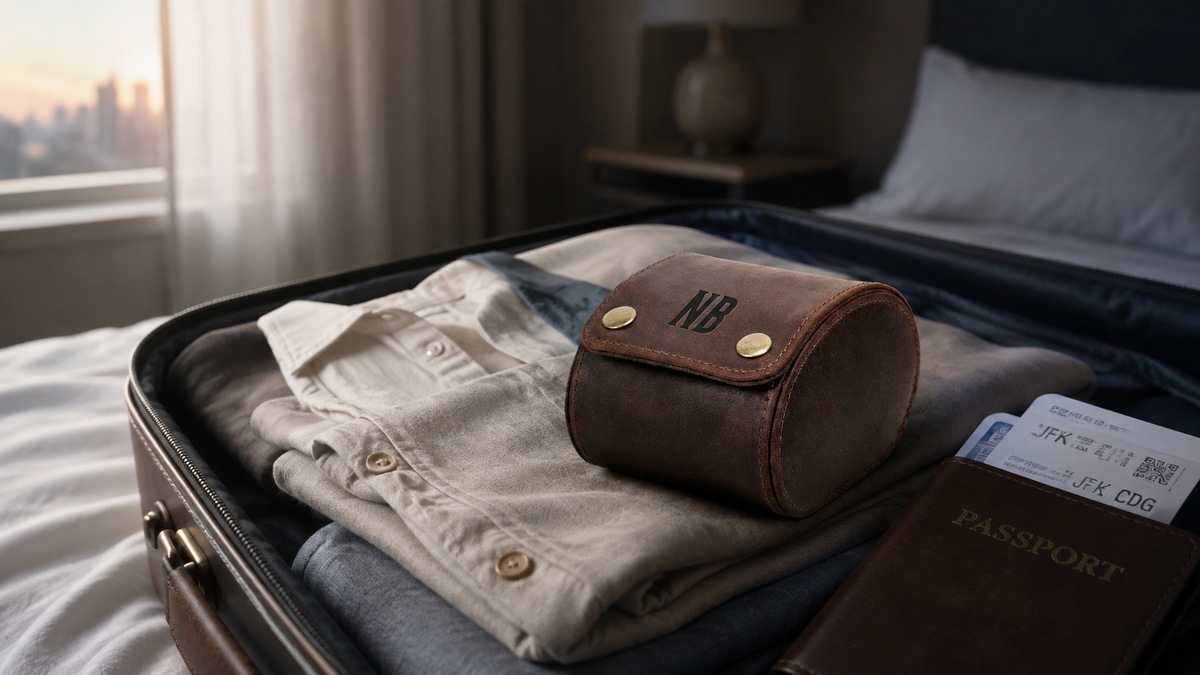
Best Single-Watch Travel Cases: Fit, Protection and Packability
Six cases ranked on interior fit, lid clearance and shell structure. The material on the outside came last.
By WATCHPOD Editorial · Updated 23 August 2026 · Prices checked 23 August 2026 · ~4,600 words · 19 min read
How this guide is funded. WATCHPOD makes travel cases, and one of the six picks below is ours. The other five are here because for some travelers they are the better buy, and we say so where that is true. No brand paid for placement, and none of the outbound links are affiliate links.
Our Picks at a Glance

|
BEST OVERALL
|
BEST LEATHER
|
BEST FOR ROUGH TRAVEL
|
|
WATCHPOD Single Watch Travel Case
|
Leatherology Travel Watch Box
|
Tiswell Hard Watch Case
|
|
$14.98
|
$95
|
Budget tier
|
Every pick in this guide, by format. Prices carry the date they were checked.
|
Pick
|
Exterior
|
Packed size
|
Published fit
|
Price
|
|
WATCHPOD Single Watch Travel Case
|
Ballistic 1680D nylon over rigid shell
|
4.5 in wide, 2.25 in high closed
|
Cases up to 50 mm
|
$14.98
|
|
Tiswell Hard Watch Case
|
1600D nylon over EVA hard shell
|
Compact, not published
|
Not published
|
Budget tier
|
|
Leatherology Travel Watch Box
|
Structured full-grain leather
|
4 x 2 x 3.2 in
|
Not published
|
$95
|
|
WOLF Blake Single Watch Roll
|
Top-grain smooth leather
|
Not published
|
Adjustable watch guard, no range published
|
Premium tier
|
|
CASEBUDi Watch Travel Case
|
Ballistic-style nylon
|
Compact, not published
|
Standard watches, Apple Watch, smartwatches
|
Budget tier
|
|
HELMDY Watch Travel Case
|
PU leather over crush-proof shell
|
4 x 4 x 2.4 in
|
Cases up to 50 mm
|
Budget tier
|
Two things worth flagging before you read on. Only one case here publishes both its closed dimensions and its maximum case size, which is why the WATCHPOD spec column looks fuller than the rest. And two picks are not leather at all: the HELMDY is PU over a synthetic shell, and the Tiswell is coated nylon over moulded EVA. They stay in because they answer specific problems, thick watches and rough handling, better than any hide case at the price. The exterior column tells you which is which.
Which Single-Watch Case Wins for Travel?
For most trips the answer is a rigid pod with a concave interior: the WATCHPOD Single ($14.98) holds a watch flat while foam closes around it from both sides. Dress travelers should take the Leatherology Travel Watch Box ($95). Anyone checking a bag or heading outdoors wants the Tiswell hard case instead.
Watch damage in transit is rarely dramatic. It is a hairline across a polished lug. A clasp that pressed a mark into a caseback somewhere over the Atlantic. A crystal marked by the zip pull it spent four hours against.
A dedicated case solves most of that without the weight of a watch box. The logo on the outside decides very little. What matters is inside: how much room the watch has to travel, whether the lid presses on the crystal, and whether the shell keeps its shape when a packed bag leans on it. Most people shopping single-watch travel cases start with material and finish with regret.
Format is the first fork. Rigid pod, structured leather, or budget synthetic.
Pick by traveler type
|
You are
|
Buy this
|
Why
|
|
A cabin-only flyer
|
Rigid pod
|
Clears a security tray, draws no attention, controls movement
|
|
A business traveler
|
Structured leather box
|
Presentation plus structure, doubles as bedside storage
|
|
A collector who wants hide
|
Leather roll with a watch guard
|
Craftsmanship, and a barrier that stops drift
|
|
Checking a bag or heading outdoors
|
EVA hard case
|
Crush and splash resistance nothing soft can match
|
|
Someone with a 6 to 6.5 in wrist
|
Concave or compressible interior
|
Short bracelets fail on oversized pillows
|
|
Rotating watches trip to trip
|
Removable foam padding
|
Resize the cavity to whatever you packed
|
Count the watch on your wrist. Most people shopping for a two-watch roll are actually taking one watch and wearing it half the time. A single case saves the luggage space you will want back on day four.
How We Judged These Six Cases
Fit first. This is a desk-researched comparison built on manufacturer-published dimensions, the supplied SERP and competitor research, and prices checked on 23 August 2026. Where a brand does not publish a figure we print “Not published” rather than guessing at it. Independent hands-on findings are included only where the source handled that specific model.
Fit range. How many case and bracelet sizes the interior genuinely accepts, not the number printed on the listing. A published maximum case size scored higher than a vague “fits most watches”.
Movement control. Whether the watch stays put when the closed case is tilted through ninety degrees. A soft lining that lets the watch slide scored as no protection at all.
Structure. Whether the shell resists compression or folds under thumb pressure. Soft cases were not penalised for being soft. They were marked for it.
Everyday use. Loading speed, closure security, and how the case behaves in a bag that is already full.
Every card carries an evidence line: manufacturer specifications, supplied research, or an independent hands-on source. Where a spec is missing we say so on the card rather than filling the gap with a plausible number. Marketing dimensions on their own do not settle anything.
Start With Format, Not Brand
Think about the roughest hour of a normal trip instead of the price of the watch. That hour is what the case has to survive.
Rigid pods: the smallest protective footprint
A rigid pod puts a firm shell around a padded cavity, so nothing outside the case reaches the watch. The good ones use a concave dish rather than a cushion, which removes the need to match a fixed pillow to your specific bracelet. Small enough for a jacket pocket, and plain enough that nobody looks twice at it in a security tray.
Structured leather: protection you can leave on a nightstand
Full-grain over a structured body holds its shape when the bag fills, and a microsuede lining gives the watch a low-friction surface on every side. It costs more, marks from moisture, and transmits pressure rather than resisting it. What it buys is a case that looks correct at a dinner and still packs like a small box.
Hard cases: when you cannot control the bag
EVA under coated nylon is the only format here that treats compression and grit as solved. Bulky, functional, and the right answer the moment the case might sit under shoes or a laptop.
Budget synthetic: a dedicated space at the lowest price
A watch loose in a bag meets keys, chargers and zip pulls. Those three account for most everyday travel scratches, and a $15 padded enclosure removes all of them. It does not buy adjustment or sealing.
|
Format
|
Main strength
|
Main trade-off
|
Best for
|
|
Rigid pod
|
Protection per gram, discreet
|
Round shells do not stack
|
Cabin-only flyers, one valuable watch
|
|
Structured leather box
|
Presentation plus structure
|
Price, moisture care
|
Business trips, dress watches
|
|
Leather roll
|
Craftsmanship, soft interior
|
Low crush resistance
|
Controlled travel, hotel storage
|
|
EVA hard case
|
Compression and splash resistance
|
Bulk, functional looks
|
Checked bags, outdoors, sports
|
|
Budget synthetic
|
Lowest entry price
|
No adjustment, basic fit
|
Gym bags, commutes, second cases
|
The “3 watch rule” is not an official standard. It is shorthand for a rotation that covers most situations: one everyday watch, one sport watch, one dress watch. Useful as a packing filter. Not a reason to buy slots you will not fill.
Best Rigid Single-Watch Cases
Two answers to the same brief. A $14.98 nylon pod that solved the movement problem by abandoning the cushion, and a moulded EVA shell for bags you do not control.
BEST OVERALL · OUR OWN PRODUCT
1. WATCHPOD Single Watch Travel Case
The only case here that publishes both its closed dimensions and a maximum case size. It is shaped like a flat donut: rigid outside, fully padded inside, with the watch lying on its side in a concave dish while foam closes around it from top and bottom.
|
Exterior
|
Ballistic 1680D nylon over a rigid shell
|
|
Lining
|
Soft velvet, deep concave centre
|
|
Packed size
|
4.5 in wide, 2.25 in high closed
|
|
Weight
|
Approx. 2.1 oz
|
|
Fit
|
Cases up to 50 mm
|
|
Closure
|
Full-perimeter zipper
|
|
Extras
|
Microfibre cloth, one-year warranty
|
WHAT WORKS
✓ Concave dish accepts any bracelet shape, so nothing has to match a fixed pillow
✓ Keeps the bracelet off the caseback, which is where polished links pick up their first marks
✓ Ballistic weave resists crushing and is difficult to cut
✓ Reads as a charger pouch, not as something worth taking
WHAT TO WEIGH
– Soft round footprint does not stack next to packing cubes
– Holds one watch and no spare strap
– Water repellent, not waterproof
Best for: Cabin-only flyers and anyone moving one valuable watch between home and a hotel safe.
$14.98 · Price checked 23 August 2026 · View the WATCHPOD Single Watch Travel Case →
Evidence: Manufacturer specifications; owner fit reports on the official listing.
BEST FOR ROUGH TRAVEL
2. Tiswell Hard Watch Case

A moulded EVA shell wrapped in water-resistant 1600D nylon, with a removable base to position the watch. It is the pick when the case will share a bag with things you cannot control.
|
Exterior
|
1600D nylon over EVA hard shell
|
|
Lining
|
Soft lining, removable base
|
|
Packed size
|
Compact, exact dimensions not published
|
|
Weight
|
Not published
|
|
Fit
|
Not published
|
|
Closure
|
Zipper
|
|
Extras
|
Water-resistant exterior
|
WHAT WORKS
✓ EVA absorbs compression better than any soft format here
✓ Coated nylon handles splashes, brief rain and a damp sports bag
✓ Removable base positions the watch inside the shell
✓ Priced with the budget picks despite the stronger shell
WHAT TO WEIGH
– No published dimensions or maximum case size, so large watches need checking first
– A removable base positions a watch, it does not custom-fit one
– Reads as equipment, not as an accessory
Best for: Checked bags, road trips, sailing, camping, and any bag that gets stacked under others.
Budget tier · Price varies by seller, check the listing · Sold through major marketplaces
Evidence: Supplied SERP and competitor research. Manufacturer dimensions not published.
What a Good Rigid Interior Looks Like
One enclosed position, padded on every face. Not a flat pillow with a lid closing over the top of it. The case, crown, bezel and clasp should stay clear of hard surfaces when the case is turned on its side or dropped into a bag at an angle.
You should also be able to load the watch without pressing a finger against the crystal. Cases that force you to hold the watch in place while you zip are the ones that mark it.
Best for Frequent Flyers
Slim profile, low weight, dependable closure. Heavy hardware and oversized zip pulls add grams and catch on bag liners without adding protection. A compact rigid case stays in a backpack or personal item where you keep it under your own control, which also makes the hotel safe transfer quick on arrival.
Loading speed counts more than most buyers expect. A 5am departure is not the moment to fight a stiff cushion.
Verdict for rigid cases. The WATCHPOD Single is the right buy for most people because it is the lightest, the cheapest, and the only one that tells you the fit ceiling before you order. Move to the Tiswell when the case will travel in checked or shared luggage, and accept that you are buying a shell without a published spec sheet.
Best Leather Single-Watch Cases
Two very different reads on hide. A structured box that holds its shape in a full bag, and a traditional roll built around a barrier system rather than a plain cradle.
BEST LEATHER
3. Leatherology Travel Watch Box

Full-grain outside, microsuede inside, with a removable curved cushion and a zip closure. It is the case that looks correct on a hotel nightstand at 11pm and still packs like a small box at 6am.
|
Exterior
|
Structured full-grain leather
|
|
Lining
|
Microsuede
|
|
Packed size
|
4 x 2 x 3.2 in
|
|
Weight
|
Not published
|
|
Fit
|
Not published; cushion is removable
|
|
Closure
|
Zipper
|
|
Extras
|
Microfibre sachet, monogram option
|
WHAT WORKS
✓ Structured body holds its shape when the bag fills
✓ Cushion comes out, so you can fasten the bracelet outside and then load it
✓ Small rectangular footprint organises cleanly beside packing cubes
✓ Microfibre sachet takes a ring or cufflinks
WHAT TO WEIGH
– No published cushion circumference; ask before buying for a bracelet under 6.5 in
– Leather transmits pressure rather than resisting it
– The zip can stick when new
Best for: Business trips and weddings, where a dress watch travels and presentation matters as much as protection.
$95 · Price per supplied research, confirm on the product page · Sold direct
Evidence: Supplied research and published testing notes. Cushion dimensions not published.
BEST SEPARATION
4. WOLF Blake Single Watch Roll
WOLF has been making watch storage since 1834, and the Blake follows the classic roll format with a patented watch guard barrier rather than a plain cradle. Top-grain smooth leather outside, ultrasuede inside.
|
Exterior
|
Top-grain smooth leather
|
|
Lining
|
Ultrasuede
|
|
Packed size
|
Not published
|
|
Weight
|
Not published
|
|
Fit
|
Adjustable watch guard; no wrist range published
|
|
Closure
|
Chrome-finished snap
|
|
Extras
|
Cylindrical body, doubles as desk storage
|
WHAT WORKS
✓ Watch guard barrier closes the gap around smaller watches
✓ Ultrasuede is a genuinely non-abrasive surface for crystals and polished steel
✓ Slides into a garment bag or a suitcase side pocket
✓ Works as attractive storage once you arrive
WHAT TO WEIGH
– Snap closures are not intuitive; one that looks fastened but is not lets the watch shift all trip
– Premium pricing with no published cushion circumference
– Poor match for compression or wet conditions
Best for: Dress watches and travelers who treat the case as part of the accessory rather than as equipment.
Premium tier · Price varies by dealer, check the listing · Sold through authorised dealers
Evidence: Supplied research and brand specifications. Dimensions and wrist range not published.
Best for 44 mm and Thicker Watches
Divers and chronographs need room around the case, the crown and the pushers. A stated fit ceiling tells you nothing about whether your specific watch sits comfortably with the lid shut.
Measure the widest point including the crown, then compare it against usable interior width rather than the marketing line about fitting most watches. Measure crown to crown and add 2 to 3 mm. A 42 mm chronograph often needs closer to 46 mm of horizontal space once the crown and pushers are counted, and that difference is what makes a watch press the wall of a case rated for it.
Best Luxury Single-Watch Case
Premium leather is the entry fee, not the feature. At this price expect clean edge finishing, consistent stitching, a firmly bonded lining, a secure closure and a cushion built around real bracelet sizes.
Branding alone does not make a travel case safer. Neither does hide thickness.
Verdict for leather. The Leatherology box wins on structure and packing efficiency, and it is the one to buy if the case has to look right outside the suitcase. Choose the Blake if a barrier system matters more to you than a rectangular footprint. Neither is the answer for a bag that gets crushed.
Best Budget and Flexible Cases
The cheapest real enclosure here, and the one case that solves finding it in a packed bag.
BEST ENTRY PRICE
5. CASEBUDi Watch Travel Case
No hide, no hardware, no branding premium. A ballistic-style nylon exterior over a soft-lined cavity, one watch, one year of warranty, quality checked in the USA.
|
Exterior
|
Ballistic-style nylon
|
|
Lining
|
Soft lining
|
|
Packed size
|
Compact, exact dimensions not published
|
|
Weight
|
Not published
|
|
Fit
|
Standard watches, Apple Watch and most smartwatches
|
|
Closure
|
Zipper
|
|
Extras
|
One-year warranty
|
WHAT WORKS
✓ Lowest entry price for a genuine padded enclosure
✓ Handles smartwatches as well as traditional dials
✓ Small enough to live permanently in a gym bag or a glovebox
✓ Nylon resists everyday travel wear far better than a fabric pouch
WHAT TO WEIGH
– No removable foam, no cushion swap, so fit is whatever the cavity happens to be
– A thick diver can fit across the case and still press the lid
– Basic protection, not a heavy-duty equipment case
Best for: Everyday watches, commutes, and as a second case you never take out of a bag.
Budget tier · Price varies by seller, check the listing · Sold through major marketplaces
Evidence: Supplied SERP and competitor research. Dimensions not published.
BEST CLIP-ON
6. HELMDY Watch Travel Case

Structured PU leather over a crush-proof shell, plush velvet lining, removable foam padding, and a metal carabiner on the zip. The clip is the differentiator and also the thing most likely to be misused.
|
Exterior
|
PU leather over crush-proof shell
|
|
Lining
|
Plush velvet, removable foam
|
|
Packed size
|
4 x 4 x 2.4 in
|
|
Weight
|
Not published
|
|
Fit
|
Cases up to 50 mm
|
|
Closure
|
Zipper with metal carabiner
|
|
Extras
|
Modular foam inserts
|
WHAT WORKS
✓ Removable foam resizes the cavity between a 36 mm dress watch and a 44 mm diver
✓ Carabiner clips to an internal loop so the case stops disappearing into the bag
✓ PU wipes clean more easily than natural leather
✓ Published closed dimensions and a fit ceiling, which half this field does not give you
WHAT TO WEIGH
– Does not match moulded EVA or ballistic nylon for crush resistance
– Tight on space if you want room for a second accessory
– Clipped to the outside of a bag it is an advertisement, a weather exposure and an impact risk at once
Best for: Travelers who rotate watches trip to trip and want the case findable without excavating the bag.
Budget tier · Price varies by seller, check the listing · Sold through major marketplaces
Evidence: Supplied SERP and competitor research; manufacturer dimensions.
Verdict for budget. CASEBUDi is the one to buy if you want a padded home for a watch and nothing else. HELMDY costs a little more and gives you adjustment plus published dimensions, which makes it the better pick if your watches vary in size. Use the carabiner inside the bag, not on it.
Fit Check: The Five Minutes That Prevent a Return

Fit is the weakest part of almost every travel case guide online. A case can use excellent materials and still be the wrong purchase because the cavity is too large or the watch sits too high under the lid. Measure your own watch first.
Case diameter, thickness and crown width. Start with the largest watch you plan to carry, then measure its thickness. A 15 mm diver sits far closer to the lid than a 9 mm dress watch of the same diameter. Add the crown and pushers to the width figure.
Bracelet circumference against the cushion. The measurement almost nobody checks. The bracelet has to close naturally around a pillow. An oversized cushion puts tension on a bracelet sized for a 6.5 in wrist, and the clasp either strains or refuses to shut. Fixed metal bracelets are where this bites hardest. Leather, fabric and rubber adapt.
Deployant clasp clearance. A folding clasp needs interior room to sit flat. Forced into a tight position it leaves the watch at an angle and makes every load a fight. Ask the brand for cushion dimensions when they are not published. The good ones answer.
Clearance above the crystal. A thick watch can fit the cavity and still press against the lid. Check the gap once the closure is fastened, not while the case lies open.
The tilt test. Load the case, close it, then tilt it slowly in four directions. Movement you can hear or feel means the fit is wrong. Do this at home, not in a departure lounge.
|
Measure
|
Take it from
|
Compare against
|
|
Case diameter
|
Widest watch, crown included
|
Usable interior width
|
|
Case thickness
|
Tallest watch on the cushion
|
Clearance under the closed lid
|
|
Bracelet circumference
|
Shortest fixed bracelet you own
|
Cushion or cavity circumference
|
|
Cavity depth
|
Not applicable
|
Height of your tallest case plus padding
|
|
Exterior size
|
Not applicable
|
The bag pocket you actually travel with
|
If you have to push hard to close the case, the interior is too tight. Pressure on the crystal and caseback is a slower kind of damage than a drop, and it is entirely self-inflicted.
Protection Features That Matter More Than Material
Material decides how the case looks in year five. Structure decides what happens when a suitcase gets stacked under three others in a cargo hold. Different questions.
Structured shell vs soft body. Soft cases are light, flexible and slide anywhere. They also compress when something heavy pushes on them. Structured cases hold their form and keep a gap between outside pressure and the crystal. The cost is a fixed footprint, occupied whether the case is full or empty.
Cavity shape and separation. A concave dish surrounds the watch on all sides. A flat pillow supports it from one. On a folded bracelet the caseback and the links sit millimetres apart, and hours of small vibration is enough to mark polished steel, so the interior has to hold them apart without pressing on either.
Linings. Velvet, microsuede, ultrasuede and felt all work. Softness is only half the job. The lining has to stay bonded so seams do not develop after a year of loading, and it has to stay clean, because grit trapped in soft fabric turns a lining into sandpaper.
Closures. Zips enclose the watch fully but put hard teeth near the opening, so the interior has to keep the case away from them. Snaps are quick and easy to verify by feel, and quiet failures are common on rolls. Test any closure loaded, never empty.
Crush resistance. Material alone does not make a case crush-resistant. A soft case flattens under shoes, chargers or a full toiletry bag. Pack soft formats between clothing. When you cannot control where the case ends up, buy the stronger shell.
|
Feature
|
What it actually does
|
What to check
|
|
Structured shell
|
Absorbs compression from luggage
|
Press the wall. It should not fold
|
|
Concave or dished interior
|
Stops bracelet-to-caseback contact
|
Look for depth, not just softness
|
|
Cushion or foam type
|
Holds the watch without stretching it
|
Removable or compressible beats fixed
|
|
Lining bond
|
Prevents seams reaching the crystal
|
Feel the pocket edges and corners
|
|
Closure
|
Keeps the case shut under pressure
|
Test it loaded, never empty
|
|
Plain exterior
|
Reduces theft interest in transit
|
No branding, no obvious watch shape
|
Which Materials Travel Best
Full-grain leather keeps the natural grain and picks up a patina. Best for a case you plan to own for a decade, and the honest choice if presentation is part of what you are buying.
Top-grain leather is sanded and finished, giving a more even surface and fewer natural marks when new. Cleaner look, slightly less character over time.
Ballistic nylon at 1680 denier is the practical benchmark. Abrasion resistant, difficult to cut, water repellent, and it costs a fraction of hide. It will never look like an accessory, which is the entire point for some buyers.
Moulded EVA is light closed-cell foam that resists compression. The only material here that meaningfully protects against a stacked suitcase.
PU and coated synthetics cut cost and give makers more control over colour. Lower-grade coatings crack at folds and edges first, so inspect the seams before the swatch. Two picks in this guide are synthetic, and the cards say so.
Grade alone should not close the decision. A soft full-grain case can protect less than a cheaper one built over a rigid shell.
What You Should Expect to Pay
Price tracks construction more reliably than it tracks brand. Above roughly $100 on a single-watch case you are paying for hide, hardware and presentation rather than armour. That is a legitimate thing to want. Just know which one you are buying.
|
Tier
|
Typical price
|
What you get
|
Watch out for
|
|
Entry
|
$8 to $20
|
Nylon or PU, soft lining, fixed cavity, basic crush resistance
|
Coating cracks at folds, no adjustment
|
|
Value
|
$20 to $50
|
Rigid shell, shaped interior, removable foam
|
Dimensions often unpublished
|
|
Enthusiast
|
$50 to $120
|
Structured leather, microsuede, removable cushion
|
Cushion sizing rarely published
|
|
Premium
|
$120 plus
|
Hand finishing, patented fit hardware, presentation
|
Branding priced above function
|
A $300 case does not automatically fit better than a $15 one. Measurements decide fit. Price decides finish.
Case vs Roll vs Box
Cases win on packed size and crush resistance. Rolls win on presentation. Boxes win at home and lose everywhere else. If you are weighing capacity against packed size across formats, our dedicated travel case collection covers single, double and triple.
|
|
Single-watch case
|
Watch roll
|
Watch box
|
|
Typical capacity
|
1
|
1 to 6
|
6 to 24
|
|
Packed size
|
Smallest
|
Small to medium
|
Poor for travel
|
|
Crush resistance
|
High (rigid) to medium
|
Medium to low
|
Medium
|
|
Best environment
|
Carry-on, personal item
|
Carry-on, between clothing
|
Dresser, safe, display
|
|
Presentation
|
Functional
|
Looks right on a hotel dresser
|
Best at home
|
|
Long-term storage
|
Not designed for it
|
Not designed for it
|
Purpose-built
|
When a Hybrid Makes More Sense
Hybrids sit between the formats. A firm barrel or pod body keeps the compact footprint while adding structure around the watch, which is most of what a hard case gives you without the volume. Rounded and tube designs also resist rolling off a nightstand, which sounds trivial until it happens in a hotel room at midnight.
Check the interior fit carefully on these. Compact rigid bodies leave less room to adjust when the cushion is wrong.
How to Choose in Seven Steps
Count the trip, not the collection. Decide how many watches you will genuinely wear, then subtract the one on your wrist.
Measure your biggest watch. Largest diameter and thickest case, crowns and pushers included.
Measure your shortest bracelet. The smallest fixed bracelet circumference in your rotation.
Compare against published dimensions. Interior width and cushion circumference. Ask if they are missing. Silence is an answer.
Match protection to packing style. Soft between clothing, rigid for a shared bag, EVA for rough handling.
Inspect the inside before the outside. Cavity depth, lining bond and closure strength before you look at the material.
Set the budget against those functions. Then let brand and colour break the tie.
How to Pack One Watch

The case only does half the work. Where it sits in the bag does the rest.
Fasten the bracelet or strap before the watch goes in. A loose end is something that hunts for a crystal.
Check the closure line. Crown, bezel and crystal should sit clear of the zip track.
Fill the void. A rolled microfibre cloth in the empty half of a case is free and it ends the rattle.
Bed a soft case between clothing. Keep it away from shoes, chargers and toiletry bags.
Carry it in hand luggage where you can control it, then move the watch to the hotel safe on arrival.
Tilt before you travel, every time. Thirty seconds of checking beats a hairline you notice three days later on a hotel dresser.
Looking After the Case Itself
Wipe leather exteriors with a dry cloth. Water and finished leather are a poor combination.
Brush suede and microsuede interiors rather than cleaning them with fluid. Dust builds in the corners first.
Shake the lining out before every trip. Sand and metal fragments are what actually mark polished steel.
Wax a sticky zip with a candle stub rather than forcing it. Forced zips break at the slider.
Store the case open at home so a cushion is not held compressed for months.
Keep it out of direct sun, and out of a hot car. A dark case on a dashboard can get hot enough to thin the lubricants in a mechanical movement.
Six Mistakes We See Most Often
Buying on brand reputation without checking that specific model. Sizes vary widely inside one catalogue.
Oversized cushions. The most common complaint in collector threads, and the one that kills short metal bracelets.
Ignoring height. Diameter is published, thickness usually is not, and thickness is what meets the lid.
Treating soft leather as crush protection. Thickness is not structure.
Forcing the closure. That pressure lands on the crystal or the crown for the whole flight.
Advertising the contents. A branded luxury case on an airport seat tells everyone what you are carrying.
Glossary: What the Spec Sheet Means
|
Term
|
What it means in practice
|
|
Concave interior
|
A dished cavity the watch lies into, so the bracelet cannot strike the caseback
|
|
Cushion circumference
|
The distance around the pillow. Your bracelet has to close over this
|
|
Lid clearance
|
The gap between the crystal and the closed lid. The number nobody publishes
|
|
Watch guard
|
A raised barrier that sits beside a watch to stop it drifting
|
|
Deployant clasp
|
A folding bracelet clasp. Needs flat interior room to sit correctly
|
|
Ballistic 1680D nylon
|
High-denier woven shell fabric, abrasion resistant and water repellent
|
|
EVA shell
|
Moulded closed-cell foam shell, light and compression resistant
|
|
Ultrasuede or microsuede
|
Synthetic non-abrasive lining, the safe surface for crystals and polished steel
|
|
Water resistant
|
Handles splashes and brief rain. Not submersion, and zips are the entry point
|
Key Takeaways
Format first, then measurements. A rigid pod suits most single-watch trips.
Bracelet circumference against the cushion is the check almost nobody runs.
Cavity depth, not lining softness, decides whether the bracelet meets the caseback.
Structure protects. Material grade only decides how the case ages.
Two of the six picks are synthetic. That is fine if you know it before you pay for “leather”.
Airline liability caps sit below the value of one good watch, so the case travels in the cabin.
Tilt the loaded case before every trip. Movement means the fit is wrong.
Final Word: Fit First, Logo Last
The best single-watch travel case is the one that fits your watch. Not the most expensive one, and not the one with the most recognisable name on the zip pull.
Start with format. A rigid pod keeps packing simple and protects better than its price suggests. A structured leather box adds presentation without giving up much structure. An EVA hard case is the only honest answer once compression, water or dust become real possibilities. Then work down through the details that actually touch the watch: cavity depth against your tallest case, cushion circumference against your shortest bracelet, clearance above the crystal, and a shell that holds its shape in a packed bag.
Two figures decide almost every return in this category: the thickness of your watch with the crystal, and the circumference of your shortest bracelet. Get those right and a $15 case will protect a watch better than a $300 one bought on looks.
Buy for the trips you actually take, not the collection you hope to own. And when the case arrives, load it, close it, tilt it.
Ballistic 1680D nylon, concave interior, cases up to 50 mm. Single, double and triple cases from $14.98. Microfibre cloth included, one-year warranty.
FAQs
What is the best travel case for a single watch?
No single winner, because fit decides it. A rigid pod with a concave interior suits most cabin travelers, since the shell separates the watch from everything packed around it and nothing has to match a fixed pillow. A structured leather box is the better buy when presentation matters, and an EVA hard case wins when the bag will be crushed or soaked. A 6 in wrist with a short metal bracelet needs a different interior from someone carrying a 44 mm diver.
Practical tip: measure your bracelet circumference and largest case first, then judge products on fit rather than reputation.
What is the best watch box for travel?
A travel case, not a display box. Wooden watch boxes are built for presentation at home: bulky, hinged, and full of empty air that lets a watch move. A travel-focused box or pod is designed around transport, so it holds the watch still, leaves clearance above the crystal and closes without forcing anything. For one watch, a small dedicated box beats carrying a home-storage case with five empty slots.
Practical tip: pick the smallest box that still clears the crystal, crown, clasp and strap.
How do you pack a watch for travel?
Secure it inside a correctly sized cavity before the case goes near your luggage. Fasten the bracelet so no loose end can swing. Leave clearance around the crown, pushers and crystal so nothing presses when the zip closes. Keep keys, chargers and grooming tools away from the case, and use clothing as bedding around it. For anything valuable, the case belongs in a carry-on where you keep control of it.
Practical tip: close the loaded case and turn it slowly through ninety degrees. Silence means it is packed right.
How do you store a single watch?
Clean, dry, and somewhere the crystal, case, bracelet and strap cannot rub against anything hard. A padded box, pod, stand or travel case all work depending on how often the watch moves. For travel or temporary storage a closed case beats a nightstand or an open drawer. Check the interior is free of sand, dust and metal fragments first, because trapped grit is what actually marks polished surfaces.
Practical tip: enough support to stop movement, never enough pressure to squeeze the strap or press the crystal.
What is the 3 watch rule?
Not a formal standard. It is shorthand for a rotation that covers most situations: an everyday watch, a sport or dive watch, and a dress watch. For travel the logic works well, since three pieces handle flights, meetings and dinners without a large case. One wrinkle: the watch on your wrist counts, so a single-watch case often covers what looks like a two-watch trip.
Practical tip: build the rotation around your calendar, not around the number of slots a case happens to have.
Is it okay to wear a Rolex when traveling?
Yes, though it depends on destination, activities, insurance and your own comfort carrying something valuable. Wearing it keeps the watch with you rather than in a bag. There will still be moments you take it off: swimming, the gym, sleeping somewhere unfamiliar. That is what the case is for. An expensive-looking case does not make the watch safer and often signals what is inside, so plain wins.
Practical tip: check your insurance covers loss away from home before you travel. Many policies do not by default.
Can I pack a watch in my suitcase?
You can, but a valuable watch is better off in your carry-on. The TSA tells travelers to keep valuables with them rather than checking them, and you can request private screening instead of opening a case into a public tray. The money side is blunter: US DOT rules let airlines cap liability at $4,700 per passenger domestically, and around $2,175 internationally under the Montreal Convention. DOT Fly Rights adds that carriers may refuse to sell excess valuation on jewelry at all.
Practical tip: closed case, carry-on, top of the bag. Not buried under shoes in the hold.
Do I need to declare my Rolex when traveling?
Not automatically, and not simply because you own one. Declaration depends on where the watch was bought, whether you acquired or altered it abroad, and which country you are entering. CBP requires travelers to declare purchased merchandise on return, with personal exemptions of $200, $800 or $1,600 depending on the countries visited and length of stay. Exemption tiers are applied at the border, and the officer makes the final call.
Practical tip: complete CBP Form 4457 before you fly. It documents prior possession and stays valid as long as it is legible.
Sources
- Transportation Security Administration. Jewelry, What Can I Bring? US federal screening guidance, accessed 25 August 2026. Confirms jewelry is permitted in both carry-on and checked bags, recommends keeping valuables with you rather than checking them, and sets out the traveler’s right to request private screening rather than opening a case in a public tray.
- US Department of Transportation. Lost, Delayed, or Damaged Baggage Aviation Consumer Protection, accessed 25 August 2026. Source of the $4,700 per-passenger domestic liability ceiling and the 1,519 Special Drawing Rights international limit under the Montreal Convention, plus the point that carriers may pay more but are not required to.
- US Department of Transportation. Fly Rights: A Consumer Guide to Air Travel Aviation Consumer Protection, accessed 25 August 2026. Used for the finding that airlines may refuse to sell excess valuation coverage on jewelry, and for the list of high-value items that should never travel in a checked bag.
- US Customs and Border Protection. Registration for Dutiable Personal Articles Prior to U.S. Departure CBP travel guidance, accessed 25 August 2026. The Form 4457 procedure for documenting prior possession of a valuable article before international travel, and the note that a registration stays valid as long as it remains legible.
- US Customs and Border Protection. What to Expect When You Return CBP travel guidance, accessed 25 August 2026. Declaration requirements on return to the United States and the $200, $800 and $1,600 personal exemption tiers referenced in the customs FAQ.
- US Customs and Border Protection. Types of Exemptions CBP travel guidance, accessed 25 August 2026. How duty-free exemption tiers are applied to goods accompanying a traveler, and which countries and lengths of stay move a traveler between tiers.
- WATCHPOD. Single Watch Travel Case Official product page, prices and specifications checked 23 August 2026. Closed dimensions of 4.5 inches wide by 2.25 inches high, the 50 mm maximum case size, ballistic 1680D nylon construction, velvet-lined concave interior, included microfibre cloth and one-year warranty. Also the source of the owner fit reports covering a 44 mm chronograph and an Omega Speedmaster.
- Gear Patrol. The Best Cases, Rolls and Pouches for Traveling With Your Watches Editorial roundup, accessed 25 August 2026. Independent assessment of travel case formats and the design trade-offs between rolls, pouches and rigid cases, used to support the format comparison rather than any individual product claim.
- Supplied SERP and competitor research, 2026. Product characteristics for the Tiswell, CASEBUDi, HELMDY, Leatherology Travel Watch Box and WOLF Blake Single Watch Roll, together with the People Also Ask set this guide answers. Where this research and a manufacturer page disagreed, the manufacturer figure was used and the card says so. Treat individual owner comments within it as user experience rather than verified specification.





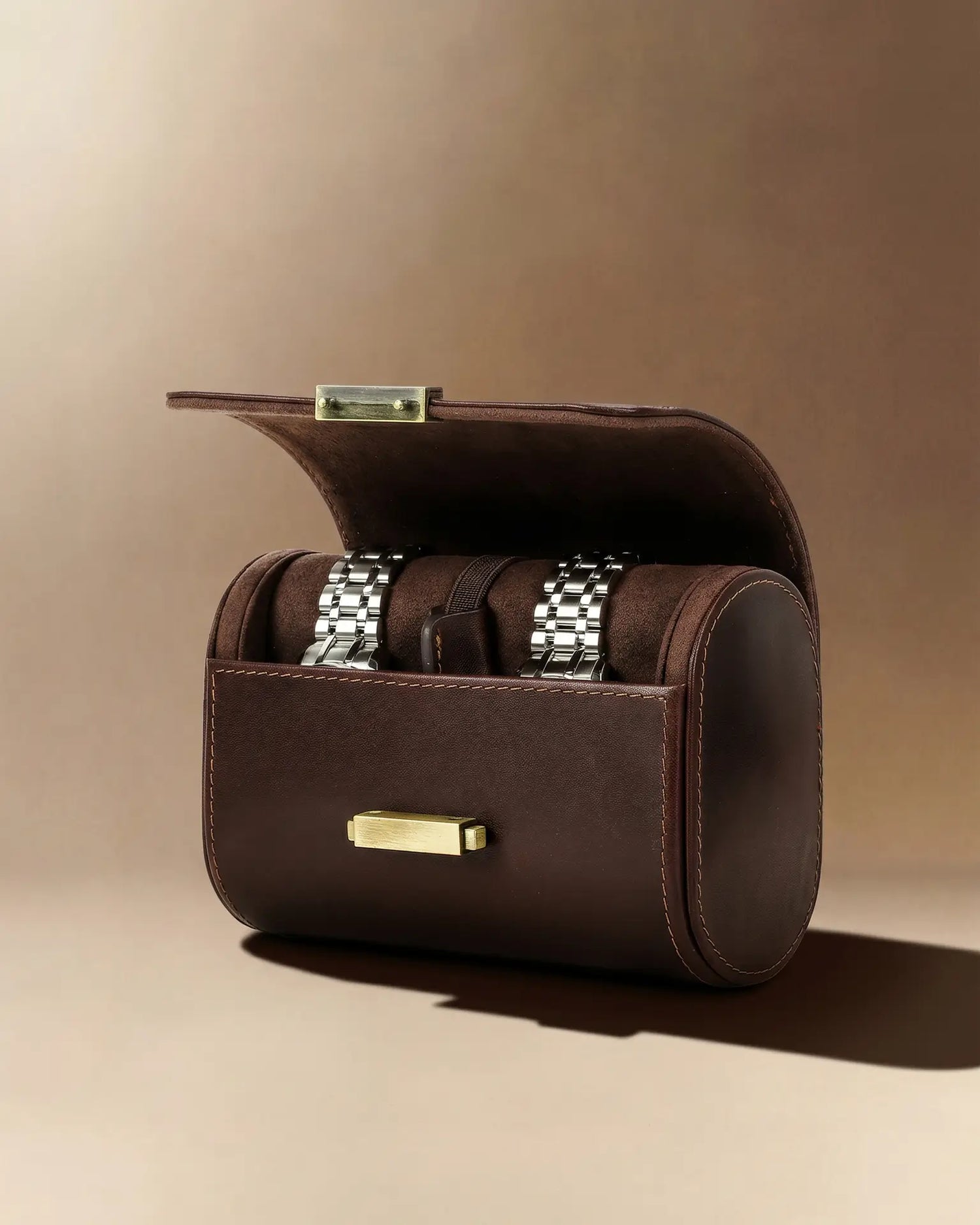
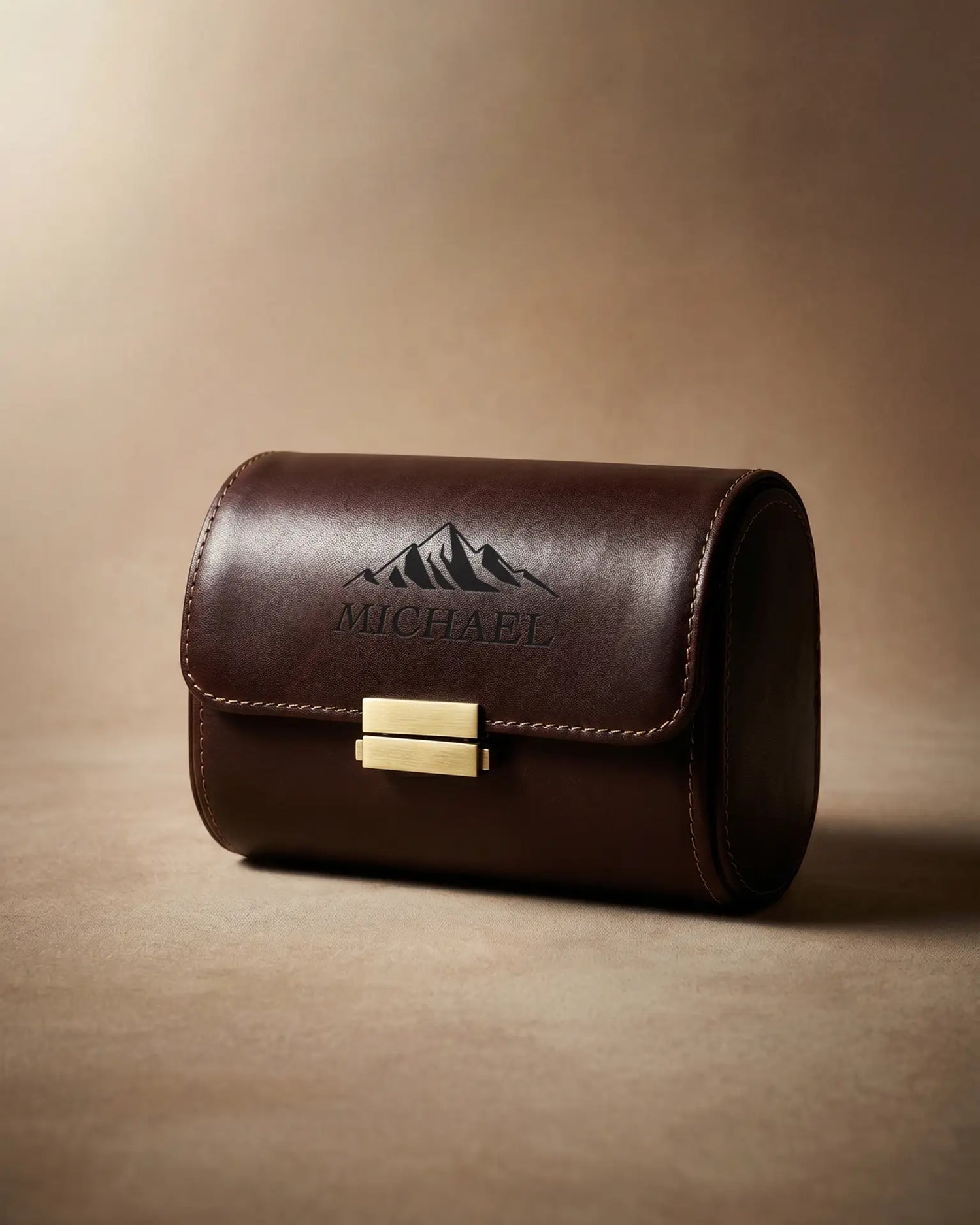
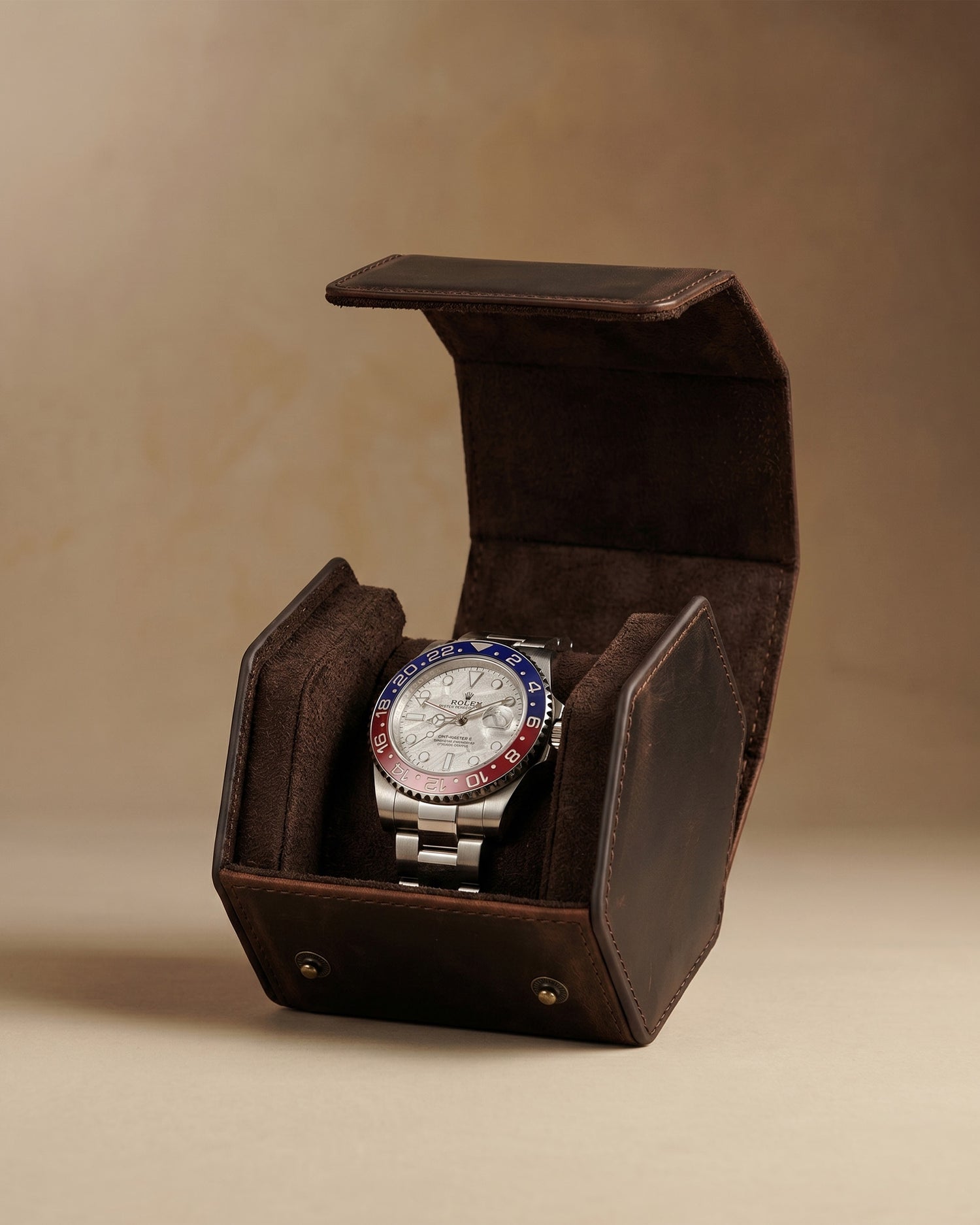
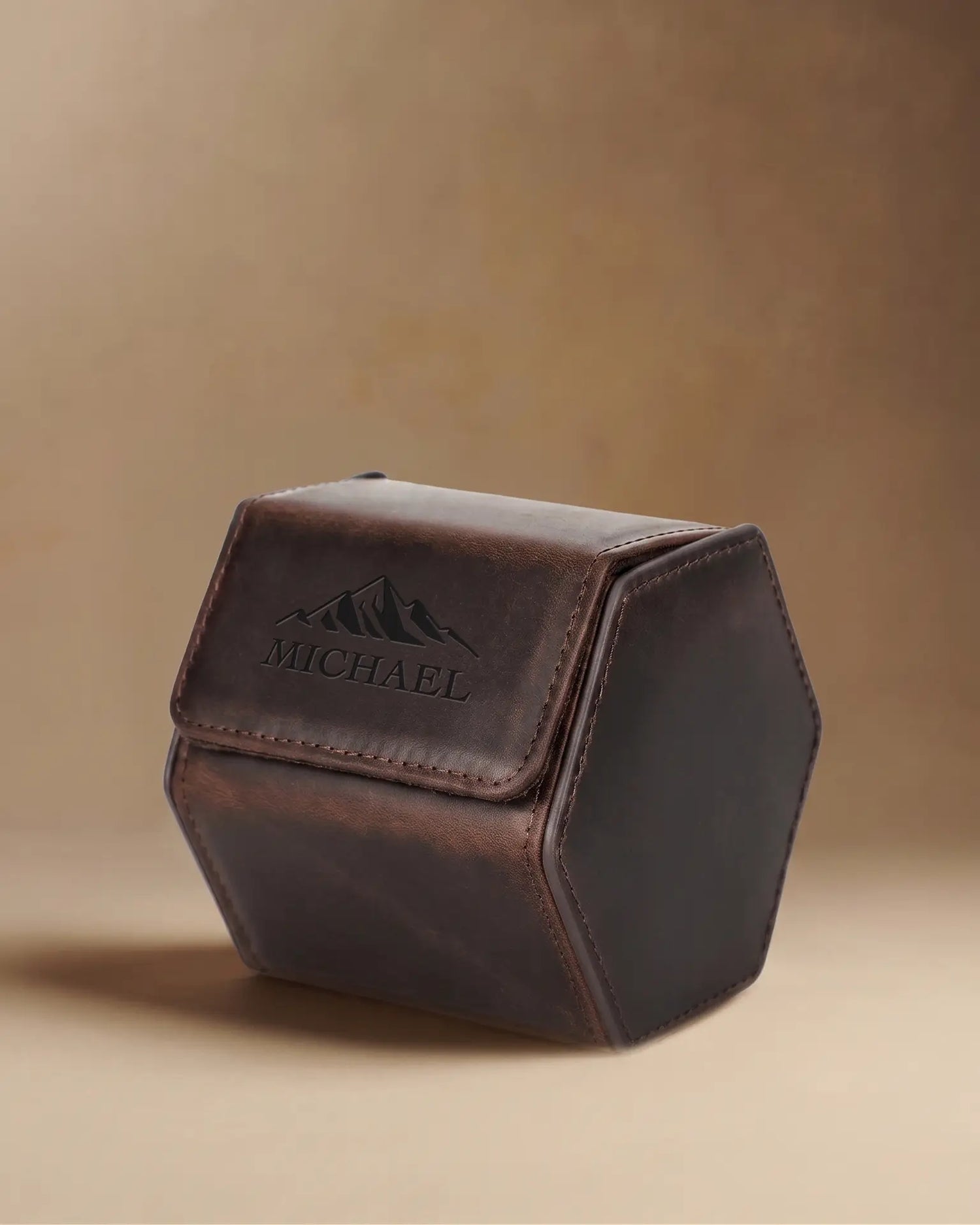


Journey Wrap 3本用レザーウォッチロール
Regular price
¥9,700 JPY
Regular price
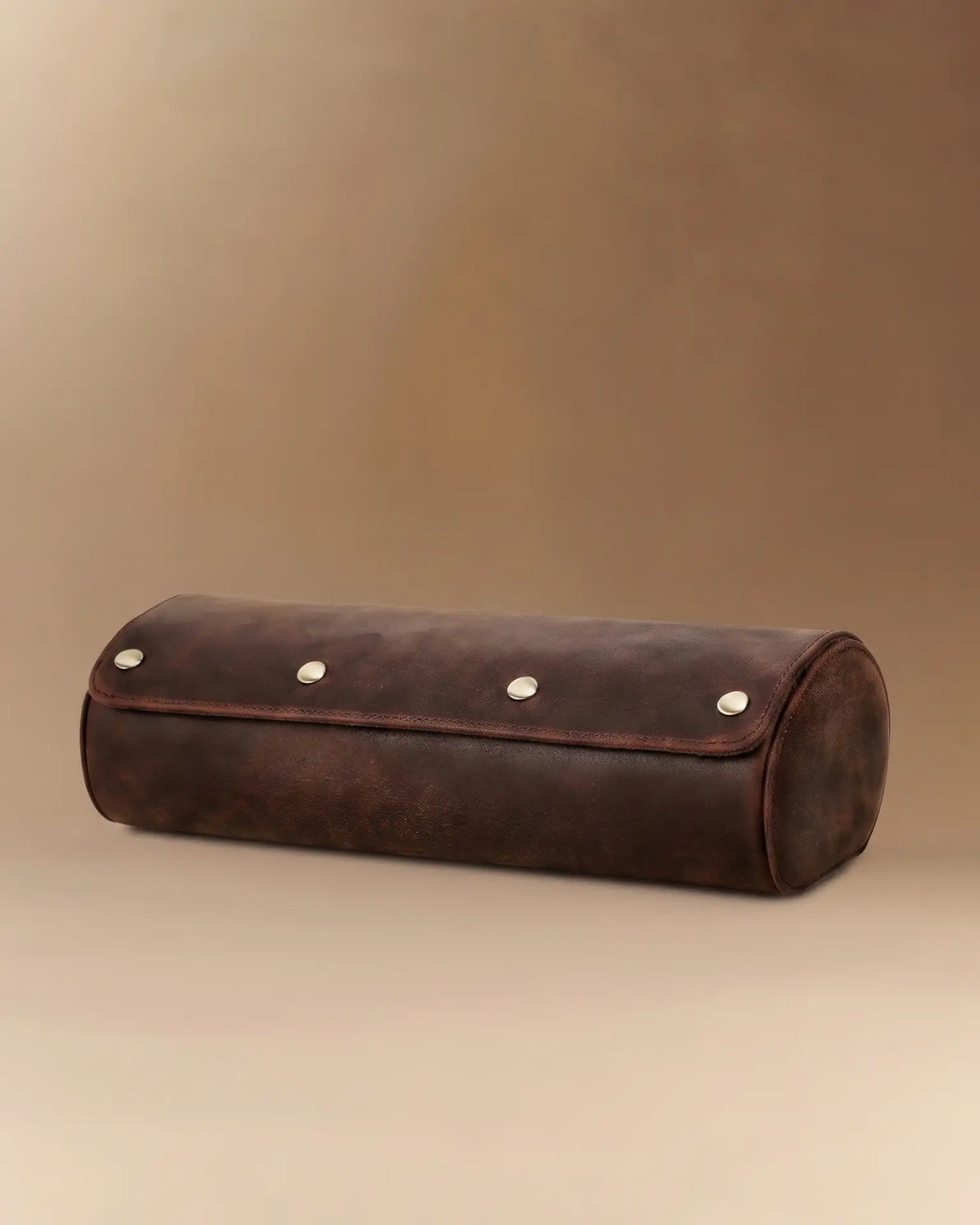
Legacy Rivet 3本用レザーウォッチロール
Regular price
¥19,100 JPY
Regular price
¥20,600 JPY
Sale price
¥19,100 JPY
Available in
 Dark Brown
 Dark Brown
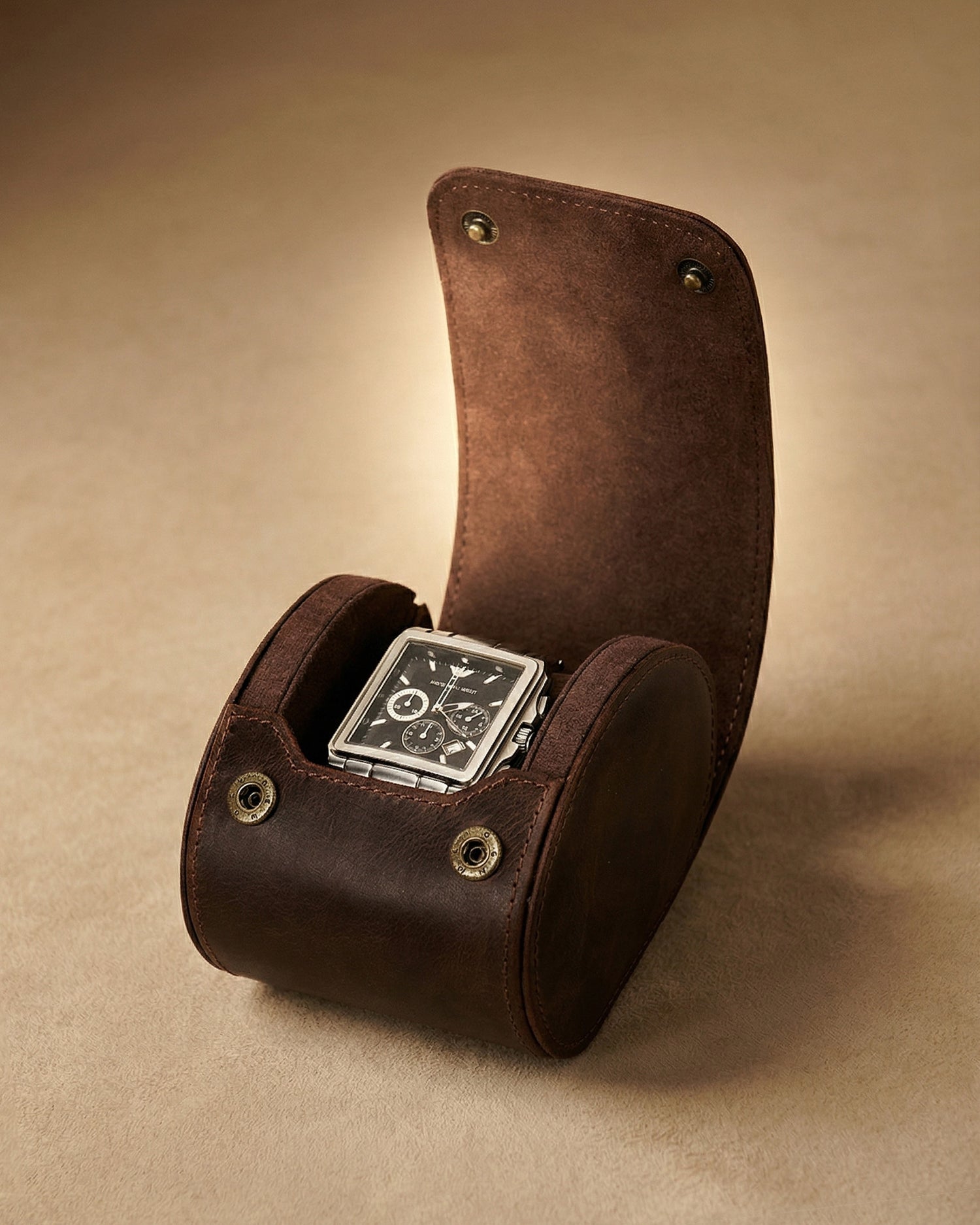
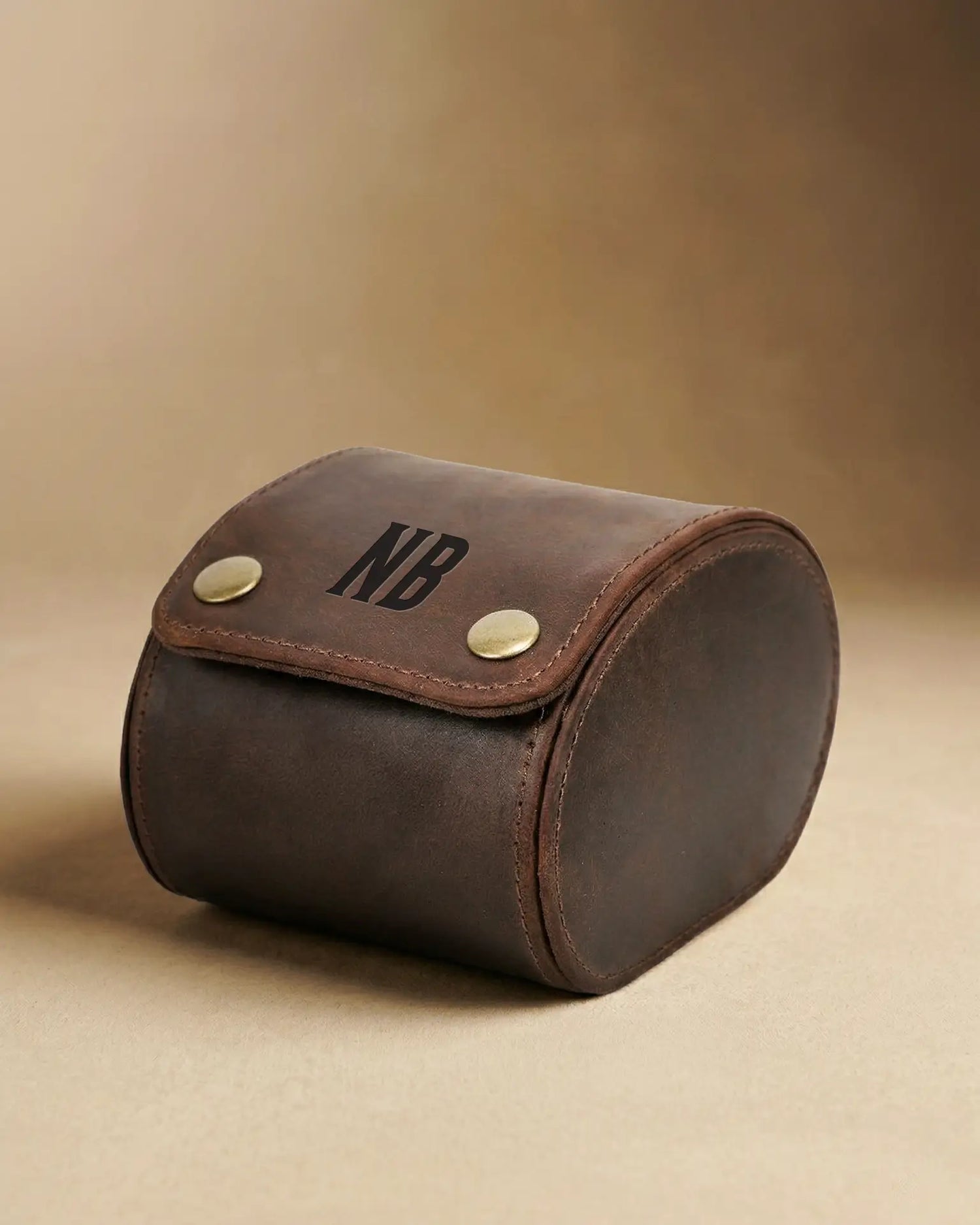
Legacy Rivet 1本用レザーウォッチロール
Regular price
¥12,700 JPY
Regular price
¥13,800 JPY
Sale price
¥12,700 JPY
Available in
Dark Brown
Dark Brown
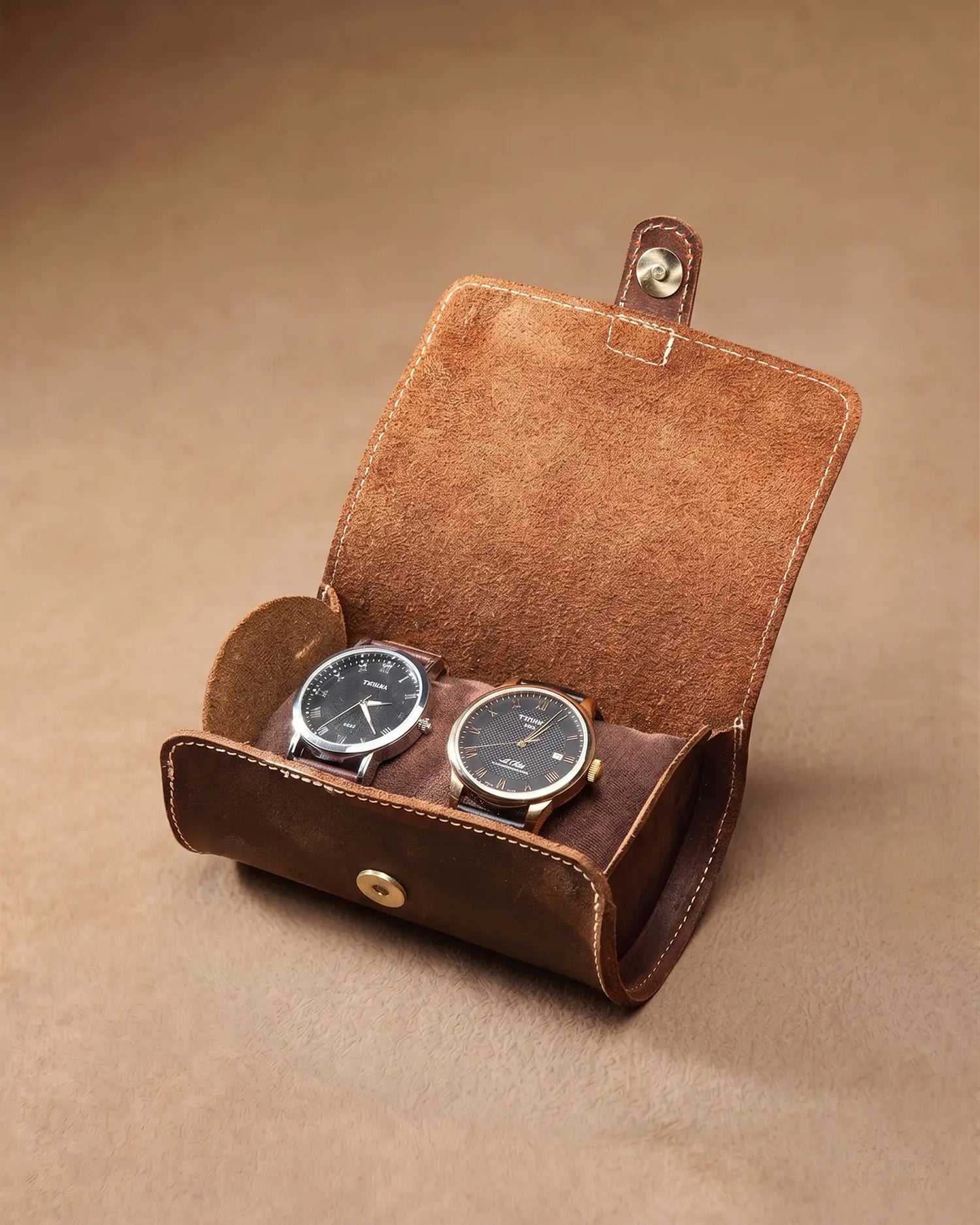
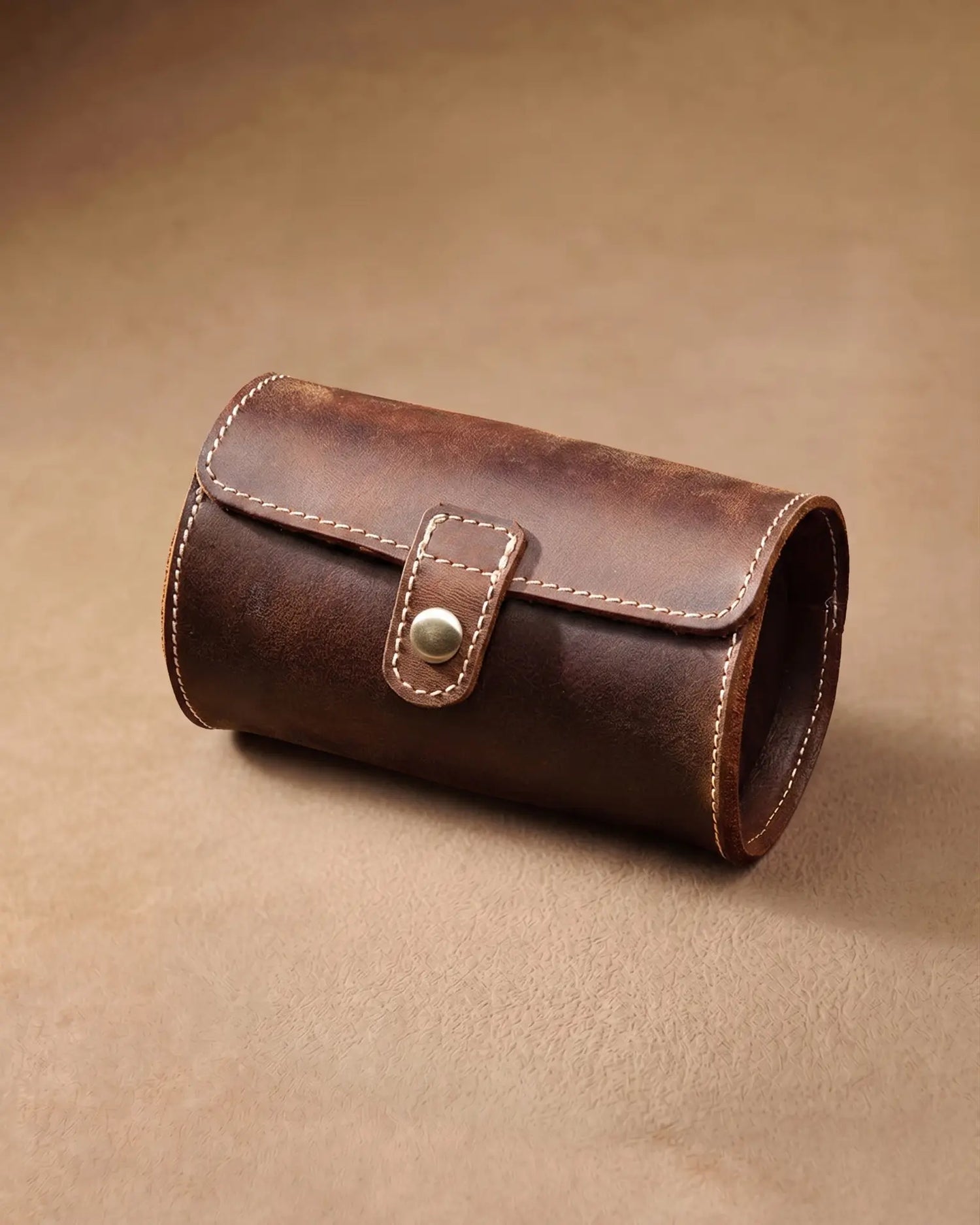
Journey Wrap 2本用レザーウォッチロール
Regular price
¥8,100 JPY
Regular price
More Leather Guides
Explore practical guides to choosing, using and caring for leather goods.

Custom Leather Bookmark Guide: Thickness, Engraving and Magnet Options

Magnetic Bookmark With Pen Holder: Who It Is For and How to Use It
